



|
Getting your Trinity Audio player ready...
|
By: Chaya Sora Jungreis-Gertzulin
“Though I walk through the valley overshadowed by death, I feel no harm, for You are with me.” (Tehillim 23:4)
“Va’tilokach Esther, And Esther was taken”. (Esther 2:8). Esther was taken to the harem of King Achashverosh. There, she met the “women of the harem”, all competing to be the next queen. They were offered all types of creams and treatments – the ultimate spa experience – but Esther would have none of that. She didn’t want to do anything that would increase her chance of being chosen queen. But, as we know, HaShem is in control, and Esther was crowned.
What Esther did request was to have “sheva ha’naaros ha’r’ooyoss”, seven personal attendants, special handmaids, from the palace assigned to her. (Esther 2:9). This was not a random request. Yaaros Devash explains that each one was designated for a different day of the week. This helped Esther keep track of the days, enabling her to know when it was Shabbos.
To keep Shabbos. No matter what the circumstances. Shabbos was Shabbos, be it in her home with Mordechai, the harem, or the palace. She tenaciously clung to her beliefs, Torah, mitzvos, her G-d. Besides observing Shabbos, Esther was careful regarding kashrus, existing on a diet of beans, lentils, peas, citrons, nuts and seeds. Additionally, she did her utmost to avoid the idols that filled the palace.
Chazal teach that the name Esther is from Istahar, meaning like a beautiful star. Esther is also derived from the word hester, meaning concealed, for at first she kept her true identity as a Jew hidden.
Esther was also known as Hadassah, meaning myrtle. The myrtle is an evergreen, maintaining its bright green hue throughout the year. Like an evergreen, Esther was committed to a Torah life, each and every day, no matter the situation.
The myrtle has a most fragrant scent, while at the same time is bitter to taste. This, too, is symbolic of Esther’s strength. She was able to be fragrant in her observance of mitzvos, while at the same time, like the bitter tasting leaf, stand strong and tough, when the time came to confront Haman.
Mordechai, too, lived his life as a proud Jew. The Megillah introduces him as Mordechai HaYehudi. “Ish Yehudi hayah b’Shushan HaBirah, There was a Jewish man in Shushan, the capitol.” (Esther 2:5) Even in the metropolis of Shushan, Mordechai didn’t feel the need to hide his identity, and walked about as an identifiable Jew. Furthermore, he didn’t cave in to Haman’s demands, refusing to bow down to him.
Esther and Mordechai not only forged a path for us to follow, but their spiritual DNA has been passed down through the ages. A DNA that has given our people the inner strength to withstand those who want to harm us and to confront the evil forces that gather against us.
Today, we have an emergence of many courageous individuals walking in the path Esther and Mordechai, , clinging to their Yiddishkeit in the darkest and most brutal of circumstances. Amongst the hostages and their families, there has been a new powerful connect between them and a Torah life.
Omer Shem-Tov, is a twenty-two year-old who went to Nova for a day of music, dancing and fun. All this suddenly changed when the festival was attacked by terrorists. Omer was able to escape, but returned to help his friends Itai and Maya Regev, brother and sister. The three were taken hostage. Itai and Maya were released in the initial November deal. Omer remained captive for 505 days. He was subject to physical and psychological abuse, prolonged isolation and starvation.
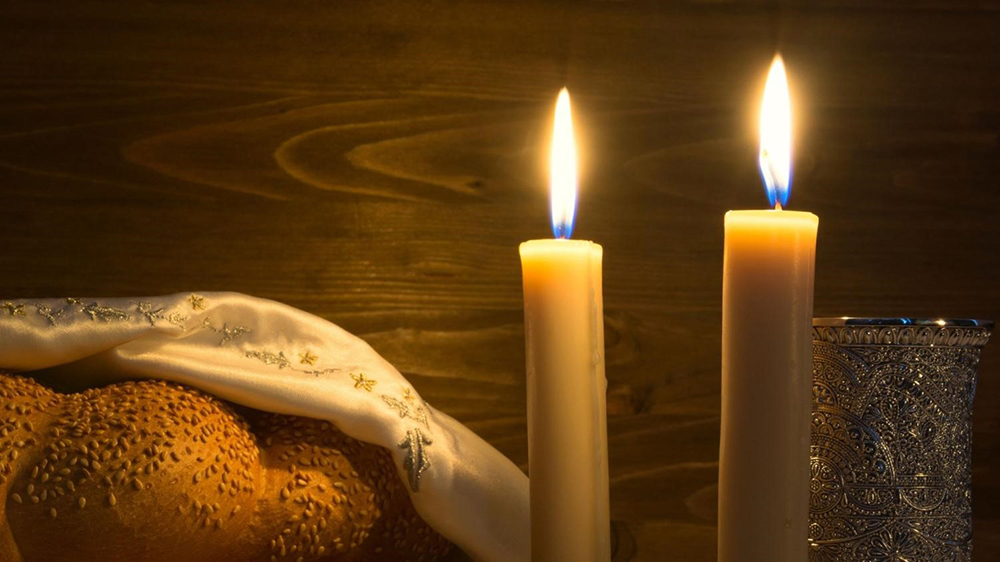
While not observant, Omer turned to HaShem in captivity. When Itai was released, he spoke of how he and Omer longed for a Shabbat dinner. Miraculously, one of the terrorists gave them a half-filled bottle of grape juice. They counted the days. Every Friday night, they covered their heads with toilet paper (for lack of anything else). Omer would recite Kiddush, and they would sip a little grape juice. A ritual Omer continued, even after Itai’s release. Omer said the grape juice lasted and lasted…. Like the oil of the menorah that kept on burning and burning.
At night, the electric would often be cut off. Pitch black. At times, the captors would give Omer a flashlight. While he used it on weeknights, come Friday night – leil Shabbos – Omer refrained from using it. To the best of his ability, Omer kept Shabbos.
During the time of his captivity, Omer’s mother, Shelly, paved her own path connecting to HaShem by keeping Shabbos. She said about her son, Omer, “They took his freedom, but they couldn’t take his soul.”
Keith Siegel, a sixty-five year-old American-Israeli, was held in captivity for 484 days. He tells of being given moldy pita bread, unfit for human consumption. Of being forcefully kicked in the ribs, spat upon, and called a dog for no reason.
It was under these deplorable conditions that Keith found strength by connecting to HaShem. Each day, he said the only prayers he remembered from his youth, Shema Yisroel, and the brocha of hamotzi. When he returned, Keith spoke about the terrorists trying to convince him that Islam was the true religion. He refused to listen, and became stronger in his faith. Upon being reunited with his family, his wife asked what he would like for a Shabbat dinner. He asked for two things, “a yarmulke and a Kiddush cup”.
Ohad ben Ami, a fifty-six year-old hostage, was freed after 16 months in captivity. He returned gaunt and frail. He said “I really felt that there was Someone Above watching over me. What unites us is faith in G-d. Only faith gives us strength at times when we feel crushed.”
Ohad’s request…. To learn how to make havdallah.
This is just three. Three amongst many who have made life changes since October 7, creating a strong bond between them and HaShem.
In this week’s parsha, we read of HaShem’s instructing Moshe to tell Bnei Yisroel, “Observe my Shabbos, for it is a sign between Me and you for all generations.” For all generations, whether in the palace of Achashverosh or the tunnels of Gaza, the sign is ever present.
As we sing in the Shabbos zemiros, “Ki eshmerah Shabbos, Keil yishmereini, If I will safeguard the Shabbos, HaShem will safeguard me.” A promise from HaShem to His beloved people.
Shabbat Shalom!
Chaya Sora
Chaya Sora can be reached at [email protected]
This article was written L’zecher Nishmas/In Memory Of HaRav Meshulem ben HaRav Osher Anshil HaLevi, zt”l and Rebbetzin Esther bas HaRav Avraham HaLevi, zt”l