



|
Getting your Trinity Audio player ready...
|
By: Menachem Posner
- The Maccabees Are the Heroes of Chanukah
The Maccabees were Jewish fighters who led the revolt against the Syrian Greek ruling class, who had suppressed Jewish religion in an effort to spread their Hellenistic customs and idolatrous beliefs. The Maccabee victory, and the subsequent miracle of the oil burning in the Temple menorah for eight days instead of one, is what we celebrate every year during the eight-day holiday of Chanukah.
- The Name “Maccabee” Is Not Mentioned in the Talmud
The Talmud speaks little of Chanukah. The one time the story is briefly told, the leaders of the group (and their descendants) are referred to as the House of Chashmonai, the ancestral family of Matityahu, the pious and brave priest who led the group until his passing.
- The Maccabees Were From Modiin
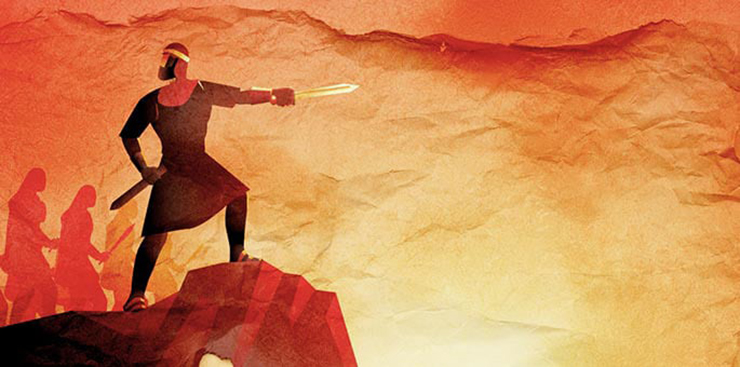
Matityahu began his revolt in the village of Modiin, where the Greeks tried to compel him to publicly engage in idol worship. When he refused, violence broke out and a group of Jews ended up taking refuge in caves among the surrounding hills.
- The Maccabees Originally Refused to Fight on Shabbat
According to Josephus, after the Maccabees refused to comply with the Greek demands, they were attacked on Shabbat morning. Devoted to Torah, the Jews refused to fight back, and around 1,000 people, including many women and children, died from fire and smoke.
After that, Matityahu made it clear that Judaism is a religion of life, and that the Shabbat laws are temporarily suspended to save a life.
- Matityahu Had Five Sons
Matityahu’s five sons—Yochanan, Yehuda, Shimon, Elazar, and Yonatan—joined the struggle. After a year of leadership, as the elderly Matityahu neared his end, he exhorted the group to follow Shimon’s guidance in religious matters and to appoint Judah as their military leader.
Yehuda Maccabee (Judas Maccabeus) was one of the leaders of the Jewish guerilla freedom fighters who drove the Seleucid Greek occupiers out of Judea in 139 BCE.
Yehuda was the eldest son of Mattathias (the son of Yochanan), the High Priest, who instigated the revolt by killing the Greek official Nikanor after a pig was slaughtered in the Holy Temple.
Yehuda and his brothers were fierce fighters, described by the Greek General Bagris (Bacchides) as “stronger than lions, lighter than eagles, and faster than bears.”
According to the ancient scroll of Antiochus, the brothers were not just expert fighters; they took their strength from fasting and praying, beseeching G‑d to send them success.
Mattathias compared his sons to historic Jewish heroes. For Yehuda, he chose Judah the son of Jacob, who is associated with the mighty lion. Like a lion, Yehuda fought fearlessly for the freedom to serve G‑d and live in accordance with the Torah.
But, in the thick of a victorious battle, Yehuda was killed. The surviving brothers were disheartened, knowing that his strength had been equal to all four of theirs combined. Heartbroken himself, the elderly Mattathias encouraged his sons to continue fighting, even offering to go out to battle with them.
Through the bravery of the Maccabees—inspired by Yehuda—the Greeks were finally ousted from the land, and the Jews celebrated their victory with the holiday of Chanukah.
- Many Meanings Are Ascribed to the Name Maccabee
The term Maccabee, which was apparently first only associated with Judah, may be related to the Hebrew word for “hammer” or the Greek words for “strong” or “fighter.”
Perhaps the best-known explanation is that the word “Maccabee” comprises the initial letters of a verse the Jewish people sang after G‑d split the sea: “Mi kamocha ba’eilim Hashem (מי כמוך באילים י׳), “Who is like You among the mighty, O G‑d.” It is said that this phrase was the Maccabean battle cry, written upon their banners and shields.
The name is commonly spelled מכבי, but sometimes מקבי as well. What does it mean?
Who Is Like G‑d?” It is said that this phrase was the battle cry of Maccabees, written upon their banners and shields.
Some explain that the word “Maccabee” is related to the Greek word meaning “strong” or “fighter.”
Others explain that it comes from the Hebrew word for “hammer,” makav, either because Judah was the “hammer of G‑d,” his features somewhat resembled that of a hammer, or because his earlier occupation was that of a blacksmith.
Some suggest that it comes from the word Hebrew word mekabeh, which means “to extinguish.” The Maccabees endeavored to snuff out the fire of the Greeks, which spread death and desolation throughout the land of Israel.
- The Maccabees Were Deeply Religious
Matityahu and Judah were not merely fighting for political or national freedom. They saw themselves as fighting for G‑d Himself. Josephus tells of many instances where they prayed to G‑d for success in their battles. In one instance, he records Judah telling his troops that victory depends not on the number of soldiers but on their faithfulness to G‑d. He bolstered his arguments with examples from Jewish history where a few pious Jews managed to vanquish thousands of enemies.
- They Used Guerilla Tactics
At times, the Maccabees faced overwhelming odds, vastly outnumbered and out-weaponed by the massive armies of Greek soldiers and mercenaries sent their way. Yet, with a prayer on their lips, they managed to surprise the enemy and send them fleeing in fear time and time again.
War in Judaism is a complex issue. Some wars were Divinely ordained, for reasons known to G‑d alone. Others were necessary for self-defense or other purposes. The ultimate goal, however, is for the world to be at peace, as Isaiah prophesized: “He [Moshiach] shall judge between the nations and reprove many peoples, and they shall beat their swords into plowshares and their spears into pruning hooks; nation shall not lift the sword against nation, neither shall they learn war anymore.”
- They Restored the Holy Temple in Jerusalem
After decisively routing the Greeks from the Land, Judah led his band of battle-hardened men to Jerusalem to restore the Holy Temple to its sacred use, which the Greeks had discontinued. They were met by a sorry sight: broken walls, overgrown courtyards, and pagan idols in G‑d’s home. On the 25th day of Kislev (the first day of Chanukah), they rededicated the Temple, lit the menorah, offered the showbread, and resumed regular worship.
While the Temple was both a place of spiritual enlightenment and animal sacrifice, there is a dispute as to what its primary purpose was. According to Maimonides, it was most basically defined as “a house for G‑d that is prepared for the offering of sacrifices.” According to Nachmanides, “The main object… is realized in the ark, as G‑d says to Moses, ‘I will commune with you there, speaking to you from above the ark’s cover…’” In other words, the main purpose of the Temple was a dwelling place for the Divine Presence.
- G‑d Performed a Miracle for Them
As recorded in the Talmud, the Maccabees found just enough pure oil in the Temple to kindle the menorah for a single day. As they had done so many times before, they threw reason to the wind and placed their trust in G‑d. They lit the menorah, and a miracle occurred: the oil burned for 8 days until more could be obtained.
They declared that these 8 days be celebrated as the Festival of Lights, commonly known as Chanukah (“dedication”).
- Their Descendants Should Not Have Become Kings
The Chashmonaim took for themselves the throne of kingship and establish a monarchy. This was a grievous mistake, since they were Levite priests and G‑d had already promised that only the descendants of David (from the tribe of Judah) may be appointed to the throne (see II Samuel 7:12–15). Indeed, they were eventually usurped by Herod, an Edomite, who killed the Hasmonean King Antigonus and took the throne for himself.
- Judah Continued to Battle
Even after he successfully trounced the Greek armies, Judah continued to fight off invaders from near and far. Sadly, he died courageously in battle and was laid to rest in Modiin.
- Chanukah Has Several Great Female Heroes
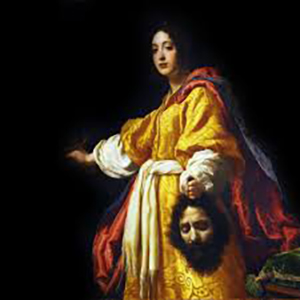
Jewish lore tells the story of the brave Judith, who enticed the Greek general Helifornes with cheese and wine before decapitating him, thus saving her townspeople from death. And then there is the story of Chanah, who encouraged her seven sons to die rather than cave to the Greek demands that they worship idols.