



|
Getting your Trinity Audio player ready...
|
By: Chabad.org Staff
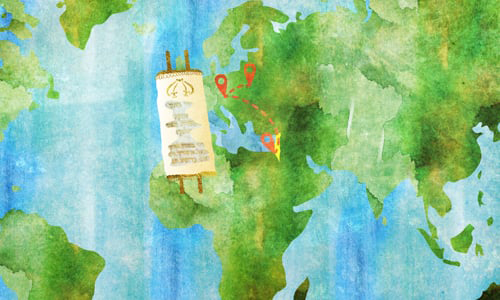
The Three Weeks is an annual mourning period that falls out in the summer. This is when we mourn the destruction of the Holy Temple and our launch into a still-ongoing exile.
The period begins on the 17th of the Hebrew month of Tammuz, a fast day that marks the day when the walls of Jerusalem were breached by the Romans in 69 CE.
It reaches its climax and concludes with the fast of the 9th of Av, the date when both Holy Temples were set aflame. This is the saddest day of the Jewish calendar, and it is also the date that many other tragedies befell our people.
Observances:
There are various mourning-related customs and observances that are followed for the entire three-week period (until midday of the 10th of the Hebrew month of Av, or—if that date falls on Friday—the morning of that day). We do not cut our hair, purchase new clothes, or listen to music. No weddings are held.
The 17th of Tammuz
17 Tammuz is a fast day, on which we refrain from eating and drinking from dawn to nightfall. The fast commemorates five tragic events that occurred on this date, including Moses breaking the Tablets and breaching of the walls of Jerusalem.
The Nine Days
The final Nine Days of the Three Weeks are a time of intensified mourning. Starting on the first of Av, we refrain from eating meat or drinking wine, and from wearing freshly laundered clothes.
The 9th of Av
Nine Av is a more stringent fast than 17 Tammuz. It begins at sunset of the previous evening, when we gather in the synagogue to read the Book of Lamentations. Besides fasting, we abstain from additional pleasures: washing, applying lotions or creams, wearing leather shoes, and marital relations. Until midday, we sit on the floor or on low stools.
The Holy Temple
The Holy Temple (Beit Hamikdash) was a large structure that was the nucleus of Judaism, its most sacred site. It stood atop Jerusalem’s Mount Moriah. Our people would stream there three times a year to bring sacrifices and interface with the Divine.
The first Beit Hamikdash was built by King Solomon in the year 833 BCE, and destroyed by the Babylonians in the year 423 BCE. The second Beit Hamikdash was completed in the year 349 BCE by Jewish returnees from the Persian exile, renovated by King Herod in 19 BCE, but ultimately destroyed by the Romans in 69 CE, when the current galut (exile) began.
For nearly 2,000 years, there has been no Holy Temple in Jerusalem. Yet, it is an axiom of Jewish belief that the Temple will be rebuilt in Jerusalem. Known as the Third Temple, it will be built according to the prophecies of Ezekiel.
The Inner Message
There is more to the Three Weeks than fasting and lamentation. Our sages tell us that those who mourn the destruction of Jerusalem will merit seeing it rebuilt with the coming of Moshiach. Furthermore, through learning about the structure, function and significance of the Holy Temple at this time of year, it’s as if we are actually rebuilding it.
May that day come soon, and then all the mournful dates on the calendar will be transformed into days of tremendous joy and happiness.
