



|
Getting your Trinity Audio player ready...
|
By: Tzivia Greenbaum
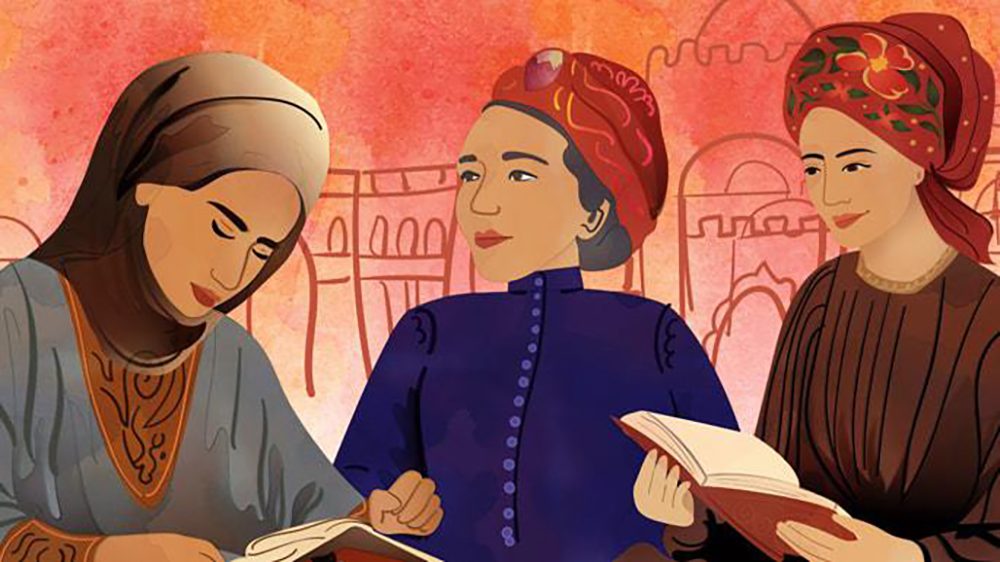
Bat Shmuel HaLevi, Osnat Barzani, and Flora Sassoon—these three Jewish women from the land of Bavel (Babylonia, or modern-day Iraq), whose lives spanned a period of almost 1,000 years, are united by their remarkable devotion to Torah study and their outstanding contributions to their communities and to the continuity of the Jewish people.
The Jews of Bavel
The ancient Jewish settlement in Bavel began when King Nebuchadnezzar exiled King Jehoiachin of Judea to Babylon, along with nobles, warriors, and Torah scholars, in the 5th century BCE.1
It produced outstanding scholars such as Ezra the Scribe and Hillel the Elder, who bolstered and restored tradition in times of severe crisis during the Second Temple period.2
The authoritative Talmud Bavli was compiled there 700 years later, and further on, the academies of the Geonim dominated the Jewish Diaspora with their halachic guidance.
In recent centuries, the yeshivot of Bavel produced leading lights like the great scholar Chacham Yosef Chaim of Baghdad (the Ben Ish Chai) and about half the Sephardic Chief Rabbis of Israel.
Ultimately, economic migration in the 19th century and the violent upheavals of the 20th led to its dispersion. Read on to gain a glimpse into the lives of three remarkable women who helped guide this ancient Jewish community.
Bat Shmuel HaLevi (12th Century)
After centuries as the center of Jewish scholarship, Bavel faded, and new centers of Jewish learning emerged in Spain (Sepharad), North Africa, and Northern Europe (Ashkenaz).
In the 12th century, Rav Shmuel ben Ali HaLevi of Baghdad led the effort to revive the great Torah tradition to which he was heir, leading his yeshivah for 30 years. He carried on a notable (and sometimes fractious) correspondence with Maimonides and other international scholars.
A German visitor to Baghdad, Rabbi Petachya of Regensburg, wrote in his travel journal:
“Rav Shmuel has no sons, but only one daughter. She is an expert in the Talmud. She gives instruction in the Written Torah to young men, through a window. She, herself, is closed within the building.”
A poem mourning the passing of “the daughter of Rav Shmuel HaLevi” was written by the poet Eliezer ben Yaakov HaBavli, but it contains no more biographic details.
Her name has been lost to history, and all that is preserved is a glimpse through the window behind which a woman sat, passionate about Torah and inspiring the youth of her community with their treasured heritage.
Osnat HaTannait (16th Century)
In the late 16th century, the Jewish communities of Northern Iraq3 were facing their own decline in Torah education. In response to the spiritual crisis, Rav Shmuel ben Netanel HaLevi Barzani dedicated himself to building a Yeshivah in the capital of Mosul that would serve as a source of spiritual nourishment. Students from all over flocked to his Yeshivah, but his greatest pupil was his own daughter, Osnat (Aseneth), whom he personally tutored in Tanach, Talmud, and likely Kabbalah.4
After the passing of her father and then the untimely death of her husband, Rav Yaakov Mizrachi, Osnat was left with two young sons and all the responsibilities for the yeshivah lay on her shoulders. A fundraising appeal that she wrote to local communities displays a beautiful, poetic Hebrew replete with learned references, and gives a window into her life experiences:
“… have mercy on me on account of the grave of my father, of blessed memory, so that their Torah should not go to waste, for I have remained teaching Torah, moralizing, and lecturing. And I am in such straits; I have nothing to sell, and no older son, and no messenger that could circulate …
“… between the paths of the sages I was raised, indulged by my father, of blessed memory, and he taught me no craft besides the work of Heaven. He also made my husband, of blessed memory, swear not to have me do any trade. In the beginning [my husband] was preoccupied by his in-depth study and had no free time to teach the students, so I taught them in his place …”
Osnat was highly regarded by Kurdish Jews, who titled her with the female version of the Aramaic title for teacher: Tannait. For generations, they retained traditions about her wisdom, piety, and ability as a miracle worker.
When the community in Baghdad asked her to send her most successful student for a Rabbinic position, she sent her own son Shmuel. Thanks to her, the Barzani family counts 22 generations of rabbis, shochtim and judges, who are all proudly related to this learned and courageous woman.
Rabbanit Flora Sassoon (19-20th Century)
As modernity arrived, many Jews from Bavel sought to migrate, on the run from hostile rulers and in pursuit of business opportunities.
Baghdadi outposts sprung up all over the Far East, and large trade empires were established, linked by family and faith. Fareha-Flora, a member of the legendary Sassoon dynasty in Bombay, India, was born to Aziza and Yechezkel Gabbai in 1859. Remaining loyal to the Torah-learning tradition of Bavel, her parents hired a qualified Torah scholar from the Baghdadi community to instruct their 12 children.
Flora was an especially gifted student, spending countless hours being tutored by great scholars, even after her marriage and the birth of her three children. Jewish fundraisers who visited India would report back in amazement about the woman who was fluent in Tanach, Midrash, Gemara, Halacha, Jewish history and philosophy, and was also a paragon of piety and kindness.5
Flora Sassoon’s life could fill its own book. She spoke six languages and was a keen businesswoman. When her husband Solomon Sassoon passed away in 1894, she took over his trading company, becoming the first woman to run an inter-continental business.
Wherever she traveled, she would take along a personal shochet who provided her with kosher meat. She was renowned for her philanthropy and social activism, and gained a reputation as a generous and regal hostess at her lavish kosher banquets.
It is as “Rabbanit” that Flora was addressed by her many correspondents, who were often appealing to her generosity to support their yeshivot, in awe of the woman who could carry on a halachic discussion with learned rabbis.
Flora and her family held a warm correspondence with the famed Chacham Yosef Chaim of Baghdad, who, upon learning that she attended a Talmud shiur delivered by the Chief Rabbi of England, was intrigued that Londoners would be able to learn Gemara on her level! (The Ben Ish Chai was no stranger to female scholarship; he recorded in his halachic writings that his grandmother would learn 18 chapters of Mishnah daily.6)
Her correspondence with Chacham Yitzchak Nissim of Baghdad, later Sephardic Chief Rabbi of Israel, was included in his collection of halachic responsa.
After moving to England for the medical care of her daughter Mazal, Flora arranged for Rabbi Eliyahu Dessler, the future Mussar teacher, to tutor her son David (an expert on Jewish manuscripts) and daughter Rachel.
She researched and wrote articles for Jewish publications and gave many lectures for Jewish causes, including being honored with the opening speech at the Rabbinical College in London.
After a lifetime of activity, with extensive impact, Rabbanit Sassoon passed away in 1936. Ten years later, she was moved to Mount of Olives in Jerusalem.
