



|
Getting your Trinity Audio player ready...
|
By: Yaakov Raskin
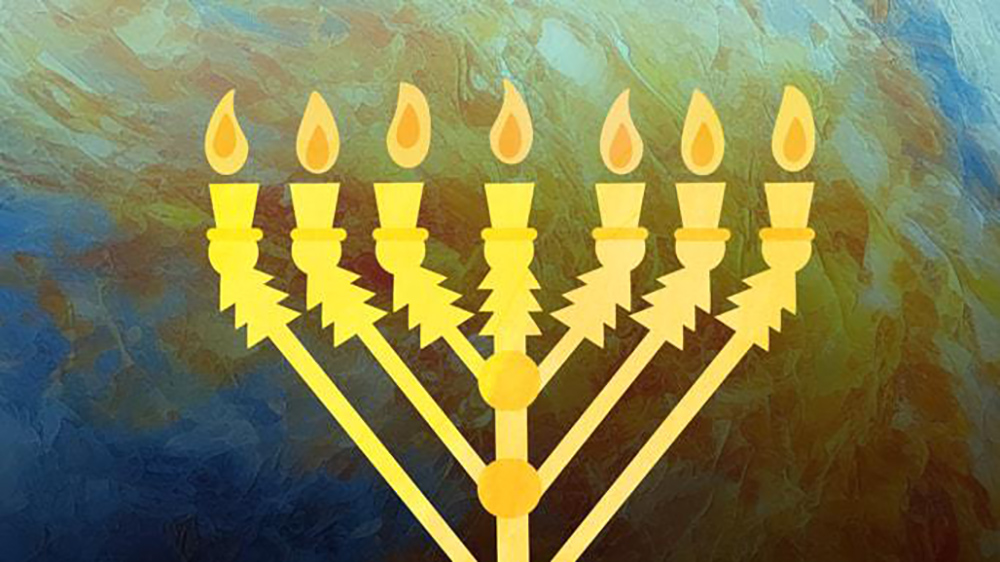
The Temple Menorah (“lamp”) was a 7-branched golden candelabra G‑d mandated to be placed in the Tabernacle (and later the Holy Temple in Jerusalem).1 It was lit every day, using wicks placed into seven cups of the finest olive oil.2
The Position of the Menorah
The Menorah stood in the Heichal (sanctuary), in the outer room (the Kodesh), which led to the inner chamber (Kodesh Hakodashim) and the Holy Ark. The Menorah was placed in the north of the room, to the left when entering from the main door on the east.
The orientation of the Menorah is debated in the Talmud.3 Rabbi Judah the Prince (Rebbi) argues that it ran the length of the temple, from east to west, whereas Rabbi Eliezer ben Rabbi Shimon says it ran the width of the temple, from north to south, a view codified by Maimonides.4 5 6
The Menorah Lighting
Each morning,7 in the Temple in Jerusalem, a priest8 started the process of kindling the Menorah’s 7 lamps9 using wicks and a half-log measurement of high-quality olive oil in each cup.10 This was enough to last through the longest winter night until the next morning.
The lamps were lit from wick to wick. The kohen would take a wick that was lit and place it next to the next lamp to light it11. The process would start from the western Candle, the Ner Hamaaravi.
A procedure known as hatavah was done each morning, 12 but exactly what this service consisted of is subject to debate.
According to Maimonides hatavah includes kindling: 13 “Of the 7 lamps, the kohen would clean and kindle 5 of the lamps in the morning. Afterward, the priest would perform another service, after which he would return and kindle the remaining 2 lamps. This was done to elongate the process and give it more prominence.”14
Others15 teach that Hatavah only involves preparing the lamps, but does not include the lighting. Thus, in the morning, the kohen would extinguish 6 of the 7 lamps. The kohen would then clean 6 lamps and add new oil but not light them. Thus there was one candle (called the “western lamp,” whose identity we shall address) that remained lit. He would leave this candle lit and add oil to it. In the afternoon, he would return, light the 6 flames from the western flame, and then the western candle would be cleaned, filled with new oil, and then relit.
The Western Lamp
The Talmud teaches: “The western lamp should have the same amount of oil as its neighbors. With it you should light the others, and with it you shall finish.”16
Accordingly, this lamp was already burning when it was time to light the other candles, and it was only extinguished, prepared, and relit after the rest of the lamps were lit for the day.
Which one was “the western lamp”?
Maimonides (in Yad Hachazakah) explains that the Menorah was placed from north to south, which means no flame was closer to the west than the others. He, therefore, attributes the designation to the central flame, as it was the only wick which was made to face the Holy of Holies in the west.17 18.
