



|
Getting your Trinity Audio player ready...
|
How did South Florida become one of the largest Jewish communities in the world?
By: Rabbi Menachem Levine
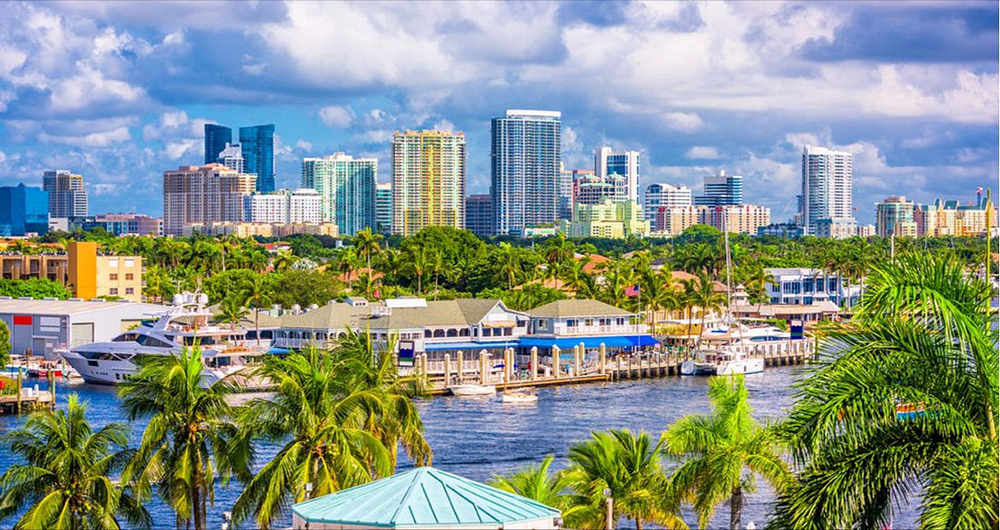
The Jewish population of South Florida is about 650,000. It has the third largest concentration of Jews in the country and the single largest concentration of Jews (13 percent of the total population of South Florida) outside of Israel.
The story of Florida is a surprising one, with visions becoming dreams and antisemitism in places we would not have expected. Here is the history of one of the most popular Jewish vacation spots, which is home to growing, vibrant communities in Dade, Broward, and Palm Beach counties.
Florida’s Early History
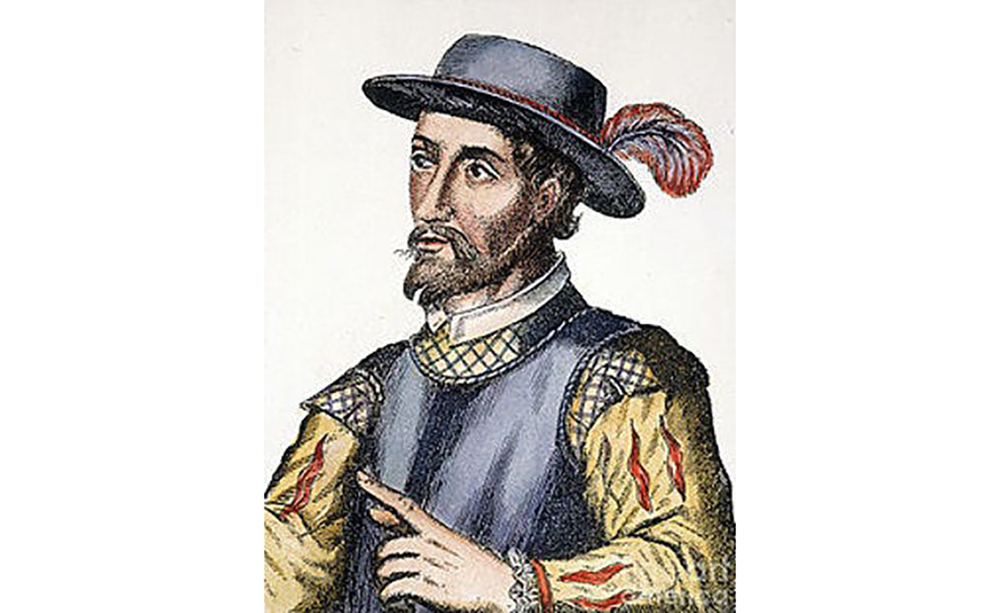
In 1513, Juan Ponce de León discovered Florida for Spain, making it the first American territory to be discovered and settled. Under the Spanish Inquisition, only Catholics could live in Florida, although it is believed that Jewish Conversos were among the early settlers and soldiers of St. Augustine.
Under the Treaty of Paris in 1763, England acquired Florida from Spain, and Jews were permitted to reside there. The first-recorded Jews to settle in Florida, Alexander Solomons, Joseph D. Pallaccios, and Samuel Israel, arrived in Pensacola.
More Jews moved to northern Florida over the next few decades, though the Jewish population still comprised of only a dozen individuals.
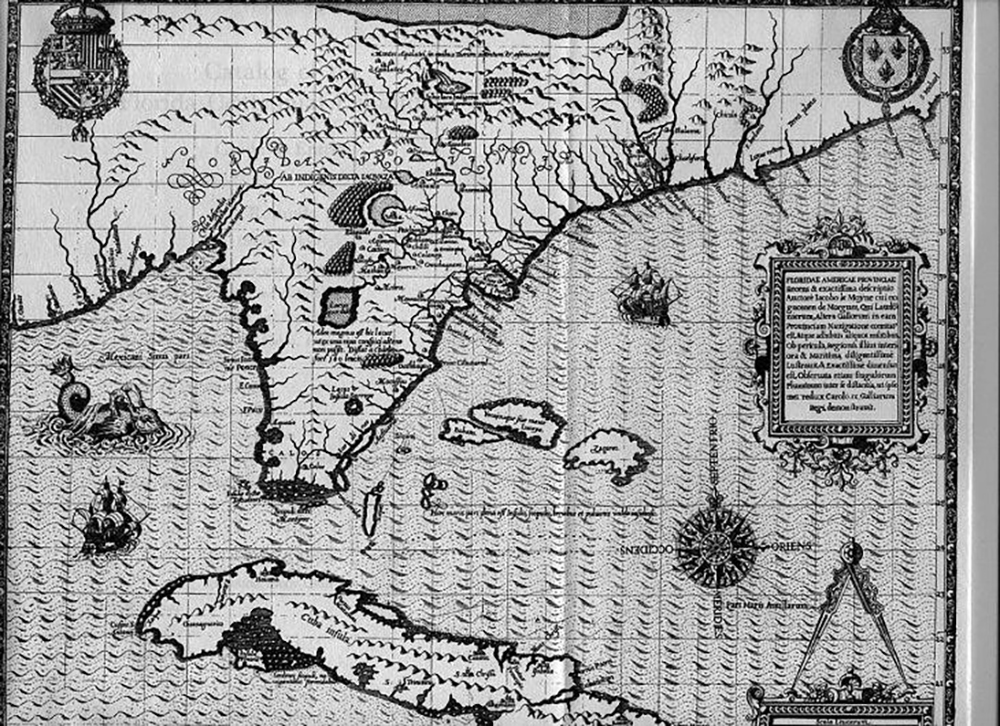
In 1783, England returned Florida to Spain. Once again under the rule of the Inquisition, Spain ordered a census that revealed Jews, including a Polish Jew, David Moses, who had a hide store in St. Augustine. Remarkably, Spain decided to allow the few Jews to remain as the area needed settlers.
Florida Becomes an American Territory
Florida became an American territory in 1821, and between 30 and 40 Jews lived in the northern part of the state.
Samuel Myers, a lawyer, settled in Pensacola in 1821. In 1822, his wife, Louisa, gave birth to Virginia Myers, the first documented Jewish child born in Florida.
A Vision for Florida: Moses Elias Levy
Moses Elias Levy was born in Morocco in 1782 to an influential Jewish merchant who served in the sultan’s court. Levy was fluent in five languages and was a man of many talents. He was a successful merchant, a social activist, an abolitionist, and a supporter of universal education.
In 1818, Levy began work on an ambitious project. His vision was to create a Jewish settlement that would give oppressed Jews from Europe an agrarian community where they could freely practice their religion and preserve their culture.
He purchased over 50,000 acres in Alachua County, Northern Florida, in 1820, which eventually grew to 100,000 acres. He constructed three properties: A sugar cane plantation on the Matanzas River, the Hope Hill plantation in present-day Astor, and Pilgrimage, a few miles from Micanopy. Levy’s dream started to come to fruition in 1823 when his business partner, Frederick Warburg, arrived with 21 settlers.
However, the community lasted only 13 years before the Second Seminole War broke out in 1835. At that point, the community dispersed.
Although it was a financial failure for Levy, it was successful in that it was the first Jewish farming settlement in the United States and created possibilities for persecuted Jews from Europe. The Jewish colony he built in Micanopy is today home to the University of Florida. In an interesting turn of history, this University has the largest Jewish population of any public university in the United States.
Florida becomes a State
On March 3, 1845, Florida became the 27th state of the United States. Out of a population of 66,500, there were fewer than one hundred Jews living there.
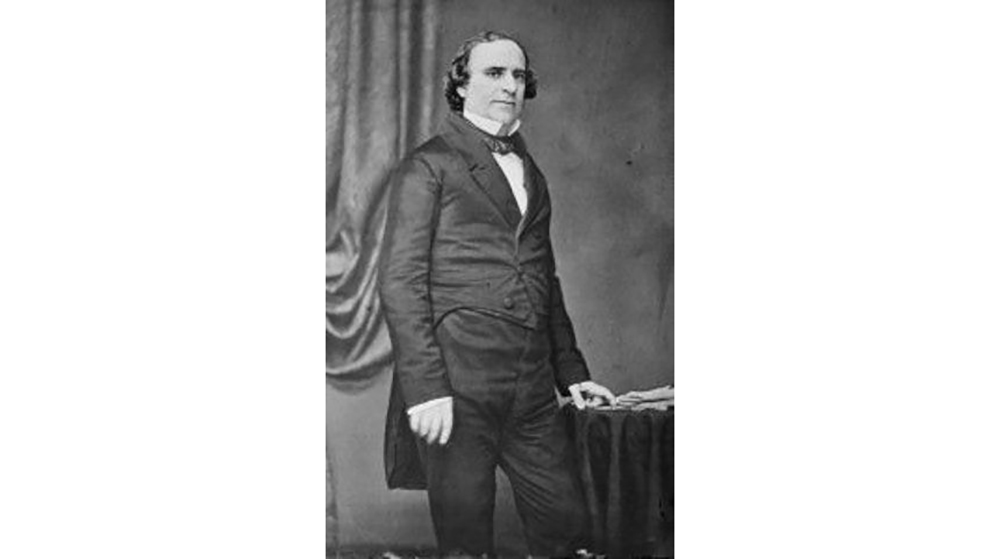
Yet their numbers did not diminish their influence. Moses Levy’s son, David Levy Yulee, served as the first US Senator from Florida, making him the first Jew to serve in the US Senate. He is known as the Architect of Florida Statehood, having helped write the state’s Constitution and organizing the first cross-state railroad in 1853.
Even his very name remains associated with the state. Levy County, on the Gulf Coast in Northwest Florida, and the town of Yulee in Nassau County, are both named in David Levy Yulee’s honor.
In the second half of the 19th century, Florida’s Jewish population continued to slowly grow, and Jacksonville was at the center of that growth. It was there that a Jewish cemetery, the first Jewish institution in Florida, was established in 1857, and the first synagogue was formed in 1876. By 1900, six congregations had been established in Northern Florida.
The Barrier to Jewish Migration from Northern to Southern Florida: Antisemitism
South Florida’s Jewish community lagged behind the Northern and Central Florida Jewish communities for decades. In 1928, roughly 40 percent of the Jewish population of 10,000 lived in Jacksonville. Yet in the second half of the twentieth century, Jews moved south, building communities in Miami and Miami Beach, and then spread to Broward and Palm Beach Counties.
The primary reason for the small Jewish population in South Florida was the very visible antisemitism.
It was common to see signs in Miami and Miami Beach that read “Gentiles Only” or “No Jews or Dogs.” Wealthy and influential developers, including Highway builder and Entrepreneur Carl G. Fisher, refused to serve Jewish customers, and Oil and Railroad Mogul Henry Flagler (1830-1913) prohibited land sales and hotel lodgings to Jewish clients.
By the 1930s, advertisements for some of Miami Beach’s oceanfront hotels said, “Always a view, never a Jew.”
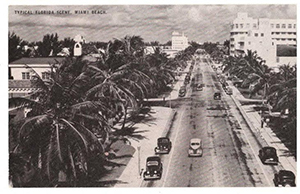
In Miami Beach, Jews were only permitted to live south of Fifth Street, as developers placed restrictive covenants in their land deeds prohibiting the sale of Miami Beach lots to Jews north of Fifth Street. Resourceful Jews made purchases of modest hotels and apartments on property south of Fifth Street, but the overall feeling was one of antisemitism.
The discriminatory laws began easing up in the 1930s and officially ended in 1949.
Miami’s Jewish Foundation
The first Jew to arrive in Miami was Samuel Singer, who migrated from northern Palm Beach in 1895.
By 1896, Jews owned 12 of the 16 businesses in the pioneer town of Miami, and the Jews held religious services in Miami that year. Yet, when the city was damaged by fire and struck with a yellow fever epidemic, the community fell apart. By 1903, the Jewish population had declined to a single person: Isidor Cohen.
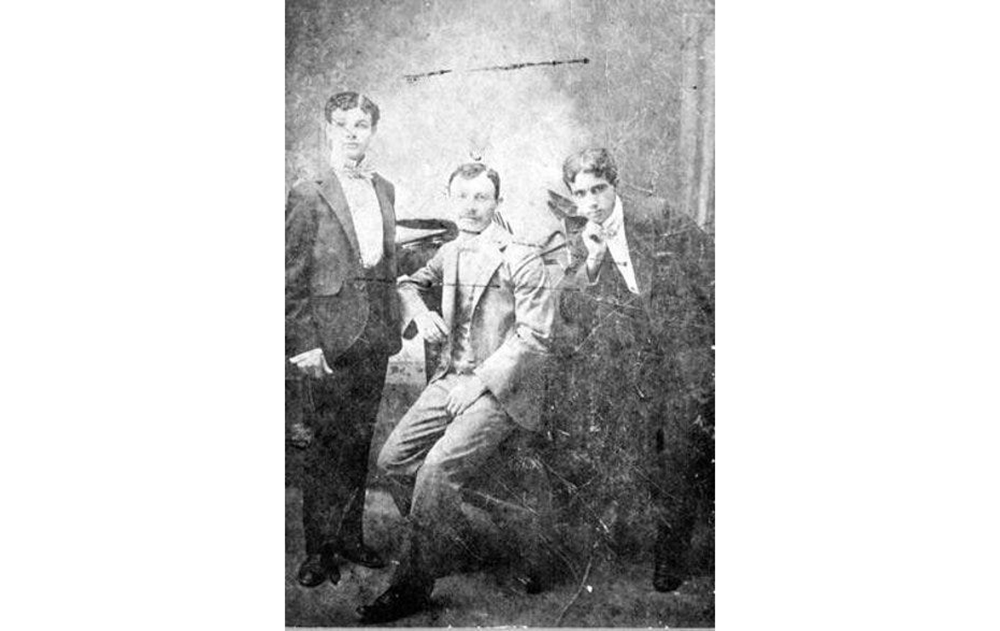
Three Jewish men, Miami, 1898. Isidore Cohen (center) is believed to be the first permanent Jewish resident of Miami. State Archives of Florida.
In 1904, Isidor Cohen married Ida Schneidman, and when they had a son in 1907, the first documented bris was celebrated in Miami. In 1913, the death of a Jewish tourist forced the still tiny Jewish community of 35 to create the first congregation and a cemetery.
Advertising, combined with abundant land, new roads, automobiles, and commercial aviation, created a tourist and real estate boom in Miami in the 1920s. The population of 100 Jewish families grew to 3,500 during this period of prosperity. Yet, due to the Great Miami Hurricane of 1926, the stock market crash, and the failure of five local banks, the city’s population decreased significantly again.
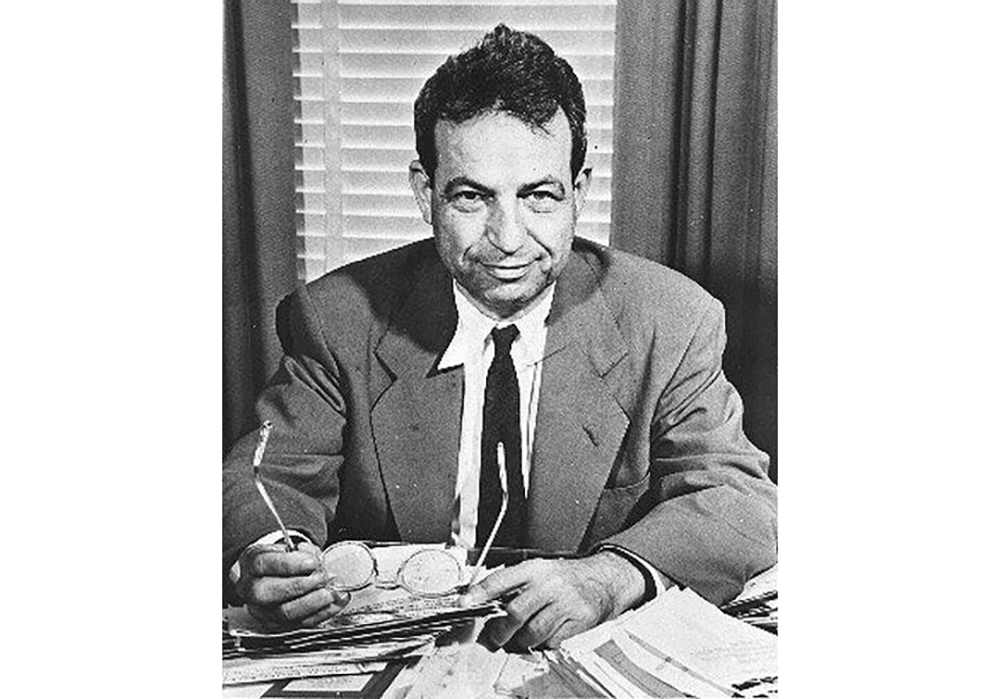
In the mid-1930s, Jewish Miami began a steady recovery. The hotel, banking, and construction industries flourished thanks to Jewish contributions. The post-war economic boom brought additional tourists and settlers to Miami, many of whom were Jews. By 1950, there were 55,000 Jews in Miami, and in the coming decade, almost ten thousand Jews arrived yearly.
In 1952, Abe Aronovitz became Miami’s first (and, to date, the only) Jewish mayor. In 1963, the first two Jews from South Florida were elected to the state legislature, and in 1973, William Lehman (1913-2005) was elected to the United States House of Representatives for the first of 10 terms. In this period, large groups of Jews began moving to North Miami and North Miami Beach.
Initially, Jews were economically based in tourism, building industries, or real estate. Eventually, many began moving into medical, legal, and financial professions, and these trends continue to this day.
Miami Beach: Shtetl by the Sea
Despite its reputation for antisemitism in the early 1900’s, Jews started coming to Miami Beach hoping to benefit from the prosperity the city had become known for.
In the 1930s, restrictive barriers to Jewish land ownership began to be removed. As a result, large numbers of Jews purchased properties from debt-ridden owners desperate to sell them. The Miami Beach Art Deco buildings of the 1930s and 1940s – many designed, built, and operated by Jews – are architectural treasures.
By the 1970s, almost 80 percent of the population of Miami Beach was Jewish!
In 1949, the Florida Legislature passed a law ending discrimination in real estate and hotels, and the Jewish community’s development bloomed. By the 1970s, almost 80 percent of the population of Miami Beach was Jewish!
The Jewish influence on Miami Beach was tremendous. Jews were and are involved politically and in developing the tourist industry. Almost all the museums and arts organizations were started by Jews. Miami Beach has had at least sixteen Jewish mayors, including the father and brother of the former Israeli Ambassador to the United States, Ron Dermer.
Thanks to its beautiful weather, Miami Beach became a popular Jewish winter vacation spot, earning it the nickname “Shtetl by the Sea.”
Yet, in 1980, Miami Beach began to change with rising prices and changing demographics. This led many Jews to move north to Broward and Palm Beach counties, and in particular, Boca Raton.
Today, Miami Beach’s Jewish community has been bolstered by Jewish immigrants from Latin America, Russia, and Israel, as well as Orthodox Jews from the Northeast.
Surfside, which borders on Miami Beach, is currently the area’s most Jewish neighborhood. In fact, of its 6,000 residents, almost half are Orthodox Jews.
Broward County: The Little-Known Story of Sam Horvitz
By 1910, five years before Broward became a county, a Jew named Louis Brown arrived in Dania, the county’s first city. By 1923, seven Jewish families were living in Fort Lauderdale, and after a few more families moved there, the first Jewish service in Broward County was held on September 17, 1926.
The building boom in the area went bust in 1926, but the small Jewish community remained. By the second half of the 1930s, the area began to recover. The Jewish community also grew, and by 1940, there were 1,000 Jews in Broward County. Today, the city of Hollywood, in Broward County, has a robust Jewish community.
Few know the fascinating background: a Jewish family is largely responsible for the city’s growth.
In the 1920s, Sam Horvitz, a high school dropout from Cleveland, entered a contract to build sidewalks and streets for Hollywood. In the building bust of the late 1920’s, Sam purchased and eventually owned more than half the vacant land in the city. As the owner of over 25,000 lots, Horvitz began building and selling single-family homes.
