



|
Getting your Trinity Audio player ready...
|
By: Fern Sidman
On Sunday, the grounds surrounding the Ohel of the Lubavitcher Rebbe, Rabbi Menachem Mendel Schneers
The 31st yahrzeit, falling this year on Motzaei Shabbos Kodesh, added a profound layer of meaning to the commemoration. The VIN News report noted that for many, the repeating calendar alignment enriched the atmosphere of true ruchnius, drawing parallels between the Rebbe’s initial passing in 1994 and this year’s solemn observance. “It’s not just remembrance,” one Chassid told VIN News. “It’s a re‑awakening of the moment when the Rebbe’s light first left the world—but did not dim.”
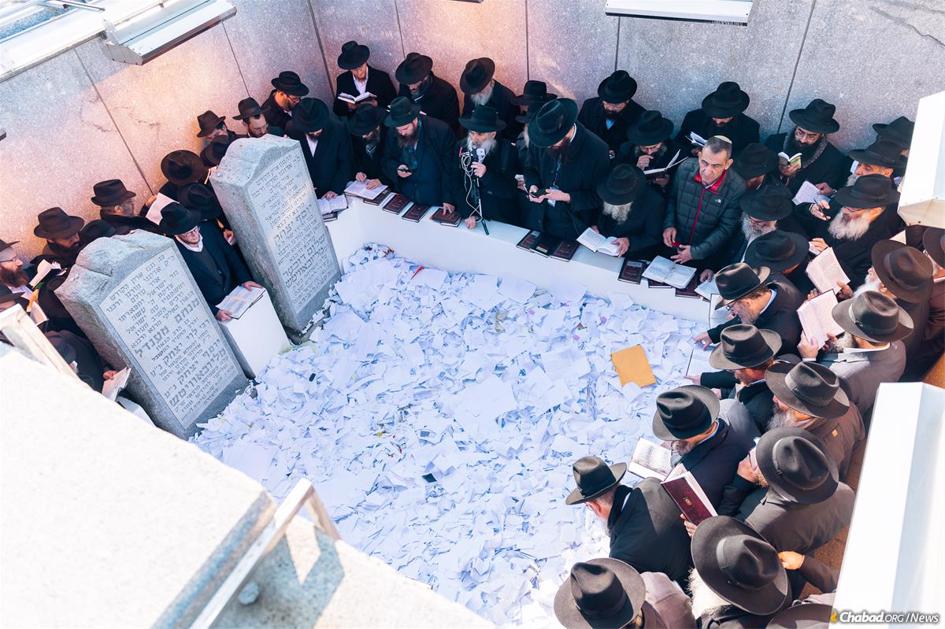
What began as a trickle late Saturday evening quickly transformed into a steady stream that persisted through dawn and into Sunday’s afternoon hours. VIN News’s coverage captured families with young children, elderly devotees, and even international visitors who had traveled great distances. Many paused at the threshold of the Ohel to recite tefillos, while others slipped written pidyonos nefesh—notes of personal supplication—into the cracks of the Rebbe’s resting place.
As the crowd ebbed and flowed, the hushed hum of tefillos mingled with the rustle of pages and murmured verses of Psalms, creating a sacred soundscape that stretched across the grounds.
In the face of such vast numbers, organizers implemented a meticulously planned route. VIN News reported that separate entrances and exits were designated for men and women, and a newly installed stone door now facilitates a smoother, more dignified departure from the Ohel. This infrastructural upgrade was part of a broader effort to enhance safety and spiritual decorum without diminishing the experience.
Security was similarly scaled for the magnitude of the event. The VIN News report described a joint operation involving the NYPD, federal law enforcement, and volunteer stewards. Officers discreetly directed foot traffic, while security cameras and designated emergency zones provided an additional layer of oversight—ensuring a tranquil, uninterrupted atmosphere for spiritual reflection.
Central to the Ohel pilgrimage is not merely the physical act of visiting; it is the tangible legacy of Rabbi Schneerson that continues to resonate. The report at VIN News emphasized how the Rebbe’s teachings echo across continents—his teachings embedded in the daily operations of thousands of Chabad centers worldwide.
Born in 1902 in Ukraine and assuming leadership in 1951, the Rebbe transformed Chabad-Lubavitch from a local Hasidic dynasty into the world’s most influential Jewish outreach movement. From remote villages in Siberia to cosmopolitan centers in New York, Chabad emissaries—shluchim—
VIN News reported that there are over 5,000 Chabad centers across more than 100 countries today. The Ohel has become a focal point not only for spiritual renewal but also for charitable inspiration. Many pilgrims, VIN News observed, leave the Ohel with renewed purpose—to volunteer, donate, or teach. The prayer notes, carried away by organizers after the event, often arrive at global Chabad centers to be read aloud and prayed over by emissaries far from Queens.
The scale and solemnity of this year’s gathering necessitated an unprecedented security presence. VIN News chronicled the coordinated effort: NYPD officers posted at key entrances, federal agents conducting surveillance, and a network of community volunteers guiding streams of visitors. Medical tents stood ready, and evacuation lanes remained clear.
“For an event rooted in quiet prayer, the preparations were nothing short of strategic,” a law enforcement source told VIN News. Their presence was visible yet respectful—ensuring public safety without intruding on the sacred experience.
VIN News’s interviews with attendees revealed deep personal connections:
A father from Mexico City shared that he had brought his three young daughters to pray for safe travels and spiritual sustenance. “The Rebbe taught love of neighbor,” he told VIN News, “and here, that love is in every note and step.”
An elderly couple from Jerusalem remarked that they had visited the Ohel annually since the Rebbe’s passing. “E ach year feels new,” the husband confided. VIN News observers noted their tears and firm clasp of each other’s hands—a testament to enduring devotion.
A young Chassid from Moscow spoke of his role as a volunteer steward. He described directing women to their entrance, then pausing to recite the Rebbe’s favorite Igrot Kodesh passages. “It’s service and learning,” he said, reflecting the dual legacy of action and scholarship highlighted in the VIN News report.
The VIN News report emphasized that the impact of Gimmel Tammuz extends far beyond this one-day event. Pilgrims said their visits rekindle commitments to mitzvah observance, community building, and supporting Israel. Many described plans to deliver meals to the needy, tutor Jewish children, or strengthen family and faith bonds.
Indeed, this mobilization of human resources—emotional, educational, and financial—is the essence of the Rebbe’s enduring mission. VIN News documented these ripple effects, pointing to new Chabad schools, mental health hotlines, and global Jewish learning initiatives as tangible outcomes of his spiritual ethos.
As the day wound to a close, cleanup crews and volunteers quietly moved through the grounds, collecting the dozens of pidyonos, tidying prayer areas, and maintaining the sanctity of the site. VIN News’s reflections underscored that the Ohel’s significance endures not because of annual attendance but because it channels a living legacy—one that transcends time and geography.
Looking ahead, VIN News anticipates that Gimmel Tammuz 5786 will bring even greater numbers. A senior Chabad director told VIN News he expects pilgrim counts to rise given the ongoing global refugee crises and growing interest in spiritual solutions. He credits the Rebbe’s message—a combination of Torah, social justice, and personal care—for galvanizing modern Jews in both material aid and soul care.
In a world of fleeting news cycles, VIN News’ coverage of the 31st Gimmel Tammuz at the Ohel reminds us that some traditions deepen over time. This gathering was not just a memorial, but a revival of shared purpose—rooted in a single man’s vision and blossoming in the hearts of Jews worldwide.
As candles are lit in living rooms across continents, as charity boxes are opened, and as Torahs are studied in quiet rooms— this serves as a reminder of the ongoing chapters of a story that began in a small Ukrainian town and continues here, amidst the hum of prayer in Queens.
