



|
Getting your Trinity Audio player ready...
|
By: Fern Sidman
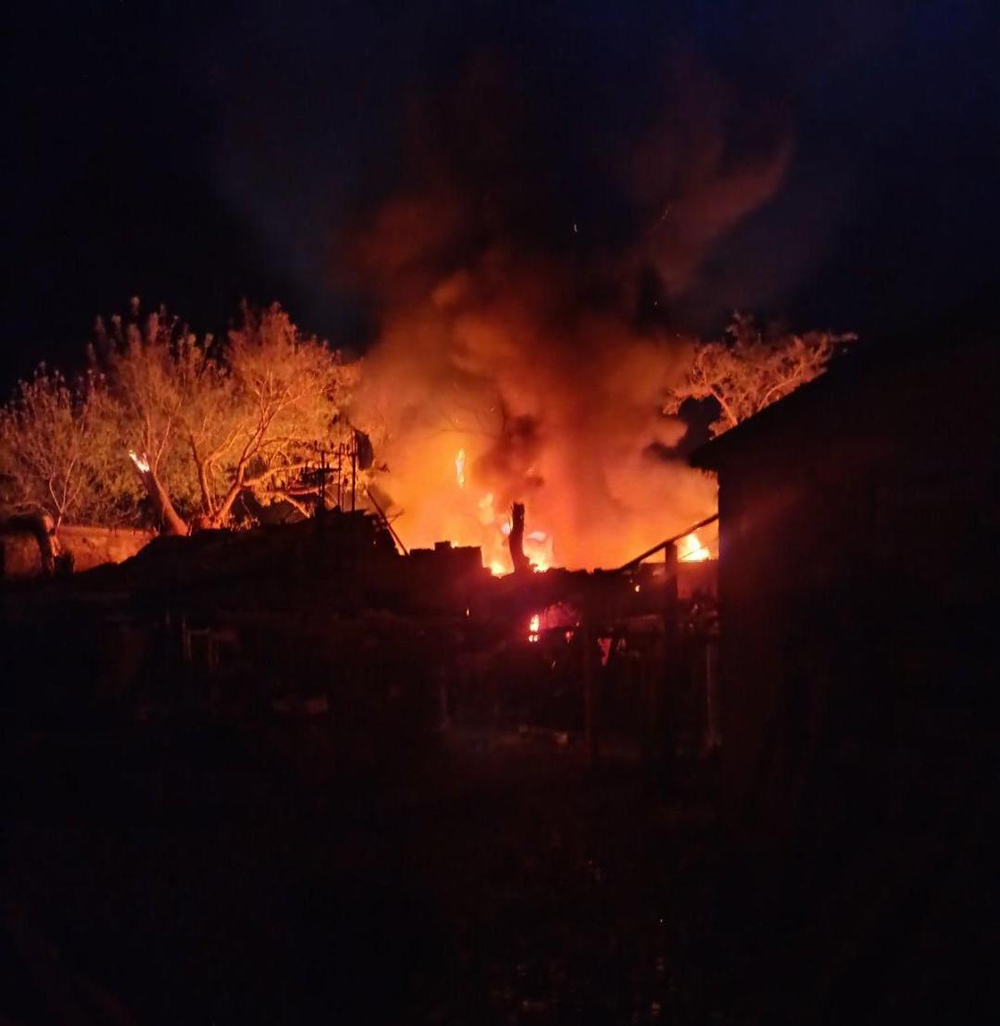
On Monday evening, the port city of Odessa once again found itself under a storm of Russian-launched Shahed suicide drones. The explosions, which thundered across the Black Sea coast, lit up the night sky and tore through civilian infrastructure, sparking fires and sowing fear among residents already battered by months of bombardment.
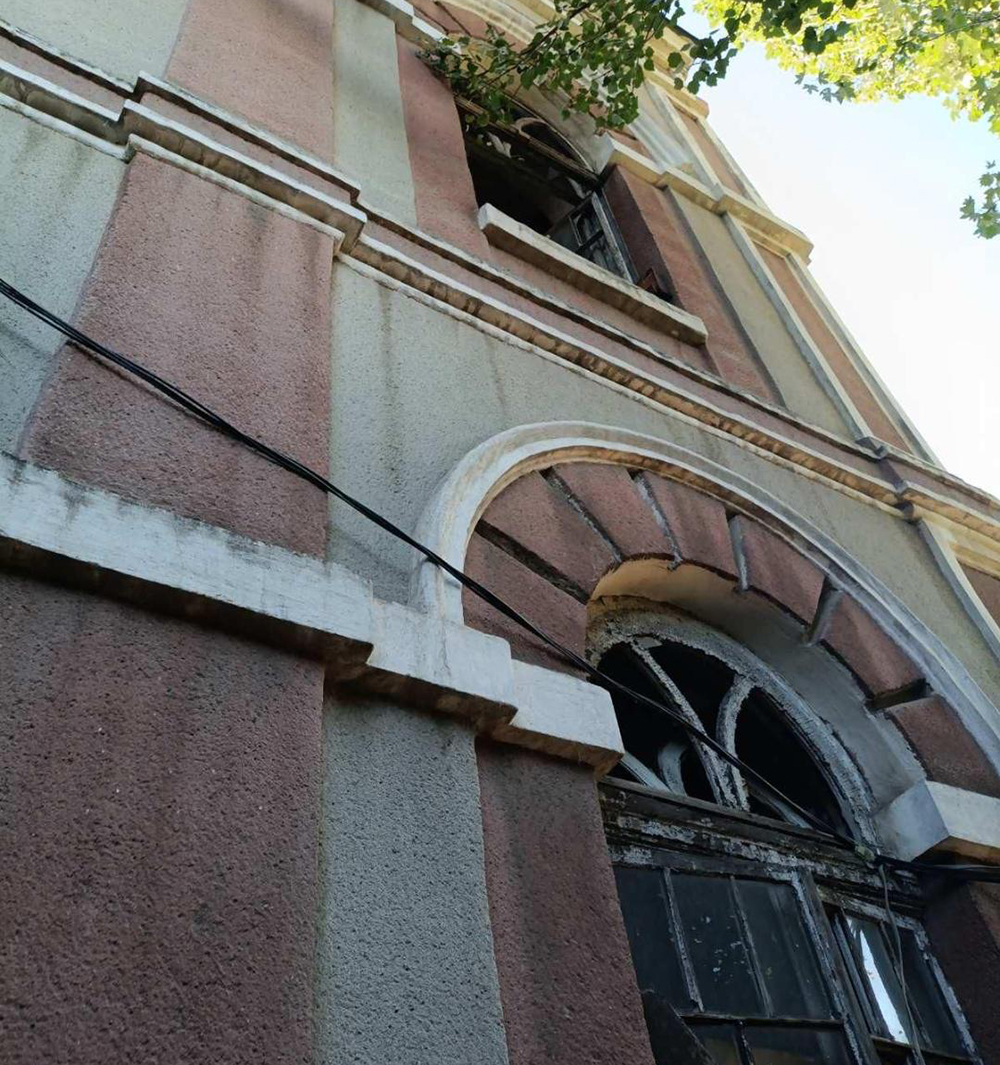
But amid the many targets struck, one stood out as both a cultural and spiritual wound: the Nahalat Eliezer Synagogue in the Peresyp District. According to a report that appeared at Ynet News, a direct drone impact set the historic synagogue ablaze, consuming part of its interior and damaging sacred scrolls and centuries-old books that had survived pogroms, the Holocaust, and decades of Soviet repression.
Though no casualties were reported, the symbolism was unmistakable. Just one day after Jews worldwide commemorated Tisha B’Av, the day of mourning marking the destruction of the First and Second Temples in Jerusalem, Odessa’s Jewish community was confronted with the sight of its own house of worship reduced to smoldering ruins.
Odessa, Ukraine’s third-largest city and its gateway to the Black Sea, has been a frequent target of Russia’s drone and missile barrages since the full-scale invasion began in February 2022. According to the information provided in the Ynet News report, the Monday assault consisted of multiple waves of Shahed-model drones, Iranian-designed unmanned aircraft that Moscow has deployed with increasing frequency.
Air defense systems managed to intercept some, but several broke through, igniting fires in both central and residential districts. Residents reported seeing drones buzzing low over rooftops before detonating in fiery blasts. “It felt like the entire city was shaking,” one eyewitness told Ukrainian media.
The strike on the Nahalat Eliezer Synagogue was particularly poignant. Built in the late 19 th century, the synagogue had stood for generations as a focal point of Jewish life in Odessa, a city once home to one of Eastern Europe’s most vibrant Jewish populations.
Chief Rabbi of Odessa Shlomo Bakst issued an emotional statement, underscoring the pain of seeing a synagogue targeted just a day after Tisha B’Av.
“Just one day after mourning the destruction of the Temple in Jerusalem, we now mourn a new and painful destruction–the severe damage to the Peresyp Synagogue in Odessa,” Rabbi Bakst said, as reported by Ynet News. “Although it hasn’t been in regular use in recent years, it stood for generations as a house of prayer, memory and sanctity. Its destruction is a wound to our community and our heritage.”
Bakst emphasized that while the synagogue had not been central to daily worship, it retained immense symbolic value. For older members of Odessa’s Jewish community, its walls carried memories of a lost world–a community decimated during the Holocaust and later silenced under Soviet rule, but never extinguished.
Other Jewish leaders also spoke out. Rabbi Rafael Kruskal, deputy president of the Jewish Community of Odessa and CEO of the Tikva Organization, which has been instrumental in evacuating hundreds of Jewish children since the war began, condemned the strike as an attack not just on a building, but on the values of humanity itself.
“When a house of worship is attacked, I expect the entire world to denounce such cruelty,” Kruskal said, according to Ynet News. “Indiscriminate violence targeting religious sites and innocent civilians crosses a moral red line–one that has been violated repeatedly. It must stop. Our communities, our children and our sacred institutions deserve protection, not destruction.”
From outside Ukraine, condemnation was swift. Rabbi Pinchas Goldschmidt, president of the Conference of European Rabbis and himself a symbol of Jewish resilience after fleeing Moscow in 2022, drew a chilling parallel between the timing of the attack and the Jewish calendar.
“This is a violent act that occurred at a chilling moment–immediately after Tisha B’Av,” Goldschmidt said, as relayed by Ynet News. “The targeting of an ancient house of prayer is not a random incident–it is further proof of the destructive nature of Russian aggression, aimed not only at Ukraine but also at its civilian population and Jewish communities.”
Analysts note that Russia’s choice of targets often defies conventional military logic. In Odessa, drone and missile strikes have repeatedly hit apartment complexes, warehouses, cultural institutions, and now a synagogue.
As the report at Ynet News pointed out, the Nahalat Eliezer Synagogue had no strategic or military value. Its destruction underscores a pattern in which civilian and religious sites become collateral–or deliberate–targets in Moscow’s strategy of psychological warfare. By striking at symbols of identity and community, Russia seeks to demoralize not only Ukraine’s population but also its allies watching from abroad.
To understand the pain of this attack, one must grasp Odessa’s deep Jewish legacy. Founded in the late 18 th century, the city quickly became a hub of Jewish life. By the early 20 th century, Jews made up nearly a third of Odessa’s population, establishing schools, theaters, newspapers, and synagogues that made the city a beacon of Jewish culture in Eastern Europe.
The Nahalat Eliezer Synagogue was part of that vibrant ecosystem. Though the Holocaust destroyed much of Odessa’s Jewish population–tens of thousands were massacred by Nazi-allied Romanian forces in 1941–the synagogue survived. Under Soviet rule, it was repurposed and neglected, but it remained standing, a quiet testament to endurance.
As the Ynet News report observed, its destruction by a Russian drone now evokes memories of past traumas while symbolizing the ongoing vulnerability of Jewish heritage in wartime.
For Odessa’s Jews, the strike adds to a sense of siege that has persisted since the war began. The Jewish Community of Odessa has played a crucial role in safeguarding children, elderly, and vulnerable members, often coordinating evacuations with international partners.
At the start of the war, Rabbi Kruskal’s Tikva Organization relocated hundreds of children to safety in Romania. Many synagogues and community centers across Ukraine have doubled as shelters and distribution points for humanitarian aid.
Now, with the Nahalat Eliezer Synagogue damaged, the community fears that its very identity is being targeted. “It is not just bricks and mortar,” one community member told local reporters. “It is a piece of our soul.”
In their statement, Odessa’s Jewish leaders appealed directly to world leaders and human rights organizations to condemn the strike. They stressed that deliberate or reckless attacks on religious institutions cannot be normalized.
Ynet News highlighted the frustration among Jewish leaders that such attacks often receive less global outrage than they warrant. While cultural heritage organizations have denounced the targeting of historic churches and museums, Jewish sites frequently face quieter responses.
“This cannot be just another headline,” Rabbi Kruskal urged. “When synagogues burn, history burns with them. The world must speak.”
The attack on Odessa’s synagogue fits into a broader pattern of Russian assaults on cultural and religious infrastructure across Ukraine. UNESCO has documented damage to dozens of heritage sites, from Orthodox churches to cultural centers.
But the targeting of a synagogue carries particular resonance. It taps into centuries of antisemitic violence in Eastern Europe–pogroms, desecrations, and expulsions. For Jewish leaders, the symbolism is unmistakable: once again, in times of war, Jewish institutions stand vulnerable.
As reported by Ynet News, Jewish leaders in Israel and the diaspora are closely monitoring these developments. The attack has sparked renewed discussions about the need for international mechanisms to protect religious heritage during armed conflict.
For Israel, the incident underscores the importance of global vigilance against antisemitism. It also highlights the fragility of Jewish communities still living in Eastern Europe, many of whom rely on international support to sustain themselves.
The sight of flames consuming the Nahalat Eliezer Synagogue the day after Tisha B’Av is more than coincidence–it is a stark reminder that Jewish history’s cycles of destruction and resilience remain painfully relevant.
As the report at Ynet News emphasized, the synagogue’s destruction is not only a Ukrainian tragedy but also a Jewish one, resonating across the world. It calls on leaders to confront the moral red line of targeting religious and civilian sites, and it challenges the global Jewish community to rally in defense of its heritage.
For the Jews of Odessa, the synagogue may be scarred, but their spirit endures. “We have mourned before, and we have rebuilt before,” Rabbi Bakst said quietly after surveying the ruins. “This will not be the end of our story.”
