



|
Getting your Trinity Audio player ready...
|
By: Fern Sidman
A rare and resonant call to action has reverberated across Israel’s religious landscape, as a coalition of prominent rabbis urged the public to boycott the ANU Museum of the Jewish People in Tel Aviv, accusing the institution of promoting narratives that normalize intermarriage and, in their view, contravene the foundational precepts of Jewish law. The appeal, publicized in a proclamation bearing the evocative title “Remove the Obstacle from the Path of My People,” has ignited a renewed and emotionally charged debate over the responsibilities of national cultural institutions in defining Jewish identity in a pluralistic age.
VIN News, which has closely followed the unfolding controversy, reported om Monday that the proclamation reflects deep anxieties within rabbinic circles about the direction of Jewish education and representation in Israel’s most prominent museum dedicated to the global Jewish story.
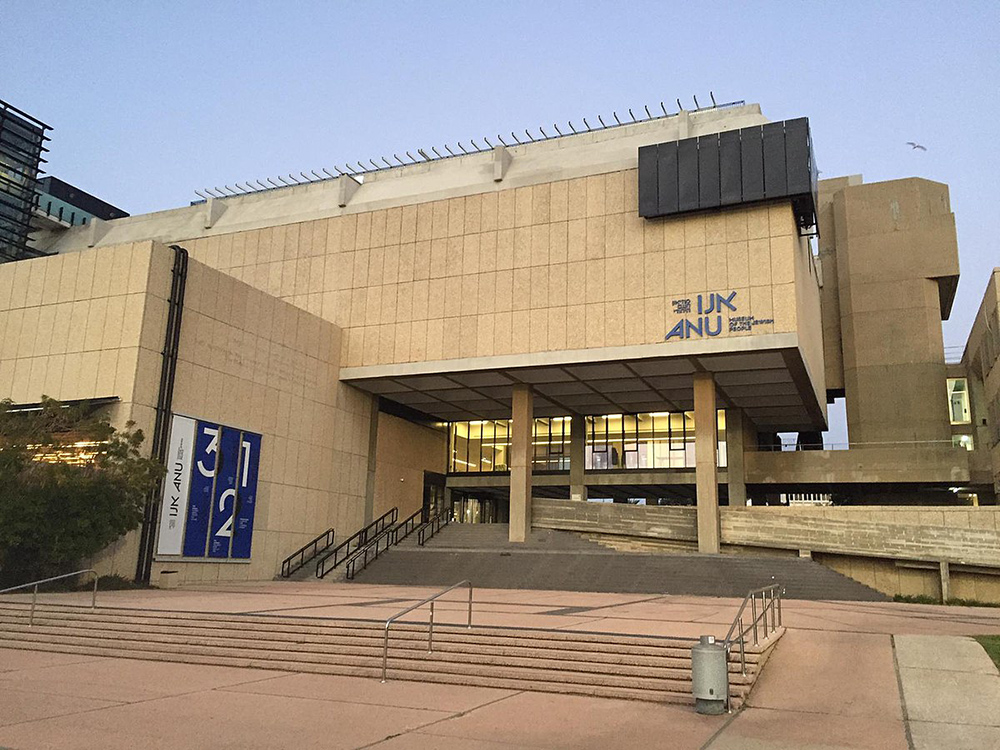
The ANU Museum of the Jewish People, formerly known as Beit Hatfutsot or the Diaspora Museum, occupies a singular place in Israel’s cultural ecosystem. Established to narrate the sweeping, multifaceted chronicle of Jewish civilization, it presents exhibitions that explore Jewish life across continents and centuries, weaving together themes of faith, culture, creativity, migration, persecution and renewal.
In recent years, ANU has sought to broaden its scope, emphasizing the diversity of Jewish experiences and identities in a globalized world. It is precisely this expansive, inclusive framing that has drawn the ire of leading rabbinic authorities, who contend that some exhibits cross a red line by presenting intermarriage as a legitimate or even celebrated dimension of contemporary Jewish life.
According to the information provided in the VIN News report, the proclamation was signed by several senior halachic authorities and rabbinical judges, representing a spectrum of religious leadership. The signatories asserted that they had received what they termed “reliable information” indicating that certain museum displays publicly recognize intermarriage. In the language of the proclamation, the rabbis warned that such representations are not merely educationally misguided but spiritually perilous, capable of sowing confusion among the faithful and weakening the boundaries that Jewish law has historically erected to preserve communal continuity. Their appeal urged observant Jews, in particular, to refrain from visiting the museum until the disputed content is removed or substantially revised.
Central to the controversy is the role of Yad La’Achim, an Orthodox outreach organization long known for its activism on issues of Jewish continuity, religious identity and opposition to intermarriage and missionary activity. VIN News reported that Yad La’Achim has repeatedly approached ANU Museum officials over the content of specific exhibits, urging them to remove what the offensive and spiritually harmful material. These entreaties, according to the group, were rebuffed, prompting the escalation of the dispute into a public call for boycott. Yad La’Achim has framed its campaign not as an attempt to censor history, but as a moral imperative to prevent the institutional legitimization of intermarriage within a state-recognized cultural venue.
The proclamation’s language reflects a profound sense of urgency. By invoking the metaphor of an “obstacle” placed in the path of the Jewish people, the rabbis suggest that cultural institutions wield a formative influence over public consciousness, particularly among younger generations.
The VIN News report noted that the signatories argue that when a museum dedicated to Jewish identity presents intermarriage without clear moral or halachic critique, it risks normalizing choices that, in their theological framework, erode the covenantal distinctiveness of the Jewish people. For these rabbinic leaders, the museum’s authority and prestige amplify the clear-cut danger, transforming what might otherwise be a contested sociological reality into an implied endorsement.
The ANU Museum has, as of this writing, not issued a public response to the boycott call. Its curatorial philosophy, however, has long emphasized an inclusive narrative of Jewish peoplehood that reflects the lived realities of Jews around the world, including those whose lives do not conform to traditional halachic categories. The VIN News report observed that the museum’s mission statement underscores its commitment to presenting the “story of the Jewish people” in all its diversity, a mandate that inevitably brings it into tension with religious authorities who seek clearer normative boundaries in representations of Jewish life.
This clash exposes a deeper fault line within Israeli society and the global Jewish community: the struggle to reconcile fidelity to halachic tradition with the sociocultural complexities of modern Jewish existence. Intermarriage, while prohibited by Jewish law, is a sociological phenomenon that has shaped Jewish demographics and identities, particularly in the Diaspora. Museums, as custodians of collective memory, face the delicate task of documenting such realities without appearing to prescribe them. VIN News reported that critics of the rabbinic boycott argue that erasing or obscuring intermarriage from the historical and contemporary record risks presenting an idealized, incomplete portrait of Jewish life, one that fails to grapple honestly with the challenges confronting Jewish continuity in an open society.
Yet for the rabbis behind the proclamation, the issue is not one of historical documentation but of moral framing. They contend that there is a critical distinction between acknowledging the existence of intermarriage and presenting it in a manner that confers legitimacy or acceptance. In their view, a national museum dedicated to Jewish peoplehood should articulate, implicitly or explicitly, the values that have sustained Jewish continuity across millennia.
The VIN News report highlighted that this perspective resonates with many within Israel’s religious communities, who perceive cultural institutions as battlegrounds in a broader struggle over the soul of Jewish identity in the Jewish state.
The boycott call thus reverberates far beyond the walls of the ANU Museum. It speaks to anxieties about assimilation, the erosion of religious norms and the marginalization of traditional voices in the public square. It also raises difficult questions about the role of state-supported cultural institutions in navigating ideological pluralism. As the VIN News report underscored, the dispute is emblematic of a society negotiating the boundaries between heritage and change, between sacred tradition and secular representation.
Whether the rabbinic appeal will translate into a sustained boycott remains to be seen. What is already clear, however, is that the controversy has forced a reckoning with the power of narrative in shaping communal self-understanding. In the struggle over how Jewish identity is curated and displayed, the ANU Museum has become a symbolic stage upon which competing visions of Jewish continuity are now publicly contested.

As founder and chairman of Israel’s Bible Bloc Party, I believe we must confront the possibility of a Holocaust in the West in general and the US inparticular. At the end of WWII, we were six million Jews in America after the deaths of six million in the Holocaust. Today, 80 years later, we are still six million in the US with over ten million Jews immigrating to the US from all over the world. And yet, we are still only six million in the US with an intermarriage rate of 80% according to many estimates. So our nuclear Judeo-Christian families total about 10 million. This is a reality, and we must prepare for a tsunami of these immigrants to Israel when the anti-Semitic Holocaust comes. We cannot just say intermarriage is bad but must embrace the new potential immigrants, Jews and their non-Jewish spouses and relatives. Israel’s population will double to 20 million as a result of this immigration to Israel. The rabbis should reconsider their hatred of non-Jews. The Halacha must be amended to be more human and more Jewish.