



|
Getting your Trinity Audio player ready...
|
Jonah and Gaza: Not a Popularity Contest
In courtrooms of The Hague, in lecture halls from New York to London, and across social media, Israel is branded with the ugliest words in the human vocabulary: genocide, apartheid, bloodlust and starvation. These accusations are not just false—they are the exact opposites of the truth.
No army in history has gone to greater lengths to preserve civilian life, even on the enemy’s side, than Israel’s Defense Forces. And yet, perversely, it is Israel that stands accused while the terror groups that target Israeli and Gazan children are excused. The pressure to cave to world opinion, to submit to other nations’ demands, has rarely been greater.
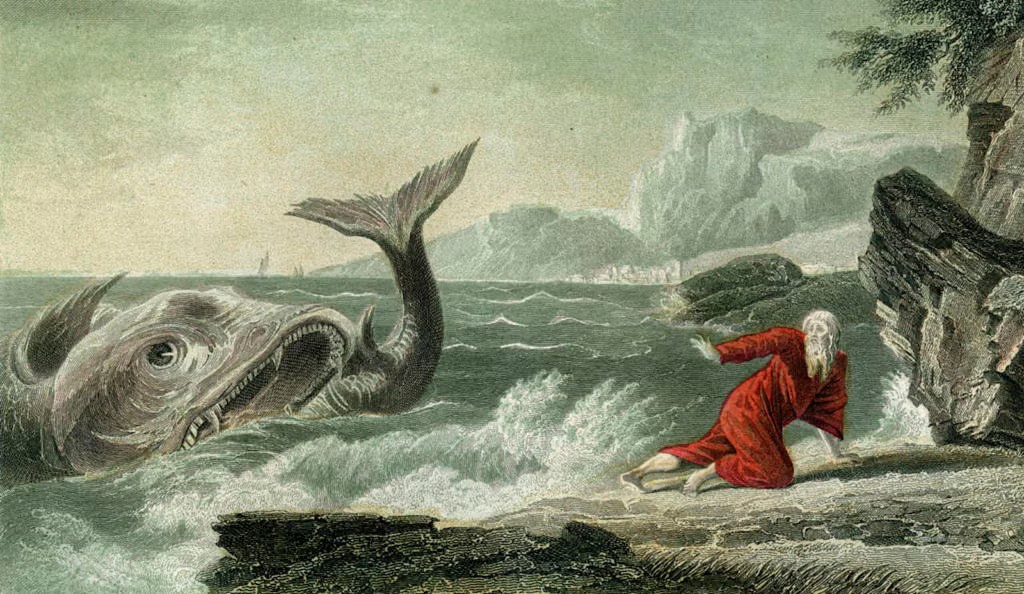
Actually, this is not a new dilemma for the Jewish people. It’s as old as the story of Jonah. Every year on Yom Kippur, Jews read this deceptively simple story about a reluctant prophet, a scary storm, and a very large fish. Beneath the surface, it is talking about one of life’s toughest challenges: the calling to do the right thing even when the world despises you for it.
G-d commands Jonah: “Go to the great city of Nineveh and proclaim against it” but Jonah refuses. Not out of cowardice, say the Rabbis, but because he foresaw what would happen: the people of Nineveh would repent, survive, and later rise up to persecute Israel. Jonah did not want to be the one to save those who would brutalize his own people, so he ran.
However, G-d pushes Jonah back into the mission. A storm, a fish, a second chance—and finally Jonah obeys. To his dismay, Nineveh listens and is spared. Jonah sulks outside the city, furious at being made to look like a fool, and anguished at Israel’s looming fate. G-d shades him with a plant, then withers it, and finally says: “Should I not care about this great city, with more than 120,000 people who don’t know their right hand from their left—and many cattle?”
The lesson is unsettling. Jonah’s role was not to be popular, or not even to protect Israel’s short-term interests. His role was to speak G-d’s truth—even if it made him unpopular, even if he would be misunderstood, and even if those he saved might later turn against Israel. The ultimate purpose of Jonah’s mission was not destruction, but salvation.
That’s why the prophet Isaiah warns us against falling into the trap of listening to public opinion: “You must not call conspiracy all that this nation calls conspiracy, nor revere what it reveres, nor hold it in awe. None but the Lord of Hosts shall you account holy; give reverence to Him alone, hold Him alone in awe.” (Isaiah 8:12–13)
It’s a message as urgent in 2025 as it was in ancient Judah. Do not be swept up in the crowd’s conspiracy theories, hashtags, or fashionable outrage. Fear G-d alone.
Today, Israeli soldiers—our Jonahs—are standing on Israel’s front lines. Young men and women who would rather be studying, traveling, working and building families, are instead fighting street by street, tunnel by tunnel, to defend not only Israel but humanity from a terror movement that sanctifies death. They know that the world is calling them murderers. They know they will be hated for doing what they must, and possibly banned from ever travelling overseas. And yet they fight, with their lives, so that Jews can live, and so that innocent civilians—yes, even in Gaza City—may one day be free from the iron grip of terrorism.
Jonah’s story ends with a question, not an answer: “Should I not care about this great city?” G-d leaves Jonah—and us—hanging. Because every generation must decide: will we be the Jonah who runs, afraid of unpopularity? Or will we be the Jonah who stands firm, who speaks up to save lives, even when misunderstood?
Because Jonah’s job was never to win a popularity contest. His job was to prevent catastrophe—even for those who might someday turn against him. Today, Israel’s job is the same. Our soldiers know it. Our people know it. The world may never thank us, but we will have carried out the task entrusted to us: to stand up for life, even when the world would prefer us to disappear.
Rabbi Leo Dee is an educator living in Efrat. His book “Transforming the World: The Jewish Impact on Modernity” was republished in English and Hebrew in memory of his wife Lucy and daughters Maia and Rina, who were murdered by terrorists in April 2023.
