



|
Getting your Trinity Audio player ready...
|
Chabad emissaries across three continents are making sure elderly Jews won’t spend Passover alone
By: Chaya Ohana
Janice is 95 years old. She had been struggling financially and could no longer afford to attend certain programs at her care home in Phoenix, Ariz. When Rabbi Levi Levertov told her she was still welcome to participate in Chabad’s annual public Passover seder and a volunteer would be sent to support her, she broke down in tears.
“I never imagined anyone would go out of their way for me,” said Janice, asking that a pseudonym be used to protect her privacy. “It meant the world to know I’m not forgotten.”
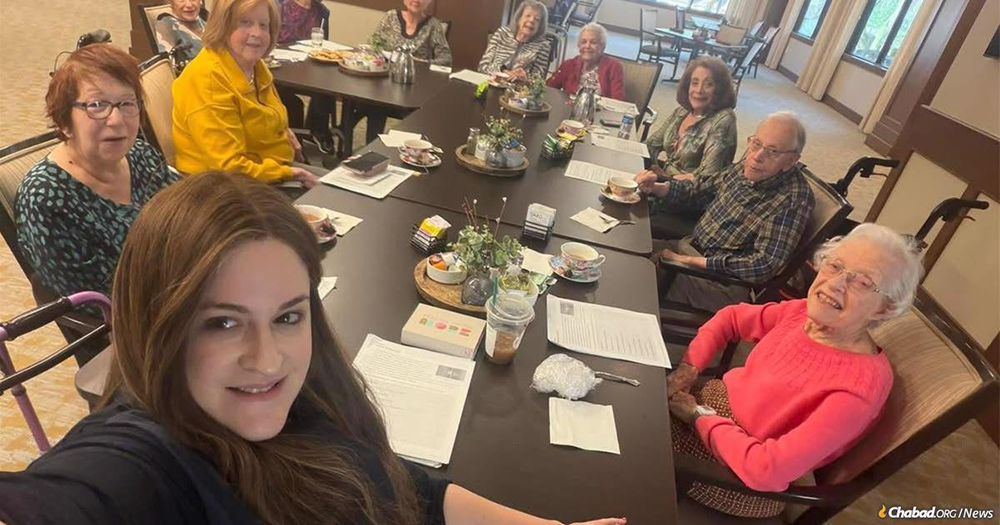
Levertov, a Chabad-Lubavitch emissary in Phoenix, directs Smile on Seniors with his wife Chani, and maintains regular contact with approximately 50 retirement communities in the Phoenix area. A network of 150 volunteers helps sustain those relationships week to week, visiting and engaging with the elderly residents.
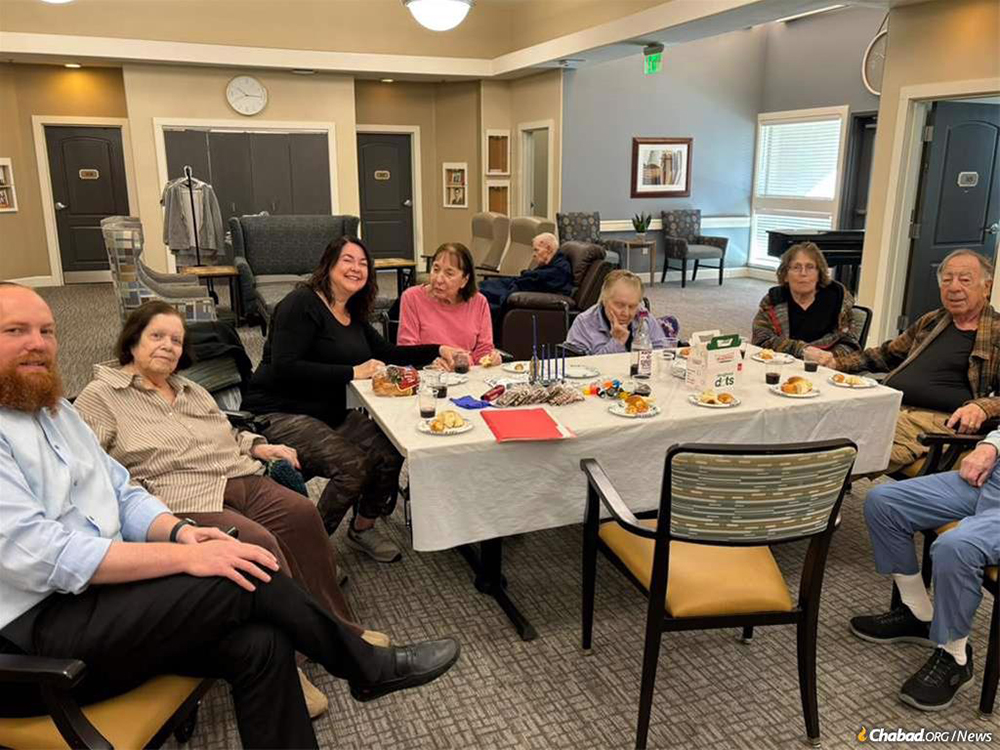
In the weeks before Passover, the pace of the work intensifies. Rabbi Levertov goes from facility to facility, giving classes on the laws and meaning of the holiday, and distributing shmurah matzah and an abbreviated Haggadah tailored for residents who may have difficulty following a full seder on their own.
“My goal is that seniors know when and how to celebrate Passover properly and joyfully,” he said. For those who cannot attend a communal seder, his team coordinates directly with the facilities to ensure they have one.
The same scene is playing out in senior care centers around the world, where Chabad emissaries are preparing thousands of elderly Jews—some of whom have not participated in a seder in years —for Passover.
‘We See Them as Mentors’
In the summer of 1980 the Rebbe, Rabbi Menachem M. Schneerson, of righteous memory, established Kollel Tiferes Zekeinim Levi Yitzchok—named for his father, Rabbi Levi Yitzchok Schneerson, who had passed away in harsh Soviet exile in 1944—a structured Torah learning program for seniors. The Rebbe taught that older Jews are not passive observers of communal life but active participants whose years of experience and wisdom are still valued.
Rabbi Ari Kievman has been demonstrating that in Johannesburg, South Africa, for more than 16 years.
“Seniors are the living Torah scrolls of our community,” he explains. “They carry history, resilience, sacrifice and wisdom. Yet in modern society, they can easily become invisible.”
Kievman’s involvement with the elderly began long before South Africa. Growing up in Brooklyn, N.Y., his mother suggested he make better use of his long Shabbat afternoon walks by stopping into local hospitals and nursing homes. By his early 20s, he was running weekly programs at several New York retirement facilities—teaching Torah classes, leading discussions, conducting holiday programs, and visiting seniors in their homes and hospital rooms.
When he and his wife, Batya, moved to South Africa, where he had studied to receive his rabbinical ordination, he stopped by the Chabad center where he had volunteered as a student.
A conversation about his work with seniors led to an invitation to stay and strengthen the existing Tiferes Zekeinim programs there. They planned to stay for six months to a year.
More than 16 years later, their Chabad Longevity Club operates out of the central Chabad House in Johannesburg and extends into numerous retirement homes and care facilities across the city.
Each week, it reaches hundreds of seniors through classes, holiday events, home visits, hospital visits and social programs.
The scope of what Kievman’s team runs is considerable. There is a full daily program that includes a project encouraging seniors to journal their memories, advice and family stories; various therapies; Torah classes and discussions; games; arts; beading; and knitting. There are weekly food parcels, musical events and guest speakers, fitness sessions, one-on-one hospital and home visits, and birthday and milestone celebrations.
“Beyond programs,” Kievman says, “what truly engages seniors is dignity and belonging. We don’t see them as recipients. We see them as mentors.”
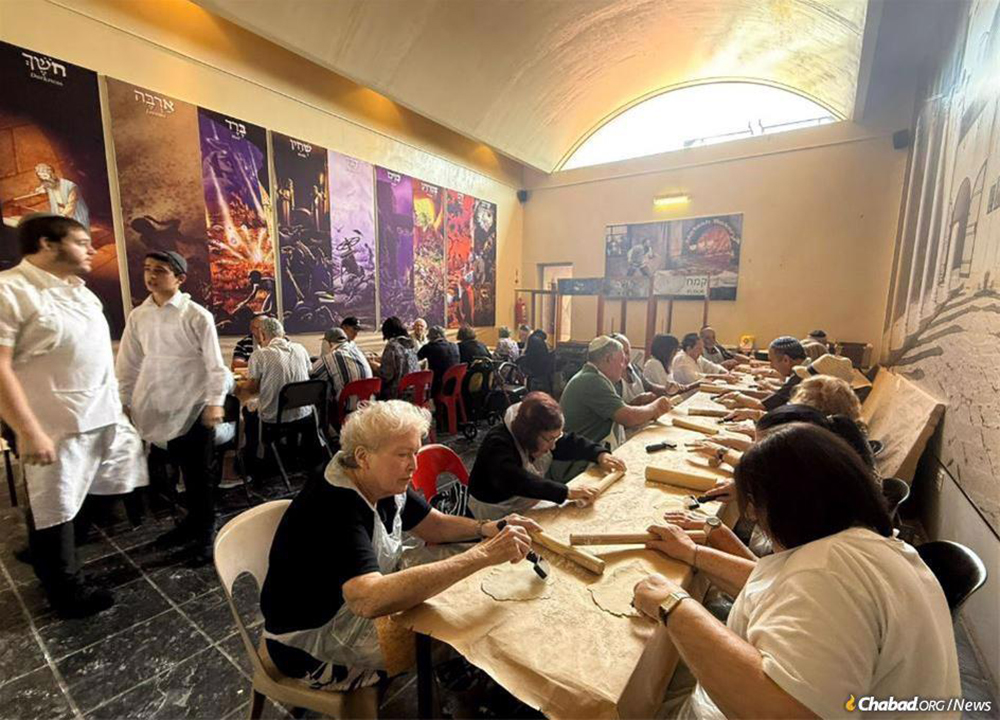
Ahead of Pesach, his team distributed shmurah matzah to more than 1,000 seniors, reaching every nursing home the Longevity Club works with. His flagship daily program included Passover preparation classes, model matzah bakeries, and model seders. There is also a retreat for those who can attend.
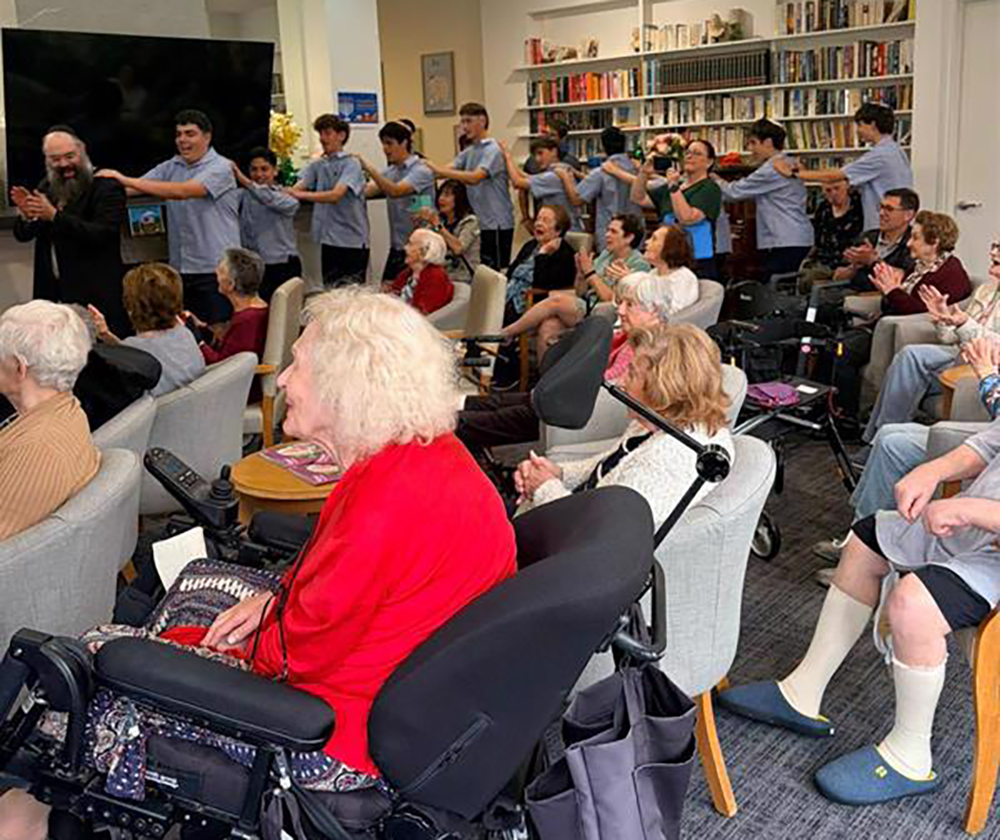
One of his regulars, Leo Tanchum, has told him plainly what the program means to him: “Rabbi Kievman gives me a reason to wake up each day.” Another senior, who had lost his spouse and most of his social circle, began attending the weekly classes reluctantly. He soon became the one encouraging others to come.
“Loneliness is one of the most silent pains of aging,” Kievman said. “When someone rediscovers connection, purpose and spiritual vitality, it’s transformative.”
From One Holocaust Survivor to 350 Seniors
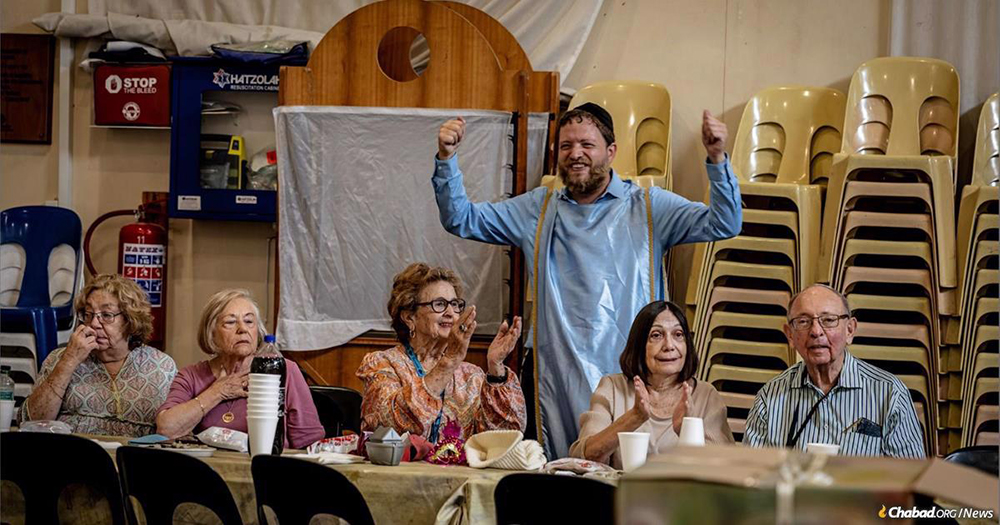
In Melbourne, Australia, Rabbi Menachem Stern arrived at a single aged care facility in 2009 to visit one Holocaust survivor. What he found was a person who was lonely and a need considerably larger than a single visit could address. He kept coming back.
“With the ageing population, where life can unfortunately feel like a waiting room for the next stage, it is so important to empower them with a real sense of happiness,” Stern shares.
Shabbat dinners for 30 at one aged-care facility eventually drew 70. Today, Smile on Seniors — the program Stern and his wife, Esther, run through their Shnei Ohr Chabad–Chabad of North Caulfield center, serves hundreds of seniors across 25 facilities.
“What started out as me visiting one elderly Holocaust survivor, connecting with one lonely Jewish soul, has blown up into an explosion of activity,” Stern says.
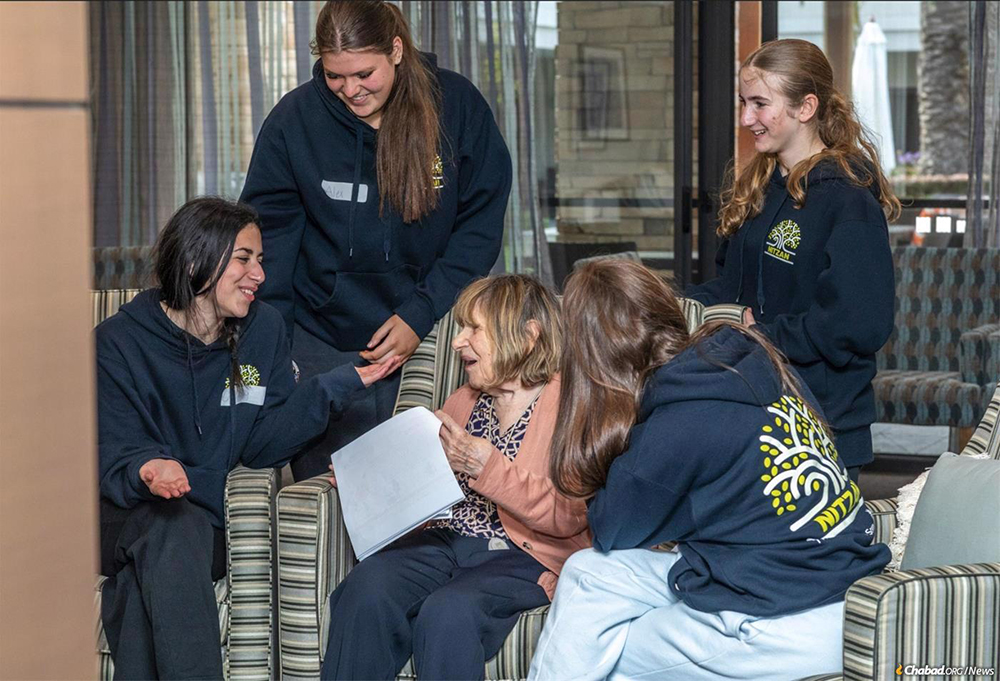
Smile on Seniors run activities ahead of the Jewish holidays, such as Chanukah parties and menorah lightings, Purim parties and Megillah readings, Passover activities, mezuzah workshops, shofar-blowing and challah bakes. They host Tiferes Zekainim Levi Yitzchok study sessions and also engage with five local Jewish day schools, fostering intergenerational friendships between the youngest members of the community and their elders.
“The students and seniors get a chance to interact with one another, and the youth brighten up their day by engaging our seniors with their joy and energy,” he says. “It is phenomenal to see.”
Students also visit for the “Shabbat Hug” program, and one school sends students to complete a project called “My Story,” in which they interview the seniors—many of them Holocaust survivors—and deliver care packages.
“The programs that bring children of the wider community together with our seniors does far more than just impact the elderly,” says Stern. “It teaches the youth that it’s important to give back, and shows them the value in engaging with elderly members of the community.”
This Purim, more than 300 seniors received mishloach manot packages. Events were held at 20 of the facilities the team visits regularly, many with live music and refreshments. For Passover, close to 100 seniors and family members gathered for a festive event in preparation for the holiday, with food, live music and an inspiring message. The Sterns are hosting three full seders at the larger facilities.
‘Still Growing, Still Contributing, Still Needed’
Back in Phoenix, volunteers Rob and Danielle Goldman go considerably out of their way to make sure the seniors in their orbit can engage with their Judaism as fully as possible, even in non-kosher facilities. When one resident, 100 years old, had no kosher meat, they drove it to her. They brought candles so she could light her own Shabbat candles on Friday night.
“When we walk in to our visits with seniors every Friday with challah, we see their faces light up,” says Danielle.
“Rabbi Levi and Chani are giving spiritual connection,” Rob adds, “and for some, even at their advanced ages, it might be their first exposure to Judaism and spirituality.”
“We have the largest congregation,” one husband told Rabbi Levertov, speaking about how fully he and his wife, who lives with dementia, felt they belonged.
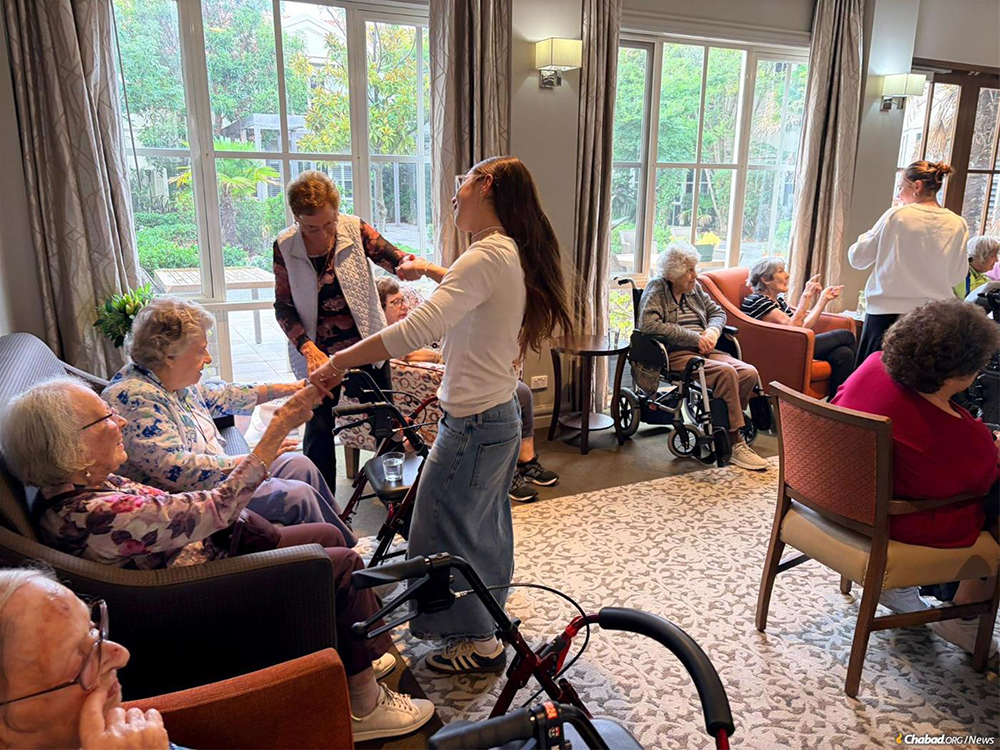
Kievman frames his work in terms of the Rebbe’s philosophy about aging.
“People often assume seniors are simply retired,” he said. “But retirement can sometimes feel like removal. We create consistent weekly touchpoints so no one disappears. We encourage peer friendships within the Longevity Club. We provide a spiritual perspective that reframes aging as elevation, not decline. We celebrate them publicly and intentionally.”
He concludes: “There is something profoundly sacred about sitting with someone in their 80s or 90s, and helping them discover that they are still growing, still contributing, and still needed.”
