



|
Getting your Trinity Audio player ready...
|
By: Tzirel Rosenblatt
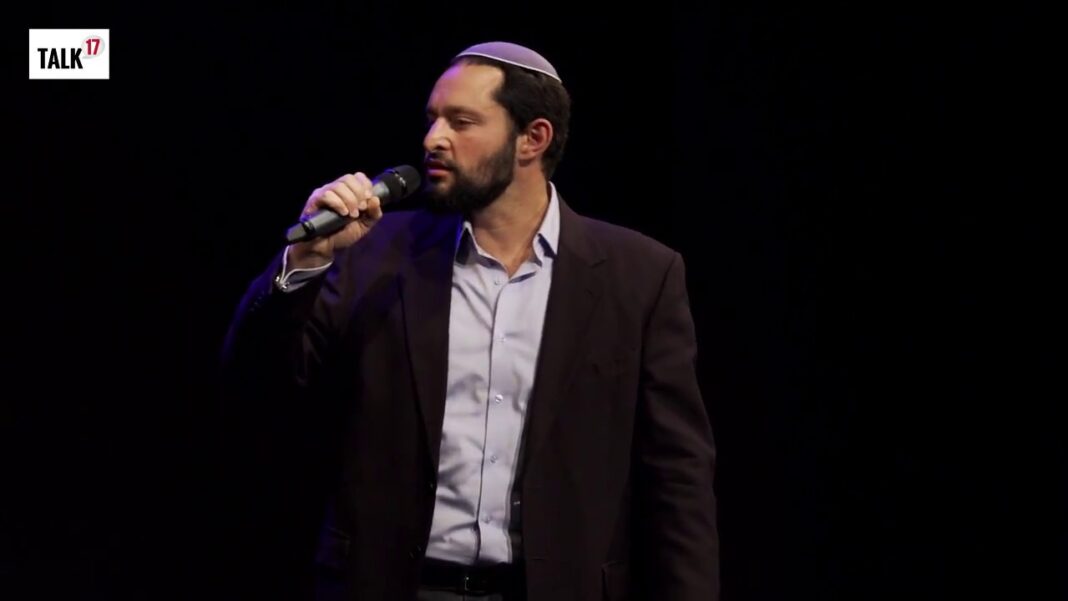
In a moment marked by escalating global tensions and a discernible surge in antisemitic incidents, a forceful and unambiguous message has emerged from one of the United States’ foremost voices on combating hatred. Ambassador Rabbi Yehuda Kaploun, serving as the Special Envoy to Monitor and Combat Antisemitism at the U.S. Department of State, has issued an “Open Letter to the Jewish Community” that departs sharply from conventional rhetoric, calling for a fundamental reorientation in how Jewish communities respond to rising threats.
The letter, shared exclusively with Belaaz.com on Friday represents not merely a statement of concern but a decisive critique of longstanding strategies that, according to Kaploun, have failed to stem the tide of antisemitic violence. In its tone, structure, and content, the document reflects a growing impatience with what is perceived as ineffective institutional responses and a call for a more assertive and unified communal posture.
At the core of Kaploun’s message lies a stark assessment: the prevailing methods employed to combat antisemitism are not working. As highlighted in the Belaaz.com article, the envoy writes with striking clarity, “The results speak for themselves: incidents keep climbing. In other words, the status quo is a failure.”
This declaration represents a significant departure from the cautious language often associated with official communications. Rather than framing the issue as a complex challenge requiring incremental adjustments, Kaploun characterizes it as a systemic failure demanding immediate and substantive change.
The Belaaz.com article underscores that Kaploun specifically critiques the proliferation of conferences, non-governmental organizations, and dialogue-based initiatives. These efforts, while well-intentioned, are portrayed as insufficient in the face of what he describes as a rapidly intensifying threat environment.
By dismissing these approaches as inadequate, Kaploun is effectively challenging the institutional frameworks that have long defined the global response to antisemitism. His critique suggests that the emphasis on dialogue and education, though valuable in principle, has not translated into tangible reductions in violence or hostility.
Perhaps the most evocative element of Kaploun’s letter is his invocation of the Passover narrative as a conceptual framework for contemporary action. Drawing on the foundational story of Jewish liberation from Egypt, he introduces the “Passover Model.”
In this analogy, the Israelites’ plight is presented not merely as a historical episode but as a paradigm for understanding the current moment. “The threat was collective. So was the salvation,” Kaploun writes, emphasizing the necessity of communal unity in the face of shared danger.
This framing carries profound implications. By aligning present-day challenges with one of the most significant events in Jewish history, Kaploun elevates the discourse from the realm of policy to that of existential urgency. The Belaaz.com article noted that this approach is intended to galvanize the community, fostering a sense of shared responsibility and collective action.
Central to this model is the call for what Kaploun describes as a “unified, unapologetic defense.” This phrase encapsulates his vision of a community that is not only cohesive but also resolute in asserting its rights and protecting its members.
Significantly, the Belaaz.com article highlighted Kaploun’s rejection of what he terms “more seminars or cringe-worthy slogans.” This critique reflects a broader skepticism toward symbolic gestures that, in his view, fail to address the underlying realities of antisemitic violence.
Kaploun’s letter also ventures into explicitly political territory, identifying specific ideological forces that he believes contribute to the rise in antisemitism. As reported in the Belaaz.com article, he calls upon the Jewish community to “reject the toxic politicization pushed by the radical left.”
This assertion is accompanied by a broader identification of threats, including “radical Islamism” and what he describes as “ideologues who hate the Jewish faith.” By naming these forces, Kaploun moves beyond generalities, offering a more defined and, for some, controversial analysis of the sources of contemporary antisemitism.
The Belaaz.com article emphasized that this aspect of the letter is likely to provoke significant debate. While some may view it as a necessary acknowledgment of specific challenges, others may question the implications of framing antisemitism within a particular political context.
Nevertheless, Kaploun’s approach reflects a willingness to confront difficult questions directly, rather than adhering to a more neutral or generalized discourse. His message suggests that understanding and addressing antisemitism requires not only moral clarity but also a readiness to engage with the political dimensions of the issue.
Beyond its critique of existing strategies and its identification of threats, the letter ultimately serves as a call for transformation within the Jewish community itself. Kaploun is not merely urging external action but also internal reflection and recalibration.
The emphasis on unity, in particular, suggests a recognition that fragmentation within the community may hinder effective responses. By advocating for a collective approach, Kaploun seeks to bridge divisions and foster a more cohesive front.
This call for unity is accompanied by an implicit challenge: to move beyond complacency and embrace a more proactive stance. The Belaaz.com article noted that Kaploun’s language conveys a sense of urgency, reflecting the belief that the current trajectory is untenable.
The implications of Kaploun’s letter extend beyond the immediate context of Passover. As the Belaaz.com article makes clear, his message has the potential to influence both policy and practice at multiple levels.
For community organizations, the critique of dialogue-based approaches may prompt a reassessment of priorities and strategies. For policymakers, the emphasis on specific threats and the call for more assertive measures may inform future initiatives.
Moreover, the letter’s timing—on the eve of Passover—adds a layer of symbolic significance. By linking his message to a period of reflection and renewal, Kaploun underscored the possibility of transformation, both individually and collectively.
In its totality, the “Open Letter to the Jewish Community” represents a defining moment in the discourse on antisemitism. It combines a candid assessment of current realities with a bold vision for the future.
Whether one agrees with all aspects of Kaploun’s analysis, there is little doubt that his message has injected a new level of intensity into the conversation. By challenging established norms and advocating for a more assertive approach, he has opened the door to a broader reconsideration of how antisemitism is confronted.
As the Jewish community prepares to observe Passover—a holiday rooted in themes of liberation and resilience—the questions raised by Kaploun’s letter are likely to resonate deeply. In a world where the persistence of hatred remains an undeniable reality, his call for unity, clarity, and action serves as both a warning and an invitation: to confront the challenges of the present with the lessons of the past, and to shape a future defined not by fear, but by resolve.

This article addresses the root cause of continuing Antisemitism and why it is proliferating…A sad example of this is the horrible and tragic murder of 2 delegates in Washington D C ,the admittance by the killer with videos and the ridiculous amount of time, energy, and costs to bring this person to justice to answer for this assasination of 2 innocent people….Justice moves too slowly to stem the rise of antisemitism.
Jews need to be legally armed for defense, enrolled in hard core self defense to take down an attacker without fear, without hesitation, young ones to old ones, all need to become fierce, loud and proud Zionist Jews. The “message” needs to be: if you’re even thinking about harming a Jew, we will take you down and ask questions later. All Jewish places need to have concrete car ram proof barriers, heavy spiked gates, surveillance, patrolled 24/7 by fierce Jews. That is our new reality, like it or not. One can live without fear only by becoming fearsome.