



|
Getting your Trinity Audio player ready...
|
By: Reuven Steinberg
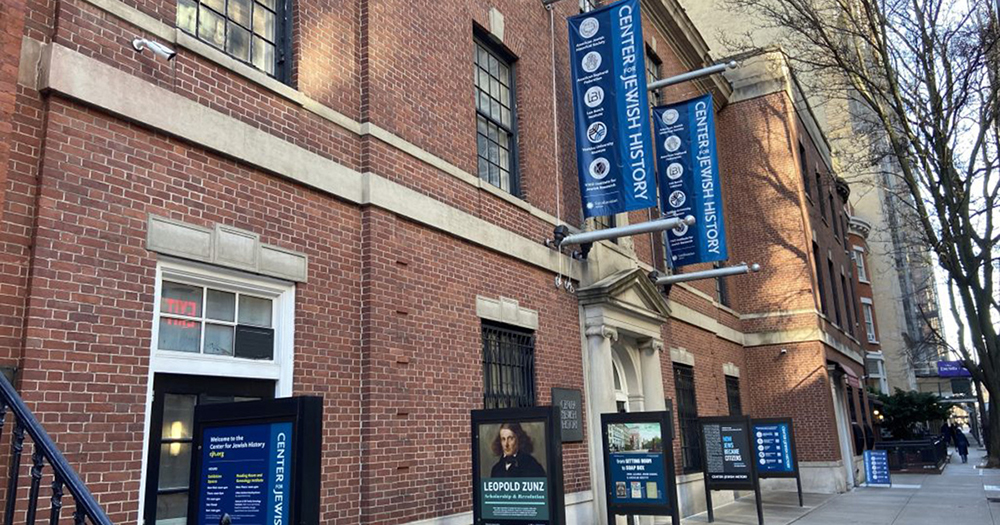
In the aftermath of the Hamas-led terrorist attacks of Oct. 7, 2023, which reverberated through Jewish communities worldwide as the deadliest day for Jews since the Holocaust, a gathering in Manhattan sought to reconsider the very foundations of Jewish historical consciousness. The Center for Jewish History in New York City hosted a daylong symposium on Nov. 2, titled “The Past, Present and Future of Jewish History,” bringing together 20 leading historians to probe questions that have grown newly urgent in the wake of profound trauma and renewed public engagement with Jewish identity.
As The Jewish News Syndicate (JNS) reported, the event was organized by the Center’s Jewish Public History Forum and structured around five sessions that explored defining themes in Jewish experience—from the enduring role of antisemitism in shaping communal resilience to the evolving relationship between Israeli and Diaspora narratives. Yet beyond the academic agenda, JNS emphasized, the symposium represented something larger: a deliberate attempt to collapse the divide between scholarly expertise and public understanding.
Dr. Gavriel Rosenfeld, president of the Center for Jewish History, told The Jewish News Syndicate that the symposium was conceived as part of a broader institutional mission to democratize intellectual inquiry. “When we established the Jewish Public History Forum in the spring of 2023, our goal was to make high-level scholarship accessible to the broader public,” Rosenfeld explained to JNS. “We have hundreds of academics in our orbit, and we want their ideas to reach a wider community.”
Since its founding, the Forum has pursued a distinctive approach—one that The Jewish News Syndicate described as “participatory scholarship.” Rather than presenting lengthy academic papers, participants were limited to brief remarks before engaging in open dialogue with one another, creating an atmosphere of dynamic exchange rarely witnessed outside faculty seminars. “This isn’t about formal academic papers,” Rosenfeld told JNS. “It’s about pulling back the curtain and showing how historians actually think about these issues.”
That transparency was central to the event’s appeal. As JNS noted, it allowed an audience of laypeople—students, educators, and community members—to experience the intellectual debates that shape the modern understanding of Jewish history, identity, and continuity.
The symposium also coincided with the 25th anniversary of the Center for Jewish History, which Rosenfeld described as an opportune moment to reassess the field itself. “It was natural to take stock of where we are—what challenges we are facing today and how we can serve the interests of the Jewish community,” he told The Jewish News Syndicate, “especially by taking scholars out of their ivory tower.”
As JNS reported, the discipline of Jewish history has undergone seismic transformation over the past four decades. Once a marginal field in American academia, it has since expanded across university departments even as funding constraints, political polarization, and ideological debates have reshaped higher education. Those dynamics, Rosenfeld observed, had become even more pronounced since the events of Oct. 7, which reignited public interest in Jewish scholarship and identity formation.
“Until Oct. 7, most ordinary people didn’t pay much attention to what was happening in academia,” Rosenfeld told JNS. “Now, there’s much greater interest in how scholars function and the internal debates that go on in academia.”
The Center, he said, had seen a surge in attendance, book sales, and community participation since the attacks. “Some Jews are reconnecting through faith and ritual,” he noted, “others through learning.”
Throughout the symposium, the events of Oct. 7 were a constant, if implicit, presence—an unspoken reminder that history was not a remote abstraction but a living reality. Dr. Daniel Schwartz, chair of the Center’s Academic Advisory Council, told The Jewish News Syndicate that the attacks had profoundly altered the context in which Jewish history is studied, discussed, and lived.
“It was, by any measure, a seismic event—the deadliest single day for Jews since the Holocaust,” Schwartz said. “It revealed both the persistence of vulnerability and the enduring capacity for resilience that have long shaped the Jewish experience.”
As JNS reported, Schwartz emphasized that scholars differed in how they interpreted and contextualized the attacks—a diversity of perspectives that the symposium was designed to showcase. “Moments like this call for critical thinking, honest argument, and resistance to both simplification and despair,” he told JNS.
Schwartz also rejected the misconception that Jewish historians were detached or overly insular. “The twenty senior historians who participated have decades of experience writing for wider publics, lecturing in community settings, and teaching students—many of them non-Jewish—who come to Jewish history with no prior background,” he said.
As The Jewish News Syndicate report observed, the symposium underscored a defining truth of Jewish history: that disagreement itself has long been integral to communal survival. For over three millennia, Jewish thinkers, rabbis, and scholars have wrestled with questions of faith, nationhood, and meaning. The Manhattan gathering continued that lineage—one of critical inquiry as devotion.
Rosenfeld, reflecting on the intellectual tradition that animated the day’s discussions, told JNS that Jewish history had always been shaped by its own internal debates—religious, political, and generational. “The Jewish community has been debating its own history for three thousand years,” he said. “Those divisions continue to shape the present. By bringing those debates into public view, we help people think more critically about the past and feel more connected to their heritage.”
Sessions at the symposium, JNS reported, traversed the full expanse of Jewish experience—from ancient exile and medieval diaspora to the Holocaust and the creation of modern Israel. Panelists explored not only how Jewish history is written but also who writes it, and for whom. One session considered how Israeli and Diaspora narratives diverge and overlap; another examined antisemitism not merely as a recurring hostility but as a structuring force in Jewish self-understanding.
While the format remained scholarly, the tone was deeply personal. Many participants acknowledged that Oct. 7 had forced them to reconsider long-held assumptions about Jewish security, memory, and belonging. For some, the day’s conversations reflected a moral responsibility to reclaim history as a tool of collective resilience.
As the JNS report highlighted, the symposium’s distinguishing feature lay in its rejection of academic exclusivity. The Jewish Public History Forum, which organized the event, was founded precisely to bridge the gap between scholarly research and public engagement. Its previous symposia—on Zionism, antisemitism, and responses to fascism—were likewise designed as interactive conversations rather than formal lectures.
“This was not an academic conference of narrowly focused papers,” Schwartz told The Jewish News Syndicate. “It was a public symposium on some of the most urgent and far-reaching questions in Jewish history today, designed precisely for an intellectually curious general audience.”
For Rosenfeld and his colleagues, that mission has taken on new urgency. The attacks in Israel, he told JNS, shattered the illusion that Jewish history belongs solely to historians. It has become, once again, a living text—interpreted, contested, and embodied by Jews worldwide.
The public wants to understand how we got here,” Rosenfeld said. “And that’s exactly what historians can help with.”
By day’s end, participants and attendees alike left with a shared sense that Jewish history is not static but elastic—a continuum that expands to encompass each generation’s trials and triumphs. As The Jewish News Syndicate report noted, the symposium succeeded in transforming scholarship into dialogue and dialogue into community.
In that respect, the event was less a commemoration than a renewal—a reaffirmation that historical study, when opened to the public, can serve as both education and solace. It provided what JNS described as “a forum for intellectual resilience,” a reminder that even amid crisis, the act of studying Jewish history remains itself an act of survival.
For Rosenfeld, the Center’s 25th anniversary offered a fitting parallel: “It was a moment to look backward and forward simultaneously,” he told JNS. “Jewish history is not merely a record of the past—it is a conversation that keeps us alive in the present.”
In a world once again confronting antisemitism, division, and violence, that conversation felt more vital than ever.