



|
Getting your Trinity Audio player ready...
|
By: Fern Sidman
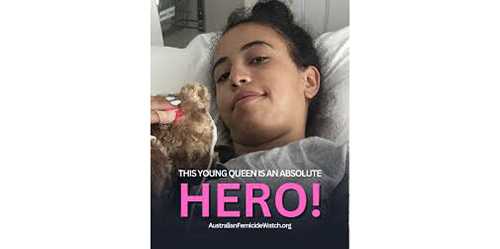
In the aftermath of one of the darkest days in Australia’s recent history, a story of extraordinary courage has emerged—one that has come to symbolize moral clarity amid terror, and the unyielding resilience of a community targeted for its identity. As reported on Thursday by VIN News, a 14-year-old Jewish girl who was seriously wounded during the Hanukkah massacre at Sydney’s Bondi Beach is now being hailed as a hero after recounting her actions in an exclusive interview with 7 News Australia.
Chaya Dadon, slight in stature but formidable in spirit, was attending what should have been a joyous communal celebration—an annual Hanukkah gathering that brought together Jewish families for music, light, and tradition—when gunfire shattered the afternoon calm. The attack, later described by authorities as an antisemitic act of terror, left 15 people dead and dozens wounded, plunging Australia’s Jewish community into collective mourning. Yet, as VIN News has documented, amid the chaos and fear, Chaya’s instinctive bravery altered the course of events for two young children whose lives she shielded with her own.
According to the information provided in the VIN News report, Chaya was initially hiding beneath a bench as shots rang out across the beachfront. Like so many others, she sought cover as panic swept through the crowd. But fear gave way to purpose when she heard the anguished cries of a Jewish mother pleading for someone to save her children.
What happened next, Chaya recounted to 7 News Australia and later cited by VIN News, was not a calculated decision but an instinctive one. She emerged from her place of shelter and ran toward the children, who were exposed and terrified amid the ongoing gunfire. Pulling them to the ground, she covered them with her body, placing herself directly in harm’s way.
“I just held them and tried to calm them,” Chaya said quietly from her hospital bed, her words understated yet profoundly moving.
Moments later, a bullet struck her leg. Despite the pain, Chaya did not cry out. She remained composed, determined not to frighten the children she was protecting. Instead, while lying wounded on the sand, she led them in reciting the Shema, the ancient Jewish declaration of faith traditionally uttered in moments of peril and devotion.
The image of a wounded teenager whispering sacred words over trembling children as bullets flew has resonated deeply across Australia and far beyond. For many within the Jewish world, Chaya’s actions evoked generations of Jewish history—moments when faith, courage, and communal responsibility converged under existential threat.
The Shema, central to Jewish belief, affirms the oneness of God and the enduring covenant between faith and peoplehood. That Chaya chose this prayer, even subconsciously, speaks volumes about the spiritual grounding that sustained her in that harrowing moment. It was not merely an act of physical protection, but one of emotional and spiritual guardianship as well.
The scale of the attack quickly overwhelmed emergency responders. Ambulances were stretched thin, racing between victims scattered across the beachfront. In a striking detail reported by VIN News, it was a surf lifesaver who ultimately transported Chaya from the scene—placing her on a rescue board and navigating through chaos to reach a waiting police vehicle.
From there, she was rushed to hospital, where surgeons operated on her injured leg. She has since been recovering on crutches, her prognosis described as positive. She is expected to be discharged later this week, though the emotional recovery will undoubtedly take longer.
Chaya’s mother, Shterny Dadon, spoke to 7 News Australia in an interview cited by VIN News, expressing both anguish and pride at her daughter’s ordeal. For her, Chaya’s actions were not extraordinary in the sense of being out of character, but rather a reflection of values deeply ingrained in their family and community.
“We can’t let hate overcome light,” Shterny said, echoing the central theme of Hanukkah itself—the triumph of illumination over darkness. VIN News underscored the poignancy of this statement, noting how it encapsulated the community’s determination not to allow terror to define their future.
Indeed, in the days following the massacre, vigils, prayers, and memorials have taken place across Australia. Candles have been lit not only in mourning for the victims but also in affirmation of life, continuity, and solidarity.
Authorities have confirmed that the Bondi Beach shooting was carried out by two gunmen—a father and son—who opened fire on the Hanukkah celebration in what investigators have described as a targeted antisemitic terror attack. Fifteen people were killed, among them community leaders, elderly attendees, and young adults whose lives were cut short in an instant.
The attack has reignited urgent conversations in Australia about antisemitism, community security, and the global rise of ideologically motivated violence. Political leaders across the spectrum have condemned the massacre, while law enforcement agencies have pledged to bolster protection around Jewish institutions nationwide.
Though Chaya herself has expressed discomfort with the label “hero,” the public response has been overwhelming. Messages of admiration and gratitude have poured in from around the world, many shared and amplified by VIN News. For countless readers, her story has become a symbol of moral courage untainted by cynicism—a reminder that even in moments of profound evil, individual choices can preserve humanity.
Educators, rabbis, and community leaders have spoken of Chaya as an embodiment of mesirat nefesh—self-sacrifice for the sake of others. Such acts are not born in isolation; they arise from environments that teach responsibility, empathy, and faith as lived values rather than abstract ideals.
As investigations into the Bondi Beach attack continue, and as Australia grapples with the broader implications of the violence, Chaya Dadon’s recovery represents a fragile but vital thread of hope. Her physical wounds are healing, but the psychological scars—like those borne by so many survivors—will require time, care, and communal support.
Yet, if her own words and demeanor are any indication, Chaya’s spirit remains unbroken. Speaking softly but resolutely, she has emphasized unity, compassion, and the sanctity of life—messages that VIN News has highlighted as central to the Jewish response to terror.
In the flickering candlelight of Hanukkah, one young girl became a living flame—small yet indomitable, illuminating the darkness not with defiance alone, but with faith, courage, and love. Chaya Dadon’s actions will stand as one of its most enduring and uplifting chapters.