



By: Menachem Posner
- Dual Purpose
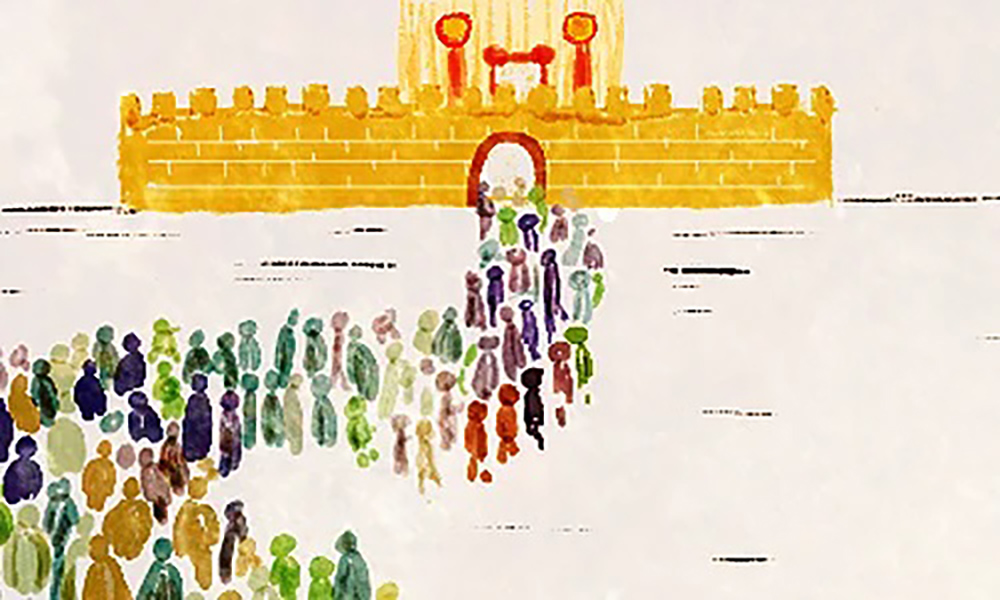
While the Temple was both a place of spiritual enlightenment and animal sacrifice, there is a dispute as to what its primary purpose was. According to Maimonides, it was most basically defined as “a house for G d that is prepared for the offering of sacrifices.” According to Nachmanides, “The main object . . . is realized in the ark, as G d says to Moses, ‘I will commune with you there, speaking to you from above the ark’s cover . . .’” In other words, the main purpose of the Temple was a dwelling place for the Divine Presence.
- From a Jebusite
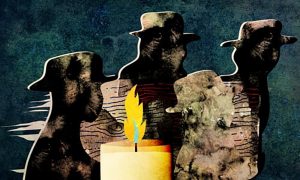
King David purchased the site of the Holy Temples, Mount Moriah, from a Jebusite named Aravnah during a terrible plague that ravaged the Israelites after David conducted a census of the people. Following G d’s command, David built an altar and brought a sacrifice on Aravnah’s threshing floor, and the plague stopped.
- One, Two, Three . . .
There have been three Temples to date:
- The portable Tabernacle, built by Moses, which accompanied the people of Israel through their 42 desert encampments and was set up in various places in the Land of Israel, including Shiloh.
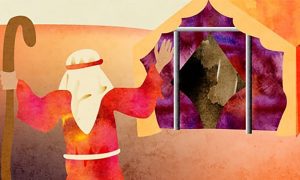
The First Holy Temple, built by King Solomon on Mount Moriah in Jerusalem, which lasted for 410 years before it was destroyed by Nebuchadnezzar of Babylon in 423 BCE. - The First Holy Temple, built by King Solomon on Mount Moriah in Jerusalem, which lasted for 410 years before it was destroyed by Nebuchadnezzar of Babylon in 423 BCE.
- The Second Holy Temple, built in the same spot as the first one by Ezra, Nehemiah and the returnees from the Babylonian exile. It was renovated extensively by King Herod in the year 19 BCE, and destroyed by the Romans in the year 69 CE.
- High Court
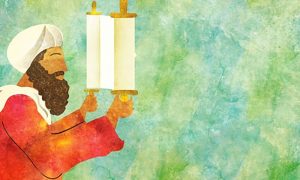
The Holy Temple in Jerusalem contained a special hall called the Lishkat Hagazit (the “Hall of Hewn Stone”), which served as the seat of the Sanhedrin, the nation’s highest court of 71 jurists. It was specially constructed partly on sacred ground and partly on the less-holy area of the Temple Mount complex, since sitting is not permitted in the most sacred place. It was there that the most important issues of Jewish law and tradition were deliberated, debated and decided.
- Twice as Nice
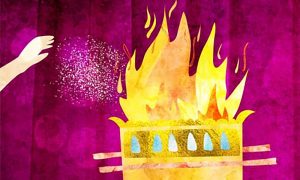
The Holy Temples contained two altars. The large copper altar in the courtyard was used for the many animal sacrifices that were brought. The golden altar inside the Temple was used only for incense, brought twice a day by the priests.
- Wash It Away

A stream of fresh water ran through the Temple courtyard. On the afternoon before Passover, when every family would bring a sacrificial lamb to eat at their Seder, the floor of the Temple courtyard would become so filthy that the stream would be dammed up, flooding the courtyard. When the blockage was removed, the entire courtyard would be left clean and fresh.
- On Guard
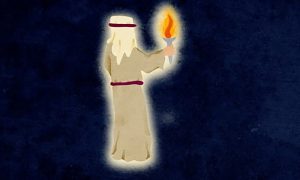
The Temple Mount was constantly guarded by cadres of priests and Levites in 24 locations. “Even though there is no fear of enemies or thieves,” Maimonides explains, “the guarding is only for honor, since an unguarded palace cannot be compared [in prestige] to one with guards.” If a guard would fall asleep, the overseer of the guards (called the Man of the Temple Mount) had permission to rap him with his stick, or even singe the edge of his cloak.
- Still Sacred
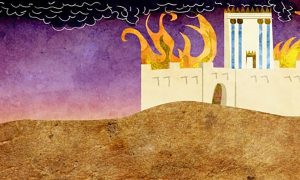
Even though the Temple has lain in ruins for nearly 2,000 years, the Temple Mount is still sacred, for G d’s Presence has not left. In fact, tradition tells us that the Ark of the Covenant is still there, in a specially built vault deep under the Temple Mount.
- Back to the Books
Rabbi Menachem Posner serves as staff editor at Chabad.org, the world’s largest Jewish informational website. He has been writing, researching, and editing for Chabad.org since 2006, when he received his rabbinic degree from Central Yeshiva Tomchei Temimim Lubavitch. He lives in Chicago, Ill., with his family.
