




|
Getting your Trinity Audio player ready...
|
By: Yehudis Litvak
Ritual purity has always been a treasured mitzvah for the Jewish people, evidenced by the numerous ancient mikvahs discovered by archeologists throughout the Land of Israel, the Mediterranean basin, and Europe. Wherever Jews settled, they built mikvahs.
Last week, we took a tour of some of the world’s most beautiful mikvahs. This week, we will explore some of the oldest.
While the primary function of the mikvah today is to allow a husband and wife to be together after menstruation, during the Temple era ritual purity was also necessary for many other aspects of everyday life, including entering the Temple Mount, handling sacred foods (such as Temple offerings and the priestly gifts), or even handling food that would be eaten on a high order of purity. For this reason, mikvahs were often found near olive and wine presses, in addition to in homes and near the actual Temple complex.
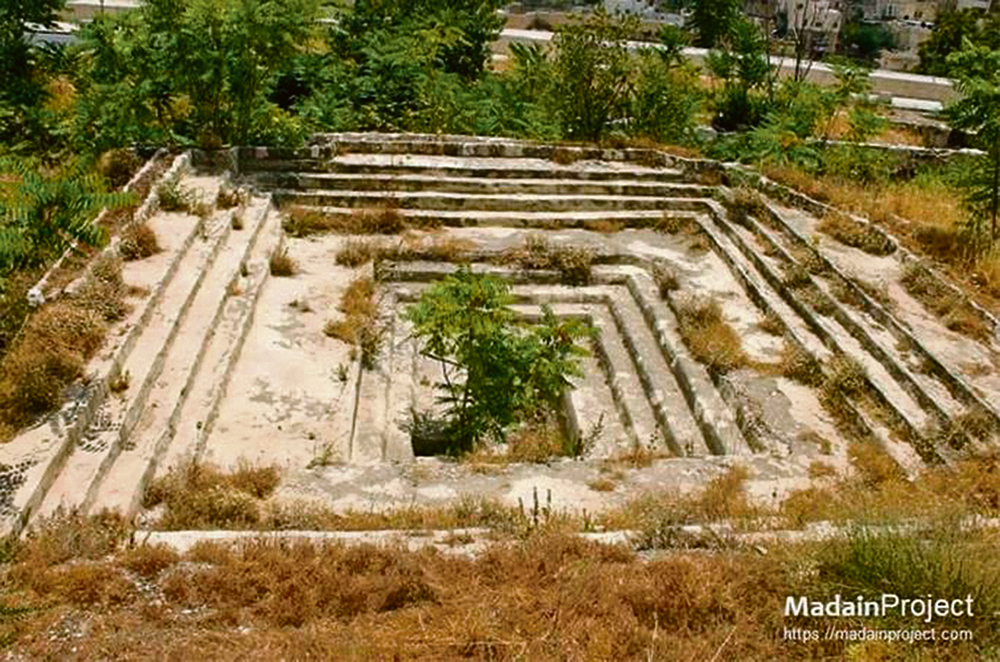
Mikvah in the Western Wall Tunnels
Archeologists have discovered many ancient mikvahs in Jerusalem, particularly in the vicinity of the Temple Mount. One of the largest is underground, in the Western Wall tunnels, about 65 feet from the Wall itself.1 Researchers believe that this was part of the building where the Sanhedrin met, and thus call it the Sanhedrin Mikvah.
The Sanhedrin Mikvah was in use during the Second Temple era. It is located in a large building, which is believed to be the administrative center at the foot of the Temple Mount described by Josephus. Archeologists have determined that the mikvah was added some time after the building was constructed, and hypothesize that the additional bath was necessary due to local population growth.
Ophel Mikvah
The Ophel–an area just south of the Temple Mount, between the Old City and the City of David National Park–contains some of the oldest archeological artifacts in the Land of Israel, dating all the way back to the First Temple.
Among the discoveries in the Ophel is a large mikvah, likely used by Temple Priests during the Second Temple era.2 Over 32 feet long and 27 feet wide, the mikvah is surrounded by stairs on all sides. The two upper steps were paved while the remaining steps and the mikvah itself were plastered.
The mikvah was likely inside a building, of which only a 1.5-foot-wide wall along its northwest side remains.
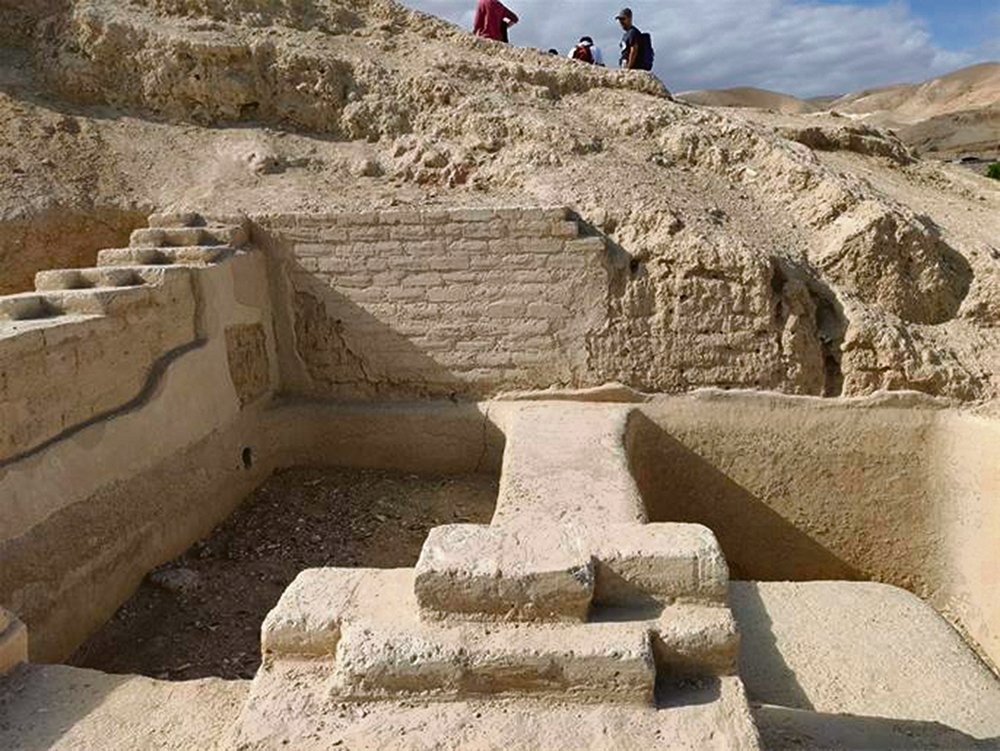
Jericho
Hasmonean kings, descendants of the Chanukah heroes, built winter palaces in the desert oasis of Jericho. In addition to state-of-the-art luxuries of the time, the palace complex contained a synagogue and many mikvahs. The complex was so solidly built that even after two major earthquakes, its ruins still stand.3
To date, at least twelve mikvahs have been discovered in the palace complex. Some of them are located in the inner chambers and seem to have been intended for the royal family’s private use. Others were found in more public areas of the complex, near storehouses, oil and wine presses, and bathhouses.4
Qumran
Located in the Judean desert, Qumran gained its fame after the Dead Sea Scrolls were found in its caves. Archeologists also discovered ruins of an ancient settlement in the area, dating as far back as the First Temple period.
Later, Qumran was much expanded by the Hasmonean kings, who constructed an elaborate water system, including an aqueduct and a dam. Due to the desert climate, rain was seasonal and all water was precious. Winter floodwater and rainwater were collected and stored in numerous cisterns throughout the water system.
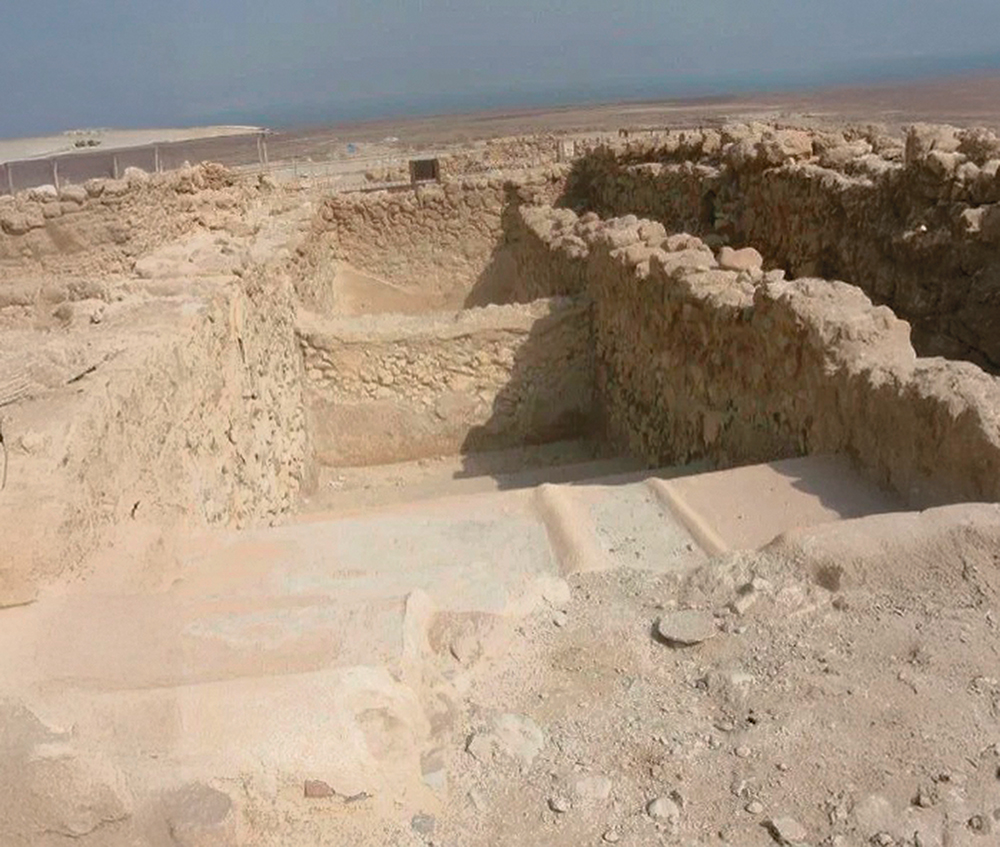
Archeologists discovered a large number of mikvahs connected to this water system, some large and some smaller. The mikvahs were dug into the soil and waterproofed with thick gray hydraulic plaster. Some of the larger mikvahs have a low partition dividing the stairs. Archeologists presume that one side was used before the immersion and the other side after the immersion, for greater purity.5
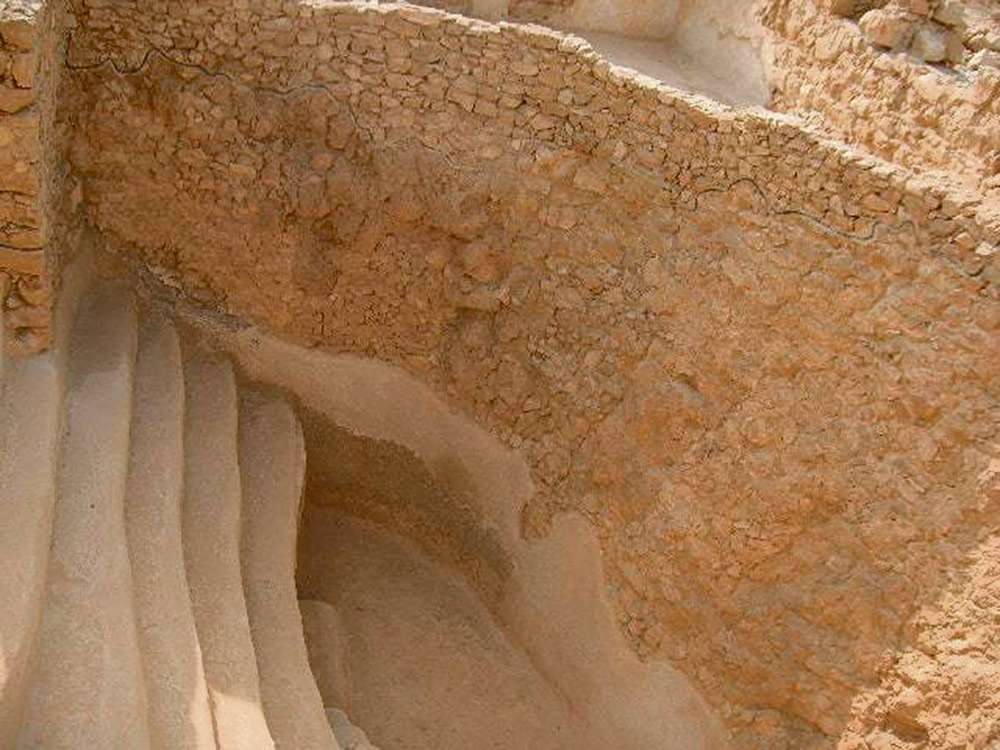
Masada
Masada is best known as the mountaintop fortress that became the last stand of the Jewish rebels during the Great Jewish Revolt against Rome. But Masada was fortified much earlier, in the Hasmonean era, and was the location of one of King Herod’s royal palaces.
Extensive archeological excavations uncovered at least half a dozen ancient mikvahs on Masada. Like in Qumran, water was sparse, and rain and flood water were carefully collected by the elaborate water system consisting of two aqueducts and a cascade of water cisterns on the northwestern slope of the mountain. The mikvahs were supplied with water from this system.
Beit Shemesh
Beit Shemesh is a modern, developing city with ancient roots. As the city continues to expand, archeologists are finding more and more evidence that a strong Jewish community existed in the area during the Second Temple era and beyond. Among the discoveries are numerous mikvahs.
Recently, a hilltop containing at least 10 well-preserved mikvahs was excavated during the construction of a new residential neighborhood. The researchers are calling it Givat Hamikvaot, “Hill of the mikvahs.” It is presumed that about 2,000 years ago, each home on this hill had its own private mikvah.
Their solid construction and strict adherence to the parameters of Jewish law testifies to the commitment and dedication of the Jews living under Roman occupation, even after the destruction of the Second Temple.6
Thanks to the efforts of local enthusiasts, the Hill of the Mikvahs was designated an archeological site, to be preserved in the midst of the residential area. Though currently inaccessible, the hill will be open to the public once the neighborhood is completed.7
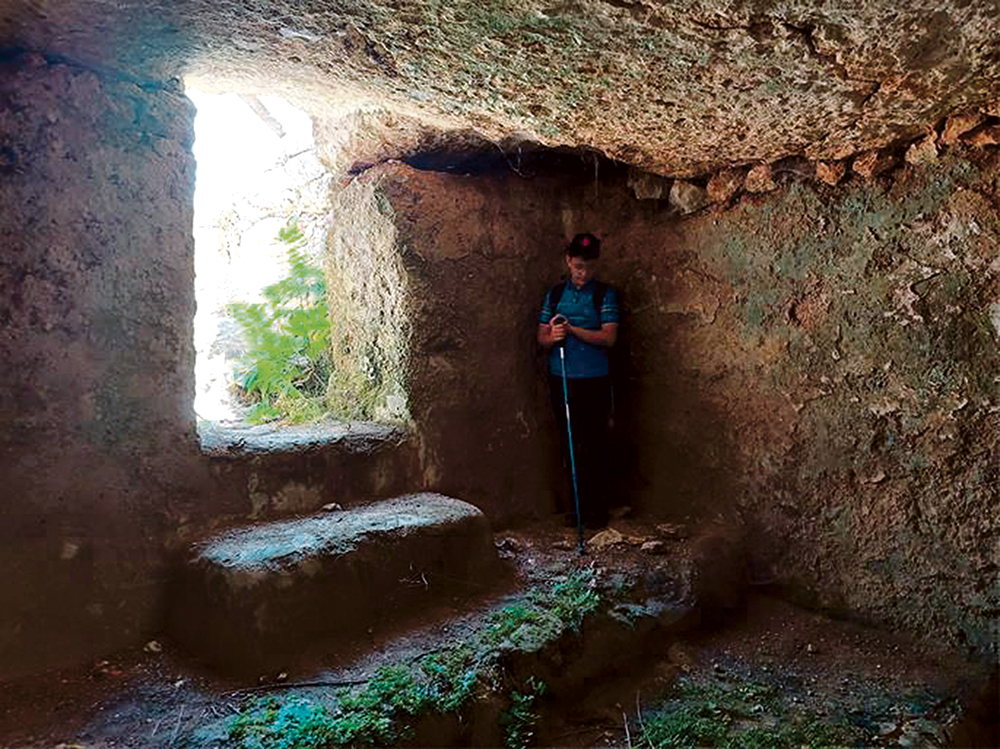
The Galilee
After the destruction of the Second Temple, the communal center of Jewish life shifted to the Galilee, in the north of Israel. Archeological evidence–including dozens of mikvahs–attests to vibrant Jewish life in the centuries following the Temple’s destruction.
Some of the mikvahs were private while others were communal. Some were located in residential areas and others in industrial areas, near olive and wine presses. Their widespread distribution makes it clear that the Jews living in the Galilee in those days were very dedicated to the mitzvah of ritual purity.
Most of these mikvahs collected rainwater, but the mikvahs in Magdala, on the Sea of Galilee, were constructed as wells with steps that would fill with groundwater.8
In Gamla, in the southern Galilee, archeologists discovered a communal complex that included a synagogue and a large mikvah, likely built by the Hasmonean kings. The mikvah included a reservoir for rainwater collected from the roof of the building. The walls of the mikvah were plastered with red waterproof plaster. The two lowest steps were wider than the others, ensuring stable footing for people of different heights.9
Machaerus, Jordan
King Herod, remembered by Jews as a ruthless and paranoid ruler who murdered his own children (among others), built many fortifications and palaces throughout the Land of Israel, including a palace on the eastern side of the Jordan River in what is now Madaba, Jordan.
Archeologists have conducted extensive excavations at Machaerus and discovered a number of mikvahs. A particularly large one, believed to have been used by the royal family, was housed in a building covered with a vaulted stone roof. Twelve steps lead down to a depth of about 12 feet, and the mikvah connects to a 20-foot-deep reservoir. 10
Syracuse, Sicily
The Jewish community in Syracuse, Sicily, originated in the days of the Roman Empire. The Jews who settled there were likely brought as captives from the Land of Israel.
Archeologists determined that an ancient mikvah discovered in Syracuse was built around 600 CE and remained in use for almost 1,000 years. The mikvah consisted of five immersion pools, supplied by an underground spring.11
The Jewish community existed in Syracuse until the expulsion from Spain in 1492. Before leaving for good, the Jews hid the mikvah in order to preserve it. They filled the entrance with stone and sand, creating a courtyard patio that concealed the mikvah.
In the 1980 s, a hotel was built in the area. During the construction, the entrance to the mikvah was uncovered. The hotel owners cleared the area and opened the mikvah to tourists.
Ostia, Italy
One of the most exciting recent archeological discoveries is an ancient mikvah in the port city of Ostia, near Rome. Ostia served as a gateway to Rome and was home to a diverse mix of ethnic and religious backgrounds.
The ancient mikvah, which dates back to the late 4 th or early 5 th century CE, is currently the oldest known mikvah in Europe. Part of a large private home, the mikvah was rectangular in shape, covered with black and white tiles, and connected to a circular well.12
At the bottom of the mikvah, archeologists found an oil lamp decorated with a menorah and a lulav, confirming their theory that it was indeed a mikvah and that this area of Ostia was populated by Jews.
The Jewish world is now celebrating fifty years since the Rebbe launched Mivtzah Taharat Hamishpacha, the international campaign to encourage couples to embrace mikvah in their marriages. (Chabad.org)
Footnotes
- Sanhedrin Mikvah, Madain Project. Also see Archaeological Discoveries: 2,000-Year-Old Mikveh Discovered in Western Wall Tunnels, Jewish Virtual Library.
- Mikveh of the Priests (Ophel), Madain Project.
- The Hasmonean Winter Palaces, Jewish Life in Jerico.
- Eyal Regev, Pools and Palaces, Segula Magazine.
- Qumran-Center of a Jewish Sect of the Second Temple Period and the Dead Sea Scrolls Found in Caves Nearby, Israeli Ministry of Foreign Affairs.
- Yisrael Hershkowitz, Dipping into History, Mishpacha Magazine, July 18, 2023.
- Nissan Levron, blog and personal communication.
- Yonatan Adler, Jewish Ritual Immersion in the Longue Durée: From Earliest Manifestations Until Today. ‘Atiqot 113, 2023.
9 Yehuda Holtzman, The Ancient Synagogue in Gamla, Historical Sites in Israel.
- Robin Ngo, King Herod’s Ritual Bath at Machaerus, Biblical Archaeology Society.
- Jacqueline Alio, Europe’s Oldest Mikveh, Best of Sicily Magazine.
- Eli Wizevich, Archaeologists Unearth 1,600-Year-Old Jewish Ritual Bath–the Oldest Ever Found in Europe, Smithsonian Magazine, March 14, 2025.
