



|
Getting your Trinity Audio player ready...
|
Somaliland — The Unexpected Destination for Travelers and What Awaits the Israeli Visitor
By: Jeff Gorman
Until just recently, Somaliland meant very little to most Israelis. However, as Ynet News recently reported, the announcement over the weekend from Jerusalem that Israel and Somaliland had signed a mutual recognition agreement did not instantly turn this remote territory into a popular travel hotspot, but it certainly sparked curiosity — and opened the door to a unique tourism opportunity for those willing to think outside the box. Ynet News explored what travelers can expect there.
The dramatic announcement of official recognition of Somaliland as an independent state was celebrated in the capital, Hargeisa, like a national holiday, according to Ynet News. Israeli flags were hoisted alongside Somaliland flags, and in the streets there was a palpable sense of shared destiny between two small nations surrounded by challenges, both of which have chosen the path of democracy and progress. For locals, the Israeli passport suddenly became a symbol of deep friendship, and mutual curiosity surged, Ynet News reported.
Beyond the diplomatic handshakes, however, this recognition opens a door for the Israeli traveler to an off-the-radar destination. Somaliland is not a typical “sun and sand” resort locale and certainly isn’t an all-inclusive vacation spot. It is a destination for curious explorers, history enthusiasts, and adventurous travelers who want to see a different side of Africa.
It should be noted that Somaliland does not currently appear on the official list of countries on the National Security Council’s travel advisory website. Therefore, it is not officially clear whether Israel recommends its citizens avoid travel there or what level of risk might be associated with visiting.
To understand Somaliland properly, the Ynet News report explained that it’s first necessary to dispel the stigma: Somaliland is not Somalia. While Mogadishu, the capital of neighboring Somalia, is widely considered one of the most dangerous cities in the world, plagued by civil war, terrorist groups, crime, and pirate activity, Somaliland — which declared independence in 1991 — functions as a fully operating state.
The territory is democratic, relatively stable, and surprisingly safe. Ynet News reported that It has its own currency, issues passports, and maintains effective police and military forces under an elected government. Though the world largely ignored it for three decades, Somaliland continued to develop on its own terms, blending ancient tribal traditions with a profound aspiration toward Western engagement.
Arriving in Somaliland requires some patience, since there are currently no direct flights from Israel, Ynet News reports. The most convenient and secure route is via Ethiopian Airlines — widely considered a reliable option for this corridor. Travelers fly from Tel Aviv’s Ben Gurion Airport to Addis Ababa and then connect on a short flight of about 90 minutes to Hargeisa, according to the report at Ynet News.
Round-trip airfare typically ranges between $800 and $1,200. Israelis require a visa, which can be obtained either through the Somaliland embassy in Addis Ababa or, in some cases, upon arrival — but only if a prior letter of invitation arranged through a local contact is secured, Ynet News reports.
Tourism infrastructure in Hargeisa is modest. Don’t expect international luxury hotel chains; accommodation primarily consists of local hotels. Notable options include the Mansoor Hotel — a favorite among foreign journalists and UN personnel due to its security arrangements — and the more centrally located Damal Hotel, which offers modern facilities. Prices generally fall between $60 and $90 per night for a double room, according to the Ynet News report.
Personal safety in Somaliland may be the biggest surprise. Ynet News reported that contrary to regional stereotypes, violent crime rates are very low, and Hargeisa is considered safe to walk around during the day. The well-known American travel blogger Drew Binsky, who visited every country in the world, highlighted Somaliland’s tranquil atmosphere in a viral video under the banner “Somaliland Is Not Somalia,” Ynet News recounted. He described it as safe, with its own government and currency, and remarked that locals were among the kindest he encountered in Africa.
However, the local government remains sensitive about its international image and enforces a unique and strict law for tourists called the Special Protection Unit (SPU). This regulation requires that any tourist leaving the capital must be accompanied by an armed security escort from the special police unit. It is not possible to rent a vehicle and travel independently within the country. In addition to inconvenience, this requirement has a significant cost: a day trip outside Hargeisa — including a 4×4 vehicle, driver, armed guard and fuel — can cost $150 to $200, substantially increasing overall travel expenses, Ynet News reports.
Visitors should also be mindful that Somaliland is a very conservative Muslim society. Alcohol is completely prohibited — no bars, no beverages in hotels, and carrying alcohol in luggage is strictly forbidden. Dress codes are also enforced; men should wear long pants, and women are expected to cover their bodies modestly.
For those undeterred by bureaucracy and cultural restrictions, Somaliland offers unforgettable historical and natural experiences, according to the Ynet News report.
Laas Geel: The crown jewel of archaeological sites. Discovered by a French expedition in 2002, this complex of rock caves contains paintings estimated to be around 5,000 years old. Unlike many faded ancient sites, the vivid depictions — of cows, dogs, and humans in rich reds, whites, blacks and purples — appear almost freshly painted. Locals consider this site sacred, and its desert-hilltop location offers breathtaking views, as was reported by Ynet News.
Camel Market at Dawn: In the heart of Hargeisa, the camel market is a cacophonous and fragrant spectacle. Herds of camels, goats and traders negotiate loudly amid dust — a fascinating anthropological immersion into the local economy, Ynet News noted.
Money Changers and Daily Life: Not far from the market, currency exchangers sit conspicuously on the street with towering bundles of banknotes — an unintentionally vivid illustration of the country’s severe inflation and the local shilling’s low value. Despite the casual outdoor setting, this is taken as another sign of personal safety and low violent crime rates.
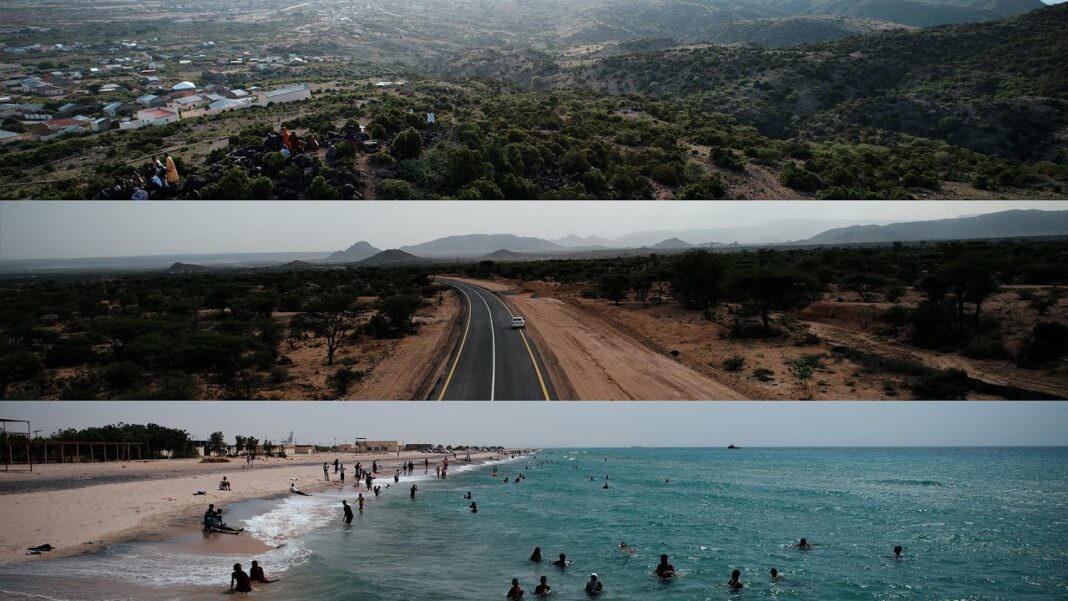
Berbera: Traveling north toward the coast leads to the historic port city of Berbera, characterized by humid seaside climate, remnants of Ottoman and British architecture giving it a haunting “ghost town” charm, and pristine Red Sea beaches untouched by mass tourism.
As the Ynet News report indicated, a trip to Somaliland is not as inexpensive as one might assume. While daily living costs and food are very affordable, logistics and mandatory security significantly increase the overall travel budget. Still, travelers who arrive now are likely to be met with a rare and warm welcome — a hospitality extended to those perceived as true friends — and to witness a nation in historical evolution at a remarkable crossroads.