



|
Getting your Trinity Audio player ready...
|
By: Jeff Gorman
When Super Bowl LX unfurled beneath the bright lights of Levi’s Stadium on February 8, 2026, the spectacle extended far beyond the clash between the New England Patriots and the Seattle Seahawks. As confetti drifted and cameras panned across a global audience, the event became, in quieter but no less consequential ways, a tableau of contemporary Jewish presence in American public life—an intricate weave of ownership and advocacy, ritual and community, celebration and controversy. In retrospect, Super Bowl LX will be remembered not merely as a championship game but as a moment in which Jewish visibility in the National Football League and the surrounding civic culture crystallized into a complex narrative about identity, influence, and the contested meaning of solidarity in an age of heightened antisemitism.
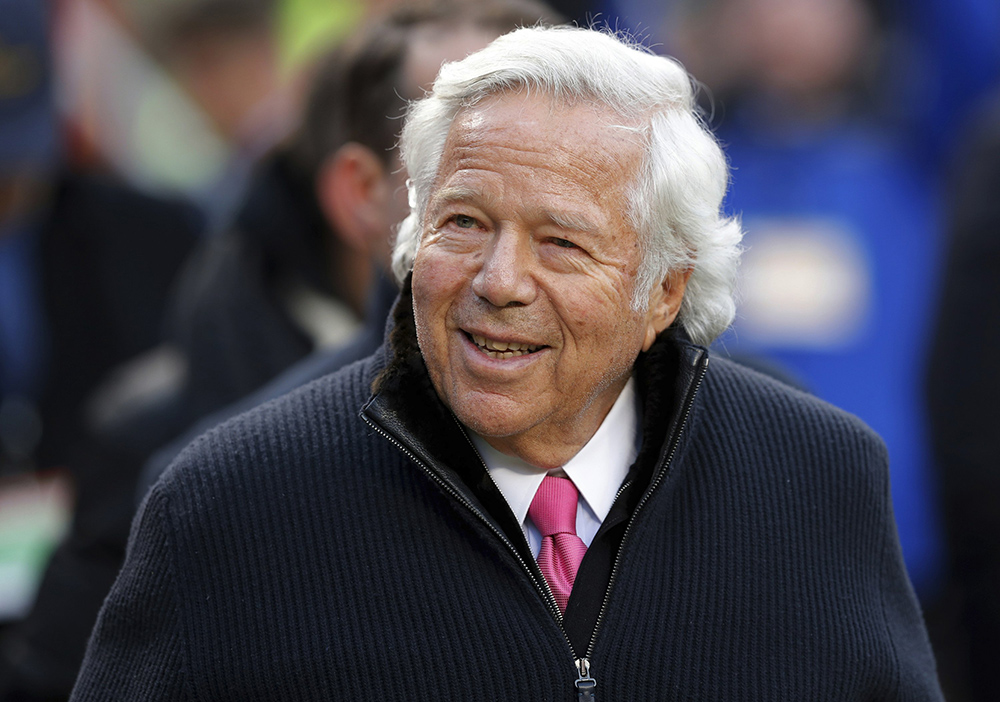
At the heart of the contest stands Robert Kraft, the Jewish owner of the New England Patriots, whose team’s return to the Super Bowl endows the evening with an added layer of communal resonance. Kraft’s prominence in the NFL has long symbolized the deep-rooted connection between American Jews and the league’s leadership, a relationship that has matured quietly over decades. By 2026, approximately nine of the league’s 32 team owners were Jewish, a demographic fact that underscores the degree to which Jewish entrepreneurs and philanthropists have shaped the institutional architecture of professional football.
Though such ownership rarely intrudes upon the on-field drama, the Patriots’ appearance in Super Bowl LX lends a personal valence to the evening for many Jewish fans, who see in Kraft’s stewardship a reflection of Jewish integration into the most quintessentially American of sporting rituals.
The Jewish imprint on the Super Bowl, however, is not confined to the owner’s box. In the days leading up to kickoff, Kraft’s philanthropic initiative—recently rebranded as the Blue Square Alliance Against Hate—seeks to transform the Super Bowl’s commercial ecosystem into a platform for moral exhortation. The alliance’s $15 million advertisement, “Sticky Note,” will air during the broadcast, portraying a Jewish teenager subjected to a slur and rescued from isolation by an empathetic ally who covers the insult with a blue square.
The image, calibrated for maximum emotional immediacy, was designed to condense the trauma of antisemitic bullying and the promise of intercommunal solidarity into a half-minute parable.
In retrospect, the ad’s reception became as much a part of the Super Bowl’s Jewish story as the commercial itself. For some, the spot represents a rare incursion of Jewish vulnerability into a cultural arena dominated by triumphalist narratives. For others within the Jewish community, the imagery provoked discomfort, even resentment. Critics argued that the portrayal of Jews as passive victims in need of rescue perpetuated outdated tropes and failed to capture the more diffuse, digitally mediated forms of antisemitism that increasingly shape Jewish experience.
The backlash revealed a generational and ideological schism over how antisemitism should be confronted in the public square: whether through appeals to empathy and allyship, or through assertions of resilience and communal self-strengthening. In that sense, the ad did not merely seek to combat hate; it inadvertently illuminated the contested strategies by which Jews seek to narrate their own vulnerability and agency.
The Blue Square Alliance’s presence extends beyond the broadcast itself. Two days before the game, on February 6, 2026, the organization convened a “Unity Summit” in partnership with Hillel International, the United Negro College Fund, and the NFL. The summit brought together Black and Jewish student leaders for a series of conversations on allyship, historical memory, and the shared burdens of prejudice. The setting—a Super Bowl host city awash in corporate hospitality and media frenzy—lent the gathering an almost surreal quality.
Yet the summit’s symbolism was unmistakable: a deliberate effort to frame the fight against antisemitism within a broader coalition against bigotry, and to root that struggle in the lived experiences of young adults poised to become future civic leaders. In hindsight, the summit represented a quiet counterpoint to the spectacle of the game itself, an attempt to cultivate depth amid the Super Bowl’s relentless surface.
If the Blue Square Alliance provides the evening’s most conspicuous Jewish advocacy, the local Jewish community in the Bay Area will furnish a parallel narrative of ritual continuity and communal hospitality. Just minutes from Levi’s Stadium, Chabad of Santa Clara emerges as an unexpected hub of Jewish life during Super Bowl week. For out-of-town fans arriving in droves, the Chabad center offers a refuge of familiarity in the midst of corporate pageantry. A kosher tailgate barbecue, featuring meticulously certified wings, burgers, and steak, will allow observant fans to partake in the game-day ritual without compromising dietary law.
The aroma of smoke and spice drifting through the parking lots will carry with it an almost talismanic significance: a sensory reminder that Jewish practice can adapt to even the most unanticipated of cultural environments.
On the morning of the game, a Tefillin Club minyan will convene at Chabad, offering what organizers described as a “spiritual boost” before kickoff. The image of men binding leather straps in prayer a short drive from a stadium roaring with anticipation encapsulates the duality of Jewish life in diaspora—anchored in ancient ritual yet fully immersed in contemporary spectacle. Later, for those without tickets, the Chabad center will host a game watch party, transforming the Super Bowl into a communal viewing experience framed by blessing and fellowship. Local rabbis also coordinated what became known as “Touchdown Shabbat,” organizing communal dinners and hospitality for Jewish visitors who arrived early enough to observe the Sabbath before Sunday’s game.
In these gestures of care, the Jewish community inscribed its rhythms onto the temporal architecture of Super Bowl weekend, demonstrating that even the most commercialized of American holidays could be inflected with religious meaning.
The juxtaposition of these local practices with the national broadcast of Kraft’s anti-hate message invites a broader retrospective reflection on what the Super Bowl has come to signify for American Jews. Once a distant spectacle, the championship game has evolved into a stage upon which Jewish presence is articulated in multiple registers: economic, philanthropic, ritual, and symbolic. The ownership of teams like the Patriots and the Philadelphia Eagles, under Jewish proprietors such as Kraft and Jeffrey Lurie, situates Jews within the league’s corridors of power.
Advocacy initiatives leverage the Super Bowl’s unparalleled audience to project moral messages outward. Meanwhile, grassroots community efforts anchor Jewish identity inward, providing spaces of belonging amid the tumult of mass culture.
In the long view, the Jewish dimension of Super Bowl LX may be remembered less for any single advertisement or event than for the convergence of these disparate strands into a moment of heightened self-awareness. The spectacle revealed how deeply Jews are woven into the fabric of American sports culture, not merely as spectators but as stewards and shapers of the game’s institutional life. It also exposes the anxieties that accompany visibility: the fear of misrepresentation, the burden of speaking for a community that is anything but monolithic, and the challenge of articulating a moral stance that resonates across generational and ideological divides.
When the final whistle blows and the season’s champions are crowned, the Jewish story of Super Bowl LX will linger in quieter spaces: in the shared meals at Chabad tables, in the conversations sparked by a controversial commercial, in the alliances tentatively forged at a unity summit. Together, these moments will compose a retrospective tableau of a community negotiating its place within America’s most lavish civic ritual—asserting presence, contesting narratives, and, in the process, revealing the enduring complexity of Jewish engagement with the national imagination.
