



|
Getting your Trinity Audio player ready...
|
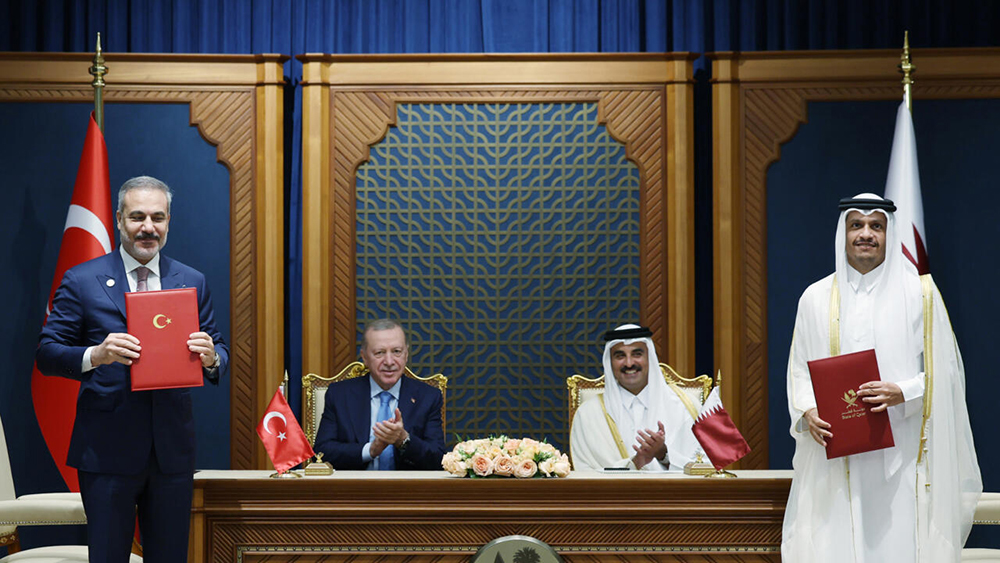
President Trump has pledged to reshape the Middle East with a bold new diplomatic architecture, anchored by the proposed Gaza Peace Board. The ambition is laudable. The execution, however, risks being undermined by the perplexing decision to include Qatar and Turkey among the principal architects of Gaza’s future. If the goal is genuine stability, reconstruction, and the permanent neutralization of Hamas, these two nations should be nowhere near the table.
For years, Qatar and Turkey have not merely tolerated Hamas—they have nurtured it. Doha has served as a comfortable sanctuary for senior Hamas leaders, hosting them in luxury while they orchestrate terror campaigns from afar. Billions of Qatari dollars have flowed into Gaza under the guise of humanitarian aid, with far too much of that largesse diverted into rockets, tunnels, and military infrastructure. A state that bankrolls an organization committed to Israel’s destruction cannot credibly be entrusted with rebuilding a post-Hamas Gaza.
Turkey’s record is no better. President Recep Tayyip Erdoğan has transformed Ankara into one of Hamas’s most reliable political patrons, welcoming its operatives, providing logistical support, and offering a megaphone for its extremist propaganda. Turkish officials have repeatedly glorified Hamas as a “liberation movement,” even in the aftermath of massacres and kidnappings of Israeli civilians. Such rhetoric is not the language of a neutral mediator; it is the vocabulary of an ideological ally.
Including these governments on a body tasked with securing peace is akin to appointing arsonists to a fire safety commission. Their strategic interests are fundamentally misaligned with the stated mission of disarming militants and creating a stable, demilitarized Gaza. Both Qatar and Turkey envision a Middle East in which Israel is weakened, isolated, and ultimately erased. That objective is irreconcilable with any durable peace process.
The United States has no shortage of credible partners—nations that recognize Israel’s legitimacy, reject terrorism, and have demonstrated a commitment to pragmatic diplomacy. Egypt, Jordan, the United Arab Emirates, and others have proven they can act responsibly. Qatar and Turkey have proven the opposite.
President Trump’s instincts on Middle East policy have often been sound. On this issue, they must be sharpened. A Gaza Peace Board populated by states that enabled Hamas’s rise will not produce peace—it will merely recycle the conditions for the next war. If the administration is serious about a new beginning, it must begin by choosing partners who truly seek one.
