



|
Getting your Trinity Audio player ready...
|
Sara Lehmann
(JNS) There is an odd footnote to the many summers I spent in the tiny upstate village of Tannersville, N.Y. On the side of a backroad, framed by imposing peaks of the Catskill Mountains is the barren site of the long-gone Camp Betar. It was there that Ze’ev Jabotinsky died in the summer of 1940.
The famous author, statesman and Zionist activist founded the Betar Movement in Latvia in 1923 with the goal of mobilizing Jewish youth for the Zionist cause. Jabotinsky was visiting the New York Betar Camp when he died of a heart attack at the age of 59.
I remembered that spot a week ago when I attended the New York premiere of the play “Jabotinsky’s Dream: The Man and the Legend.” Hosted by the Consulate General of Israel in New York, the play was produced by the Shomron Theater and premiered in Lower Manhattan at the Museum of Jewish Heritage.
The play highlighted the transformation of Odessa-born Jabotinsky the writer into Jabotinsky, the fierce defender of the Jewish people. He was profoundly influenced by the Kishinev pogroms in 1903, which shaped his vision of Jewish self-defense and the necessity of a Jewish state.
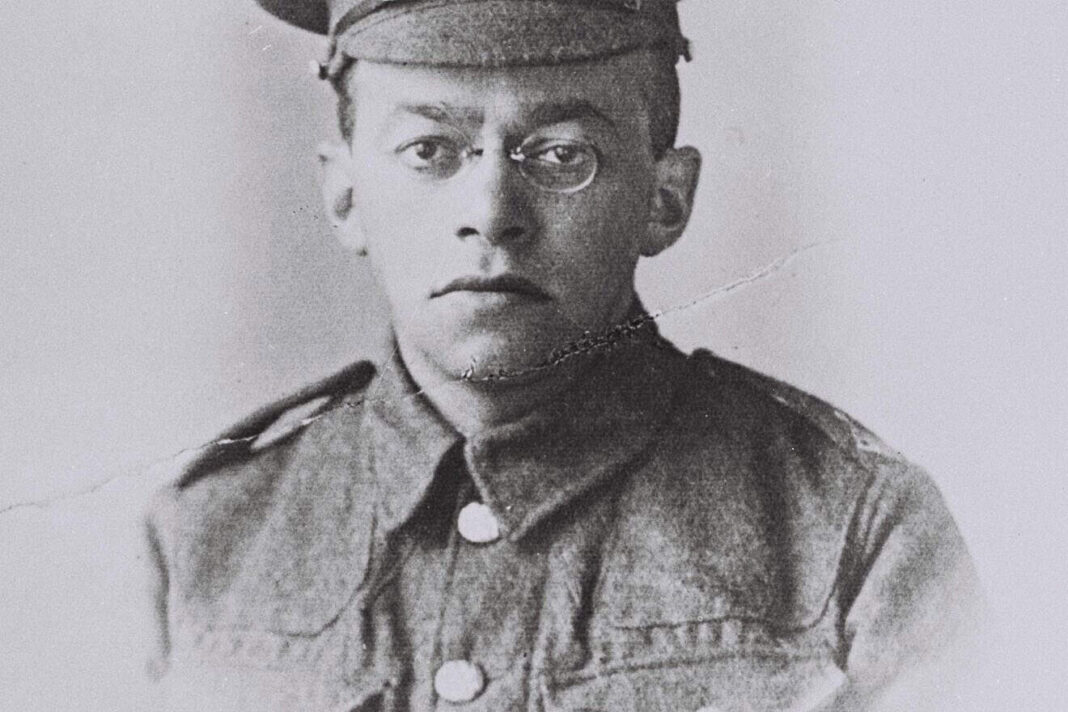
Jabotinsky co-founded the Jewish Legion of the British Army in World War I with famed war hero and Zionist Joseph Trumpeldor, created the Betar movement, and later on, formed the Irgun in British Mandatory Palestine. He begged Jews in Europe to flee to Palestine before and during the Holocaust, and was haunted thereafter by the inefficacy of his efforts.
Basically, he was the precursor to the Likud we know today.
Before the play, New York Consul General Ofir Akunis—himself a former Likud member and Knesset member—spoke at the event about the enduring relevance of Jabotinsky’s philosophy. “When Jabotinsky wrote his famous thesis ‘The Iron Wall,’ he brought the idea that we must not be weak in the eyes of our enemies,” Akunis said. “We must first build that iron wall and then peace can happen. This idea was relevant then, when he warned the Jews about the rise of antisemitism in Europe that ultimately led to the Nazi regime, and is relevant today with the existence of the Iranian regime and their proxies.”
Akunis noted the difference today of having a Jewish state and the Israel Defense Forces. But he also warned that “our enemies can feel when we show weakness and are not united. We must continue to be strong, stand up for our values and never be Jews with trembling knees.”
In a twist of irony that demonstrated Jabotinsky’s enduring relevance, just one week before the play’s premiere, New York Attorney General Letitia James said she had reached a settlement with Betar US.
As antisemitism skyrockets across America, particularly in New York, James was busy probing the activities of the group Jabotinsky had founded 100 years ago. James, who eagerly and early on endorsed anti-Israel New York City Mayor Zohran Mamdani, investigated Betar for having “repeatedly targeted individuals based on religion and national origin.”
In other words, she blamed the victim, rather than the perpetrator. James accused Betar, a tiny group of pro-Israel activists, of counter-protesting at pro-Palestinian demonstrations, using slur-filled “public and private statements” and calling on supporters to “fight back” at anti-Israel protests.
While pro-Hamas protesters shouted “Death to the Jews,” James accused Betar of intimidating the protesters. If Oct. 7, 2023, hadn’t produced animosity rather than compassion for Jews, then it would be almost impossible to believe this 21st-century version of a Kishinev blood libel to be true.
Another simultaneous event saw threats to Israel from a friendlier quarter. Jewish leaders in Israel reacted negatively to the Trump administration’s inclusion of Turkey and Qatar—enablers of Hamas—into U.S. President Donald Trump’s “Board of Peace” to oversee the reconstruction of Gaza. From Israeli Prime Minister Benjamin Netanyahu to Israeli Minister of National Security Itamar Ben-Gvir to opposition head Yair Lapid, the rejection was unanimous.
Leaders also rebuffed the idea of a Palestinian technocratic governing committee in Gaza, whose responsibilities would stretch so far as to almost form a quasi-Palestinian government. In both the local and international governing boards, no one wants to see the fox guarding the henhouse.
There were also reports of anger and skepticism in Israel at U.S. Middle East envoy Steve Witkoff, who apparently was pressuring Israel to open the Rafah crossing in a premature gesture before the return of hostage Ran Gvili’s body by Hamas, a condition of the plan’s first phase. Thankfully, Gvili’s body was recovered—but by the IDF, not by Hamas.
Then there is the matter of Hamas’s intransigence when it comes to disarmament. Speaking recently in Davos, Switzerland, at the World Economic Forum, Trump warned that Hamas “will be blown away very quickly” if it fails to disarm under the second phase of his Gaza peace plan.
Trump’s long, true and tested friendship with the State of Israel is not debatable. However, seeming pressure by his some of his envoys to precipitously move from one phase to the next is hardly a reassurance that any of the phases’ conditions will be fulfilled satisfactorily.
Nitsana Darshan-Leitner, president and founder of Shurat HaDin-Israel Law Center, commented on the return of the last hostage, saying “Ran Gvili is a symptom of the entire Trump plan for Gaza and the proposed Board of Peace. Just as Hamas acted in bad faith during the agreement—knowing where the last hostage was held and refusing to cooperate with Israel to secure his return—Israel was ultimately forced to enter and do the job itself. The same pattern will repeat: Hamas will refuse to disarm and surrender, and once again, Israel will be left with no choice but to go in and complete the mission on its own. In the end, Israel will once again be expected to pay the price for illusions others are free to entertain.”
Jabotinsky was a man of vision but also a man of action. Allowing for realpolitik, it can be assumed that in these scenarios, he would not have yielded authority over Jewish self-defense to friends, let alone enemies. Unless it was behind an iron wall.