



|
Getting your Trinity Audio player ready...
|
Jared Evan
(TJV NEWS) A seemingly straightforward question has ignited a complex debate in New York City politics: is the city’s first lady a private person — or, by virtue of her proximity to power, a public figure?
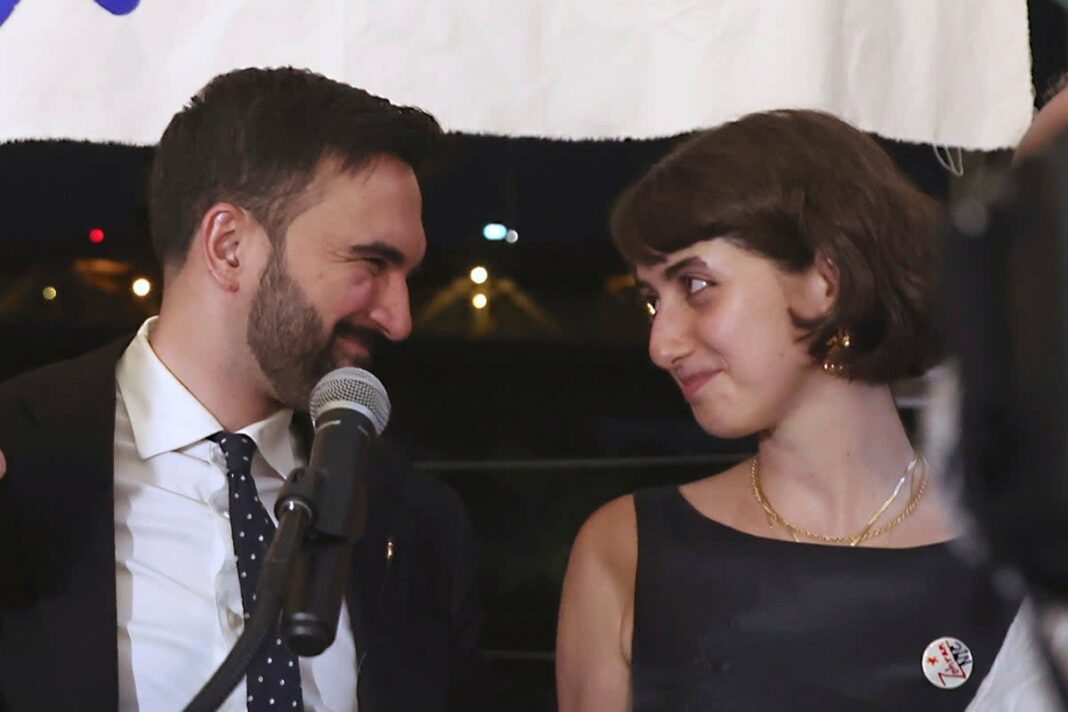
That’s the central issue explored in a Politico article by Chris Sommerfeldt examining how media, law, and culture intersect in evaluating the role of Rama Duwaji, the spouse of newly inaugurated Mayor Zohran Mamdani.
The discussion arrives at a time when the very definition of public and private life for political spouses is under scrutiny. Duwaji — a 28‑year‑old artist and digital creator whose work has appeared in major outlets — stepped into the public eye when her husband won the city’s top office. As Sommerfeldt notes in his reporting, the current debate isn’t just about her title but about whether her personal life should be shielded from scrutiny because she is not an elected official herself.
A Modern First Lady With a Foot in Two Worlds
Traditionally, the spouse of a mayor has occupied an informal, ceremonial role — sometimes culturally influential but without codified duties or legal responsibilities. The term “first lady,” while widely used in political and media circles, is not a formal government position; it has no statutory definition and carries no official powers.
Yet in today’s media environment, roles like first lady are often thrust into public conversation, especially when the individual has a public identity beyond her spouse’s career. Duwaji fits that mold: she has cultivated a creative career as an illustrator and animator, and maintained a public presence through media and social platforms prior to and during her husband’s mayoral campaign.
Sommerfeldt’s reporting points out that some critics contend Duwaji’s visibility — combined with her husband’s high‑profile position — automatically makes her a public figure, subject to media coverage and public debate. Others argue that because she holds no elected office and has declined many interviews or formal duties, she should retain greater privacy than a typical politician.
Courts, Culture and the “Public Figure” Label
In legal doctrine, there are distinctions between “public figures” and “private citizens”, particularly in libel and First Amendment law: public figures must meet a higher threshold to prevail in defamation cases, for example, because they are presumed to have voluntarily entered public discourse. Politico’s coverage highlights that courts sometimes apply a “limited‑purpose public figure” status when a person participates actively in public debate or campaigns, but the determination is fact‑specific and far from settled.
As Sommerfeldt explores, there’s no clear legal blueprint for where a mayor’s spouse falls on this spectrum — especially when the spouse has her own public presence and voice. This ambiguity creates a gray area where media outlets, civic activists, and legal analysts clash over how to treat figures like Duwaji.
Historical and Cultural Context
The debate in New York echoes broader shifts. Previous first ladies of major cities often kept lower public profiles, focusing on charity or ceremonial duties. For example, Joyce Dinkins, the city’s first African‑American first lady in the early 1990s, embraced her role with advocacy on children’s rights and literacy but did so in a media era far less centered on invasive scrutiny.
Today’s 24/7 news cycle and social media environment, however, magnify both interest and criticism, making even minor personal details a matter of public debate. Some pundits argue that when a political spouse engages with issues publicly — even through their artistic work, humanitarian efforts, or cultural influence — they tread closer to being a public figure, regardless of title.
What It Means for Duwaji and Others
At the heart of the debate is more than semantics. How Duwaji is framed — as a private individual or as someone in the public domain — has implications for journalism, public expectations, and individual rights. If she is treated as a public figure, she may face limits on privacy and protection under certain laws; if she is treated as a private citizen, media outlets and critics could face higher barriers before scrutinizing personal decisions.
Sommerfeldt’s article leaves readers with that tension front and center: there’s no hard rule, no legal definition etched in stone — just an ongoing cultural negotiation over what it means to be connected to political power in an age of unrelenting attention.
As New York watches this debate unfold, the question of whether the city’s first lady is truly a “private person” — or something distinct — remains open, reflecting broader conversations about privacy, public life, and the responsibilities and rights of those who stand beside elected leaders.
