



|
Getting your Trinity Audio player ready...
|
By: Fern Sidman
For nearly half a century, the Islamic Republic of Iran has pursued a sustained campaign of hostility against the United States and its allies, employing terrorism, proxy warfare, covert operations and ideological incitement as instruments of state policy. From the earliest days of the 1979 revolution to the present conflict, the regime in Tehran has demonstrated not merely rhetorical antagonism toward America and Israel, but a consistent willingness to shed blood in pursuit of its revolutionary objectives.
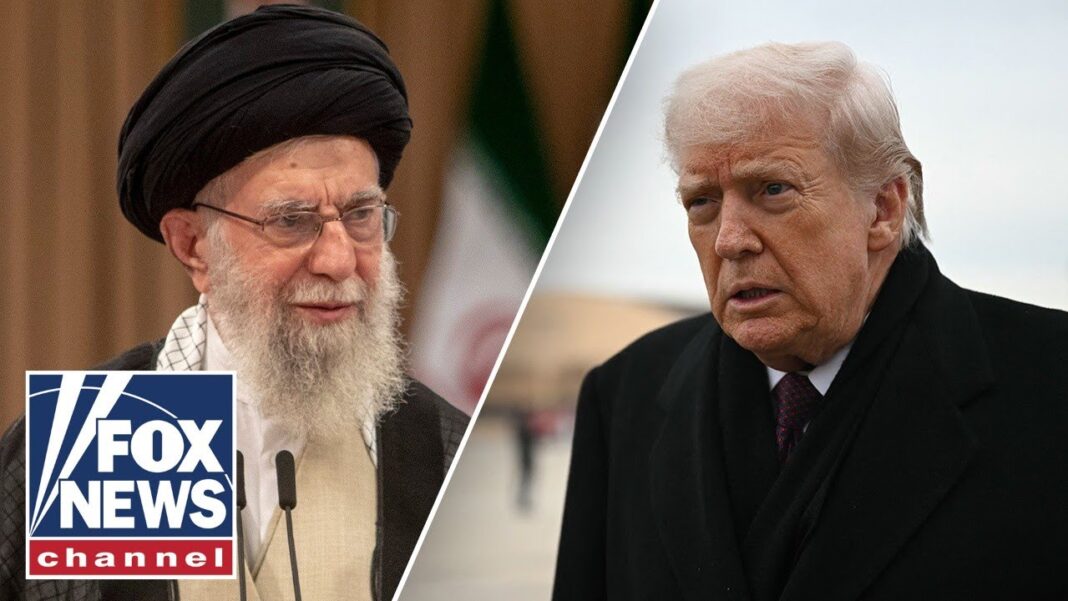
President Trump’s decision to strike Iran’s military infrastructure and prevent it from acquiring nuclear weapons marks a historic departure from decades of strategic hesitation. It is a response shaped not by impulse, but by an accumulated record of aggression that spans generations of American service members and civilians.
The first unmistakable signal of Iran’s posture toward the United States came in November 1979, when regime-backed militants stormed the U.S. Embassy in Tehran, seizing 66 American diplomats and citizens and holding them captive for 444 days. The episode was not merely a diplomatic crisis; it was an announcement that the new regime intended to confront the United States as an existential adversary.
The violence that followed was neither sporadic nor accidental. In April 1983, an Iran-backed terrorist organization bombed the U.S. Embassy in Beirut, killing 17 Americans. Six months later, Hezbollah—formed, financed and trained by Tehran—detonated a truck bomb at the U.S. Marine barracks in Beirut, murdering 241 American service members. It remains one of the deadliest single attacks on U.S. forces in modern history.
American diplomats, intelligence officers and military personnel continued to be targeted throughout the 1980s and 1990s. CIA station chief William Buckley was kidnapped and killed. U.S. embassies were bombed. Airliners were hijacked. Americans were tortured and executed. Each attack bore the fingerprints of Iranian sponsorship, whether through Hezbollah, Islamic Jihad or other aligned groups.
The pattern intensified in the Middle East as Iran expanded its network of proxy militias. Suicide bombings in Israel killed American citizens in Jerusalem, Tel Aviv and elsewhere. Iran-backed Hamas operatives detonated buses and restaurants. American-Israeli dual nationals were murdered in drive-by shootings and bombings. In Saudi Arabia, 19 U.S. Airmen were killed and nearly 500 wounded in the Khobar Towers bombing, carried out by Hezbollah Al-Hijaz with Iranian backing.
The Iraq War revealed another dimension of Tehran’s campaign. Between 2003 and 2011, Iran-backed militias were responsible for the deaths of at least 603 U.S. troops—roughly one in six American combat fatalities in Iraq. Explosively formed penetrators supplied by Iran’s Islamic Revolutionary Guard Corps (IRGC) tore through armored vehicles. In Karbala in 2007, operatives affiliated with the IRGC’s Quds Force disguised themselves as American soldiers, infiltrated a coordination center and killed five U.S. servicemen.
This was not isolated violence; it was state-enabled warfare conducted under the cover of deniability.
The aggression did not subside in subsequent years. American contractors and service members were killed or wounded in rocket and drone attacks across Iraq and Syria. In 2020, 109 U.S. troops suffered traumatic brain injuries after Iran launched ballistic missiles at the Ain al-Asad airbase. In January 2024, a drone attack by Iran-backed Kataib Hezbollah terrorists killed three U.S. service members and wounded more than 40 at Tower 22 in Jordan.
Even as diplomatic overtures were attempted by successive administrations, Iran and its proxies carried out more than 180 attacks against U.S. forces in the Middle East between October 2003 and November 2024. Assassination plots were allegedly considered against American officials, including a charged scheme involving an Iranian national and IRGC asset accused of plotting against President Trump himself.
At the same time, Iran’s nuclear ambitions continued apace.
And then came October 7, 2023.
The barbarity of that infamous day stands as one of the clearest modern illustrations of Iran’s lethal proxy architecture in action. At 6:29 am on October 7, 2023, Hamas terrorists — armed, financed and trained with substantial Iranian backing — carried out a meticulously coordinated massacre in southern Israel. Over 1,200 Israelis and foreign nationals were slaughtered in their homes, at a music festival, and in small farming communities. Entire families were murdered. Children and elderly civilians were taken hostage. More than 250 people were abducted and dragged into Gaza, including American citizens. The scale and savagery of the attack shocked the conscience of the civilized world.
Hamas does not operate in isolation. It is an integral component of Iran’s regional proxy network, alongside Hezbollah in Lebanon and the Houthi movement in Yemen. Tehran provides these organizations with funding, weapons, intelligence and strategic direction, using them as forward operating arms to destabilize Israel and threaten Western interests while attempting to shield itself from direct accountability. Hezbollah’s vast missile stockpile along Israel’s northern border and the Houthis’ attacks on international shipping in the Red Sea are manifestations of the same Iranian doctrine: surround adversaries with asymmetric firepower, escalate through deniable surrogates, and erode deterrence over time. The October 7 massacre was not an aberration but the logical culmination of decades of Iranian sponsorship of terror — a grim reminder that the regime’s ideology is not rhetorical bluster but operational reality.
A regime that has demonstrated such sustained hostility—directly and through proxies—cannot be viewed through the same lens as conventional state actors whose nuclear arsenals are bounded by traditional deterrence logic. Iranian leaders have repeatedly called for the destruction of Israel. The regime’s propaganda routinely depicts the United States as an enemy to be confronted, not accommodated.
A nuclear-armed Iran would not simply alter the regional balance of power; it would fundamentally transform it. Tehran would gain the ability to shield its proxy warfare under a nuclear umbrella, escalating aggression while calculating that adversaries would hesitate to respond. It would embolden Hezbollah’s vast missile arsenal in Lebanon and Hamas’ capacity in Gaza. It would accelerate proliferation across the Middle East as rival states sought their own nuclear deterrents.
In such a scenario, the cost of inaction would dwarf the risks of decisive intervention.
President Trump’s decision to target Iran’s missile systems, naval assets and military command structure is therefore best understood as a defensive act—preemptive in timing, but reactive in origin. It follows decades of restraint met with continued aggression. It follows an extensive record of American blood spilled in Beirut, Jerusalem, Baghdad, Kirkuk, Erbil, Syria and Jordan.
Critics may frame the action as escalation. Yet escalation has long been Iran’s method: incremental, persistent and calibrated to remain below the threshold that would trigger overwhelming retaliation. The result was a steady erosion of deterrence.
By acting to dismantle Iran’s capacity to threaten U.S. forces and allies, the current administration seeks to restore that deterrence. It sends an unmistakable message that state-sponsored terrorism will no longer be tolerated as a low-cost strategy.
There is also a broader moral dimension.
The Iranian people have endured decades under a theocratic regime that suppresses dissent, constrains civil liberties and punishes political opposition. Protests over economic hardship and political repression have been met with crackdowns, arrests and reported killings. Journalists, activists and ordinary citizens have faced imprisonment for voicing criticism. Women have confronted coercive social codes enforced by state power.
The regime has invested heavily in missiles, militias and foreign interventions while many of its citizens struggle under economic strain. Billions have flowed to Hezbollah, Hamas and other proxies even as domestic grievances fester.
Neutralizing the regime’s capacity for external aggression does not guarantee internal reform. But it reduces the tools by which the state projects coercion both abroad and at home. A regime stripped of its military leverage and nuclear ambitions is less capable of sustaining the architecture of repression that has defined it for nearly half a century.
The strategic question confronting Washington was whether to allow a hostile, terror-sponsoring regime to approach nuclear capability unchallenged, or to intervene before that threshold was crossed. Given the historical record—from the 1979 hostage crisis to the deaths of U.S. troops in Iraq and Jordan—the latter course was defensible not only as a matter of policy, but of principle.
The world’s leading state sponsor of terrorism has operated for decades under the assumption that its actions would provoke condemnation but not decisive response. That assumption has now been tested.
In dismantling Iran’s war-making capacity and curbing its nuclear trajectory, the United States has acted to protect its citizens, uphold its alliances and reinforce the norm that terror-backed aggression cannot coexist indefinitely with impunity.
History will ultimately judge the long-term consequences of this moment. But the immediate imperative—preventing a regime with a proven record of violence from acquiring the world’s most destructive weapons—was clear. In choosing action over acquiescence, President Trump has drawn a line that previous administrations hesitated to draw.
For a nation that has lost so many to Iranian-backed terror, the decision represents not adventurism, but resolve.
