



|
Getting your Trinity Audio player ready...
|
By: Arthur Popowitz
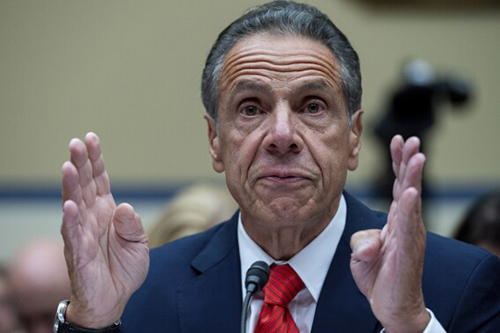
By all appearances, Andrew Cuomo has all but disappeared from the campaign trail — again.
According to a detailed analysis by The New York Post on Thursday, the former three-term New York governor has taken ten full days off from public campaigning since Labor Day weekend, a critical stretch in what insiders describe as the “make-or-break” weeks before November’s mayoral election.
In contrast, Cuomo’s rivals — Zohran Mamdani, the Democratic Socialist Assemblyman from Queens, and Republican firebrand Curtis Sliwa — have been omnipresent across the five boroughs, shaking hands, attending rallies, and staging events nearly every day since August 31.
Cuomo’s aloof campaign style, which some describe as “corporate” and “detached,” has drawn scathing criticism from political strategists, donors, and even longtime allies. Despite polling in second place, well behind Mamdani, the former governor has shown little of the ground-level hustle that once defined his political career.
“Especially in October, you want to be [at] half a dozen events a day, if nothing else but for optics,” one veteran Democratic campaigner told The New York Post. “If not now, when? Now is the time.”
Yet Cuomo seems to be spending much of this election season off the public radar — a puzzling choice that, for many, feels like déjà vu.
According to The New York Post’s review of Cuomo’s public schedule, the ex-governor has logged only 36 days of public appearances since Labor Day, the unofficial start of the general election campaign.
Many of those appearances were announced just hours or even minutes before they occurred, limiting press coverage and public turnout.
Even more striking: only 17 of those days included multiple campaign events — and those were largely concentrated on weekends, often revolving around religious or community gatherings rather than citywide outreach.
By contrast, Mamdani, the clear front-runner, has staged a relentless daily schedule of voter meetups, “reverse town halls,” and block events, despite the inherent risks of overexposure. Sliwa, too, has maintained a visible presence, with The New York Post noting that the Guardian Angels founder held more public events in one week than Cuomo has since Labor Day.
The optics, strategists say, are brutal. “He’s losing the ground war,” one longtime Cuomo ally admitted. “This feels like the same miscalculation he made in the primary — assuming name recognition alone would carry him across the finish line.”
Cuomo’s campaign insists the former governor is far from idle.
“Andrew Cuomo has been working 24 hours a day during this general election — meeting voters, courting supporters, and doing local and national media interviews to amplify his message,” campaign spokesperson Rich Azzopardi told The New York Post.
Insiders close to Cuomo say that his schedule includes a steady stream of private fundraisers, closed-door strategy sessions, and targeted media appearances aimed at shaping the narrative without the risks of unscripted public events.
The campaign points to Cuomo’s recent uptick in online visibility — particularly his interviews with high-profile digital personalities like Logan Paul, and a surge of social media content blasting Mamdani’s record on crime, housing, and policing.
Cuomo himself acknowledged during last week’s debate that his earlier campaign mistakes included failing to embrace social media.
“I did not do enough on social media, which is a very effective medium,” Cuomo said, referencing his Democratic primary loss to Mamdani — the first in New York history where a sitting or former governor was defeated by a 33-year-old socialist newcomer.
Meanwhile, Mamdani’s campaign has continued to expand its grassroots machinery across the city — canvassing subway stations, holding daily events, and leveraging TikTok and Instagram with a fluency that Cuomo’s team can’t seem to match.
As The New York Post reported, Mamdani has been pressing the flesh every day, building on a movement-driven campaign that relies less on traditional fundraising and more on small-donor energy. Even with his commanding lead in the polls, Mamdani’s team has avoided complacency.
Following the first general mayoral debate Thursday night, Mamdani held what he called a “reverse town hall” — where voters questioned him about issues ranging from policing to rent stabilization — while Sliwa held a press conference about subway crime and attended the wake of a slain security guard.
Cuomo, by contrast, held no public events at all on Friday, a decision that left even his closest aides bewildered.
“It almost seems corporate and highbrow,” one frustrated supporter told The New York Post. “We’re not pounding the streets with enthusiasm and verve. And that’s what Mamdani has. He’s everywhere. Cuomo looks like he’s above the grind, and that’s killing him.”
The latest Fox News poll, released Thursday and cited in The New York Post report, shows Mamdani breaking through the psychological barrier that every front-runner covets — crossing the 50% threshold of likely voters.
Cuomo trails with 28%, while Sliwa lags behind at 13%.
Political consultant Chris Sosa told The New York Post that Cuomo’s strategy — or lack thereof — has effectively sealed his fate.
“Cuomo has no mathematical path to victory at this juncture,” Sosa said. “It’s too late to improve his weak ground game. Barring a seismic event, Mamdani is on a glide path to victory.”
Sosa added that Cuomo’s unpopularity among broad segments of the electorate makes any late-stage pivot virtually meaningless. “Cuomo can blame social media all he wants,” he said. “But the problem with the Cuomo campaign comes down to one factor: most voters cannot stand Andrew Cuomo. Shaking more hands won’t fix such a fundamental flaw.”
For many, Cuomo’s current malaise evokes the memory of his 2021 resignation from the governorship, when he faced a cascade of scandals and accusations of misconduct.
While Cuomo has denied wrongdoing and sought to reinvent himself as a pragmatic centrist, The New York Post report noted that his comeback campaign has failed to rekindle the dynamism of his earlier political persona.
“Cuomo used to dominate every room, every news cycle,” one Democratic strategist told The New York Post. “Now he seems like a man who’s lost the appetite for the fight. You can’t win New York City by hiding behind press releases and podcasts.”
His campaign’s tendency toward tight control and last-minute scheduling has also frustrated local organizers. In the boroughs, community leaders complain that they rarely get more than a few hours’ notice before a Cuomo appearance — making it nearly impossible to mobilize volunteers or press coverage.
“It’s the same top-down arrogance that cost him the primary,” said one Brooklyn district leader who once supported Cuomo but has since switched allegiance to Mamdani. “He still acts like the governor — not a candidate who needs to earn people’s trust.”
Even Curtis Sliwa, long seen as the perpetual outsider of New York politics, has capitalized on Cuomo’s absence. The New York Post reported that the Republican nominee, though trailing in the polls, has outpaced both major opponents in sheer visibility, popping up everywhere from Staten Island ferry terminals to Harlem subway platforms.
Sliwa’s scrappy, populist approach — complete with his trademark red beret — may not win City Hall, but it has underscored the contrast with Cuomo’s cautious, consultant-driven campaign.
“Curtis is doing what Andrew should be doing,” said one Manhattan-based political analyst. “He’s out there, visible, connecting with voters. Even if people don’t agree with him, they respect that he shows up.”
To Cuomo’s detractors, the problem isn’t just absenteeism — it’s tone.
The New York Post observed that his campaign’s messaging often feels more like a corporate communications plan than a populist movement. His social media videos, though well-produced, come across as defensive and over-calculated, lacking the spontaneity that drives viral engagement.
“He’s not speaking to anyone new,” said one digital strategist who previously worked for the Cuomo administration. “He’s playing defense — trying to rehabilitate an image instead of offering a vision.”
Mamdani, by contrast, speaks the language of youth and social activism, using TikTok, Discord, and community livestreams to cultivate a sense of direct engagement. As The New York Post noted, this dynamic has made the 33-year-old Assemblyman a kind of political celebrity among young voters, particularly in Queens and Brooklyn.
With fewer than three weeks left before Election Day, Cuomo faces mounting pressure to prove he’s still a serious contender. Insiders say he’s weighing a final “media blitz” of interviews and endorsements — but even his allies admit it may be too little, too late.
“If he had been on Church Avenue walking up and down it a year ago, he wouldn’t be in this f—ing position,” one exasperated Cuomo backer told The New York Post. “He’s letting Mamdani define him — and define the race.”
For now, Cuomo’s campaign insists the former governor will “finish strong.” But for many in New York’s political circles, the verdict is already in: Andrew Cuomo, once the most dominant figure in state politics, may end his career not with a comeback — but with a quiet fade-out.
As one strategist told The New York Post, “You can’t win the mayoralty from a conference call. And that’s what it feels like Cuomo’s trying to do.”

Another reason why people of New York City should support Curtis Sliwa for Mayor.
Unfortunately a vote for Sliwa is a vote for Mamdani. He can’t win and it just takes away votes from Cuomo. New Yorkers have to get smart. This election is too important to just express themselves they have to be strategic!