



|
Getting your Trinity Audio player ready...
|
By: David Ben Hooren
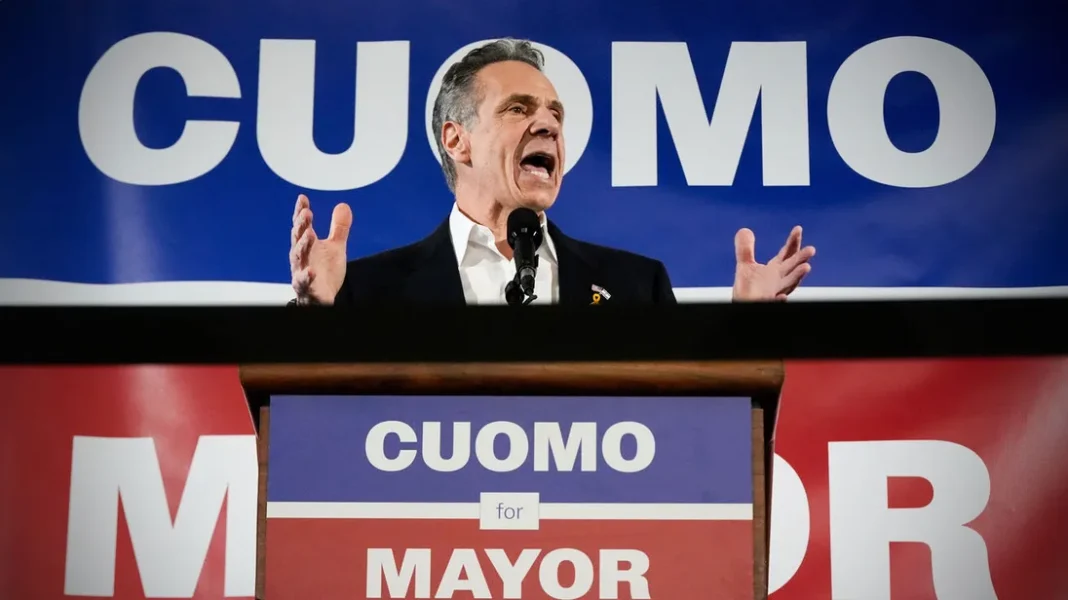
New Yorkers face a stark, uncompromising choice this November. On the ballot is not merely a race for mayor but the very future of the city as an economic, cultural, and moral beacon for the world. The contest pits Andrew Cuomo—a proven executive with a comprehensive plan to tackle crime, antisemitism, housing, affordability, and mental health—against Zohran Mamdani, a man whose ideology is rooted in socialist dogma, whose rhetoric drips with animus toward Israel and the Jewish people, and whose policies threaten to unravel the very fabric of New York City.
This is not a time for hesitation, nostalgia, or lingering resentments about Cuomo’s past controversies. Voters must decide whether they prefer a tough, seasoned leader who understands how to govern—or a radical ideologue whose movement openly brags about dictating his votes, his platform, and his political ambitions.
If New Yorkers sit this one out, if they indulge in apathy or protest votes, they will hand the city over to Zohran Mamdani and the Democratic Socialists of America (DSA). And make no mistake: that will mean economic decline, public disorder, an emboldened antisemitic fringe, and the mass exodus of lifelong residents who refuse to watch their city destroyed from within.
The rise of antisemitism is not an abstraction. It is visible on the streets of Brooklyn, in the classrooms of our universities, and in the online bile spewed by extremist activists. The attack on the Manchester synagogue last week reverberated deeply in Jewish neighborhoods across New York. At a time when Jews feel targeted, Zohran Mamdani offers no comfort—only blame. His record shows a disturbing obsession with vilifying Israel, parroting slanders about “apartheid” and “ethnic cleansing” while downplaying Hamas’s barbarity.
By contrast, Andrew Cuomo has pledged a clear, decisive agenda to combat antisemitism in all its forms. He will:
Ensure that perpetrators of antisemitic harassment, threats, or vandalism are held accountable under the law.
Implement curriculum reforms in schools to address antisemitism directly.
Adopt the International Holocaust Remembrance Alliance (IHRA) definition of antisemitism, giving city agencies and law enforcement a clear, unambiguous standard to identify and fight hate.
Cuomo understands that New York cannot thrive while its Jewish population feels unsafe. Mamdani, meanwhile, has shown a willingness to tolerate and even inflame the very forces that seek to marginalize Jews. The contrast could not be starker.
New York is once again teetering on the edge of lawlessness. The pandemic years unleashed an erosion of order that still plagues our streets and subways: retail theft, unpunished fare evasion, dangerous e-bike chaos, and persistent violent crime. Mamdani and his socialist allies call for defunding the NYPD and dismantling the institutions that stand between New Yorkers and anarchy.
Andrew Cuomo knows better. His plan would:
Add 5,000 new police officers, restoring the NYPD to its historic strength of 39,000.
Offer bonuses and incentives to attract and retain officers, ensuring New York remains competitive with other cities.
Deploy police strategically, using data to focus on repeat offenders and high-crime locations.
Crack down on quality-of-life crimes—from retail theft to subway fare evasion—that undermine public trust.
Hold businesses accountable for violations involving e-bikes and mopeds.
Safety is not optional; it is the foundation of urban life. Cuomo recognizes this fundamental truth. Mamdani, by contrast, would sacrifice it on the altar of ideology, leaving New Yorkers to fend for themselves in a city sliding toward chaos.
For millions of New Yorkers, the subway is not a choice but a lifeline. Yet riders today face crime, disorder, and a pervasive sense of vulnerability. Mamdani’s vision offers no real solution—only rhetoric about dismantling the NYPD Transit Bureau.
Cuomo has laid out a serious plan:
Substantially increase the permanent presence of NYPD and MTA officers in stations and on trains.
Restore the Transit Bureau to staffing levels that match the scale of its mission.
Upgrade turnstiles and infrastructure to prevent unlawful entry.
Work with District Attorneys to prosecute crimes on subways—from vandalism to drug use.
Partner with mental health and shelter services to provide alternatives for the homeless who currently live in stations and trains.
This is pragmatic governance. It acknowledges that subways must be safe, orderly, and humane. To vote for Mamdani would be to condemn the system to further dysfunction and decline.
New York’s housing crisis is real, and Mamdani’s socialist prescriptions—state seizure of private property, radical rent freezes, and punishing developers—will only deepen the shortage. New Yorkers know that when ideology trumps practicality, the working class suffers most.
Cuomo’s housing plan is comprehensive:
Build more housing across all income levels to stabilize rents.
Redevelop underutilized city-owned lots for affordable and mixed-income housing.
Improve NYCHA living conditions while involving residents in redevelopment decisions.
Strengthen rent-stabilization enforcement to prevent illegal hikes and harassment.
Guarantee tenants legal counsel in eviction proceedings.
Combined with his broader affordability agenda—expanding healthcare access, guaranteeing universal 3-K, expanding Fair Fares, and providing targeted tax relief—Cuomo offers a practical roadmap to keep middle-class families in New York. Mamdani, by contrast, offers ideological slogans and policies guaranteed to scare off investors, landlords, and developers alike, ensuring less housing for everyone.
Mamdani’s worldview treats homelessness and mental illness as abstract grievances to be explained away with empty rhetoric. Cuomo sees them as urgent crises demanding action. His plan includes:
Expanded access to mental health and substance abuse treatment, with emphasis on community-based services.
Prioritizing schools as entry points for youth mental health care.
Restructuring psychiatric inpatient capacity to end the revolving-door of brief discharges.
Enforcing involuntary commitment laws for individuals who cannot care for themselves.
Intensive outreach to the chronically homeless—an estimated 2,000 New Yorkers—who need structured care to return indoors.
This is tough compassion. It acknowledges that dignity requires intervention, not neglect.
The stakes are brutally clear. A Mamdani mayoralty would transform New York into a laboratory for failed socialist experiments. The DSA would dictate city policy, ensuring hostility to Israel, indulgence toward antisemitism, hostility to police, and reckless economic policies that would drive out businesses and residents alike.
Andrew Cuomo is not perfect. No leader is. But he has the experience, the vision, and the toughness to hold the line. His record as governor—flawed though it may be—demonstrates his ability to marshal resources, navigate crises, and deliver tangible results.
New Yorkers must ask themselves: do we want a mayor who works for us—or a figurehead who takes his orders from an extremist political club?
For voters harboring doubts, this is the moment to set aside personal grievances and focus on survival. New York City cannot afford a Mamdani victory. To abstain, to cast a protest vote, or to indulge in cynicism is to invite disaster.
As Andrew Cuomo himself has said, “If you want to change the direction of this city, you have to engage in the fight.”
This November, New Yorkers must pull the lever for Andrew Cuomo—not because he is flawless, but because the alternative is unthinkable. Mamdani represents the destruction of everything that makes New York a global capital of culture, finance, and freedom.
Cuomo represents safety, resilience, and a fighting chance.
The choice is binary. The consequences are existential.
Vote Cuomo. Save New York.

VOTE SLIWA. SAVE NEW YORK.
What about Sliwa?