



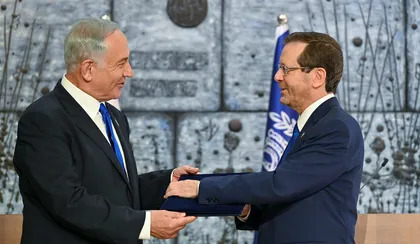
Democracies are not measured solely by their fidelity to procedure. They are measured by their capacity to sustain legitimacy when procedure, extended beyond proportion, begins to corrode the very confidence it is meant to uphold. Israel’s corruption proceedings against Prime Minister Benjamin Netanyahu, initiated in 2019 and still unresolved, have crossed from the realm of adjudication into the terrain of permanent political climate. The case now functions less as a discrete legal inquiry than as a weather system saturating public life—distorting governance, refracting every policy debate through litigation, and habituating citizens to a politics of perpetual accusation. In such an environment, the courtroom becomes not a venue for resolution but a stage for endless contestation, where each procedural development is absorbed into the daily dramaturgy of partisan struggle.
The presidency exists, in part, to address precisely such moments of institutional overreach. Clemency is not an act of impunity; it is an instrument of constitutional prudence. It recognizes that justice pursued without regard to proportionality and timeliness can become counterproductive—especially when a trial’s duration transforms it into a structural feature of political life rather than a means to resolve a finite dispute. President Isaac Herzog’s continued refusal to consider clemency risks conflating procedural endurance with moral rectitude.
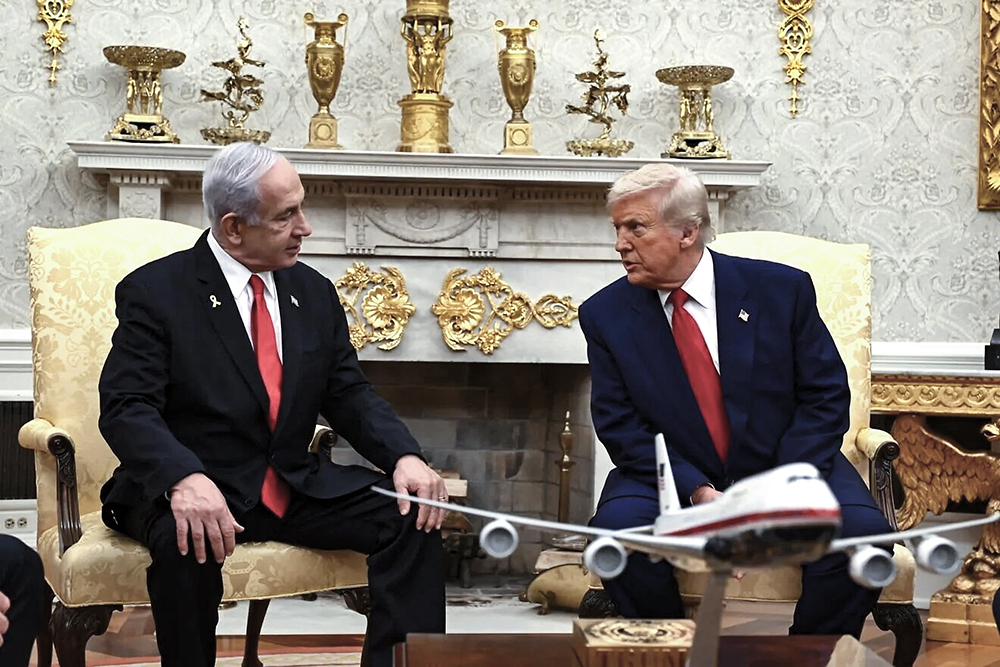
in the Oval Office of the White House, April 7, 2025. Credit: Avi Ohayon/GPO.
Law is not vindicated by how long it can litigate; it is vindicated by whether it restores clarity, fairness, and public confidence. When adjudication loses its telos of resolution, it ceases to serve the reconciliatory function that undergirds the rule of law in a democratic society.
The trial’s protraction has exacted tangible costs. It has tethered Israel’s governing rhythms to courtroom calendars, encouraged the conflation of legal argument with political contestation, and entrenched a culture in which leadership is perpetually provisional. In a country confronting acute security dilemmas and social strain, this is not a trivial burden. When the machinery of justice becomes the central spectacle of national life, policy deliberation is crowded out by procedural theater. The result is not heightened accountability but civic fatigue, a slow erosion of the public’s belief that institutions exist to resolve disputes rather than to perpetuate them.
Those who resist clemency often invoke a purist understanding of the rule of law: that to interrupt process is to concede impunity. This is a category error. Clemency does not pronounce innocence; it pronounces a judgment about the public interest. Constitutional systems provide for mercy not to erase wrongdoing, but to prevent process from ossifying into harm. The presidency’s role is not to mirror the judiciary but to integrate legal outcomes into the broader horizon of statecraft. To refuse to exercise that role in a case that has become structurally politicized is to narrow the constitutional imagination and to treat process as an end in itself rather than as a means to democratic stability.
President Donald Trump’s intervention—delivered with characteristic bluntness—has forced this uncomfortable debate into the open. His rebuke of Herzog for declining to grant a pardon framed clemency not as indulgence but as a moral corrective to a process that has drifted from impartial adjudication into political theater. Trump has repeatedly denounced the proceedings in Israel as absurd and politically driven, likening them to the partisan prosecutions he himself has faced in the United States. He has openly urged Israeli President Isaac Herzog to issue a full pardon for Netanyahu, condemning Herzog’s refusal in harsh terms. Trump has also warned that Washington cannot continue to underwrite Israel with billions of dollars, in his words, while tolerating an unjust prosecution of the Israeli prime minister.
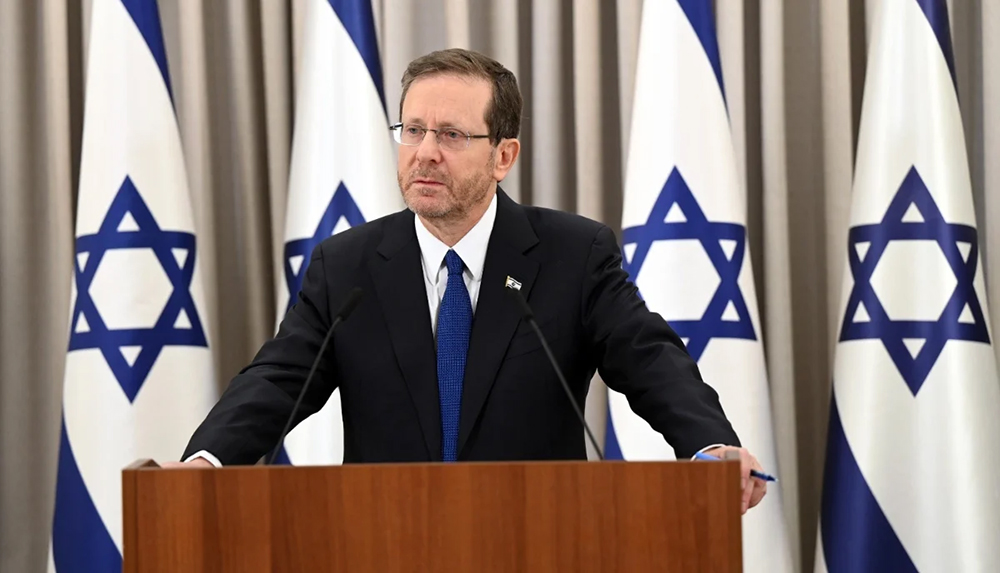
One should seriously acknowledge the substance of the question Trump posed: at what point does an unending prosecution cease to serve justice and begin to corrode it? His insistence that leadership in moments of national trauma ought not be retroactively criminalized—particularly when systemic failures are at issue—speaks to a widely shared democratic anxiety about the politicization of legal process. This anxiety is not confined to any single country; it reflects a broader unease across liberal democracies about the tendency of legal mechanisms to become proxy battlegrounds for political conflict.
For this and much more, Herzog should be ashamed of himself for using this endless trial against Netanyahu as a show of force for the “deep state” that he and others on the left have come to represent.
Media reports have also captured the philosophical divide now animating Israeli public life: between a vision of leadership that prizes decisive intervention on behalf of embattled allies and one that elevates institutional process as an end in itself. The latter posture, dignified as it may appear, risks becoming an alibi for inaction when process itself has become the problem. Prudence is not passivity. Statesmanship sometimes requires the courage to conclude what process has prolonged beyond reason, to recognize that closure can be as vital to justice as continuation.
There is also an international dimension that Israel would do well to contain rather than inflame. U.S. presidents possess expansive sanctions authorities under statutes such as the International Emergency Economic Powers Act, and recent history demonstrates that such powers can be deployed against international judicial officials in response to perceived lawfare. Those precedents underscore how quickly legal disputes can be internationalized and financialized. The lesson for Israel is not to invite external coercion, but to resolve domestic controversies through sovereign, stabilizing mechanisms. Clemency, exercised transparently and with reasoned justification, would reaffirm Israel’s institutional autonomy and prevent its internal legal debates from becoming fodder for geopolitical escalation.
If not, President Trump has the legal and moral right to strongly call out injustice by imposing severe sanctions on the members of Israel’s judiciary who are overseeing this case. And he should be vigorously supported for doing so by all those who claim to truly understand democratic principles.
To be clear: defending the integrity of courts is essential to democratic life. But defending integrity does not require sanctifying duration. Courts derive legitimacy from their capacity to render timely, proportionate justice that commands public confidence. When proceedings stretch into years and become a permanent axis of politics, legitimacy is strained. Clemency is the constitutional acknowledgment of that strain. It is a recalibration, not a capitulation.
The human dimension of this saga is also inescapable. Prolonged trials reshape political culture by normalizing suspicion and entrenching adversarialism. They teach citizens to view governance through the lens of litigation rather than policy. Democracies need closure to renew civic trust. A pardon in this context would not settle every disagreement, but it would draw a line under a chapter that has consumed disproportionate attention and energy, allowing political life to reorient toward deliberation over substance rather than procedure.
Herzog’s adamant refusal to consider this path sends a troubling signal: that procedure will be permitted to eclipse purpose. That is not the rule of law; it is the ritualization of law. The constitutional order provides tools to prevent such ritualization from hollowing out public life. Clemency is one such tool. Its judicious use here would restore the separation between adjudication and governance, re-center Israel’s political conversation on substantive challenges, and reaffirm the presidency’s moral office.
History will judge leaders not only by their fidelity to procedure, but by their capacity to recognize when procedure has become an impediment to justice understood in the fullest sense—justice that preserves institutions, social cohesion, and democratic vitality. In an age of protraction, statesmanship lies in the courage to conclude.
