



|
Getting your Trinity Audio player ready...
|
Edited by: TJVNews.com
The recent exit of the United States women’s national soccer team from the Women’s World Cup has not only brought disappointment but has also reignited the ongoing debate surrounding players’ choice to refrain from singing the national anthem before matches, as was reported by the Telegraph of the UK. Amidst this controversy, former President Donald Trump has joined the fray, accusing some players of being “openly hostile to America.” The incident highlights a divisive issue that has political and social implications within the team and beyond.
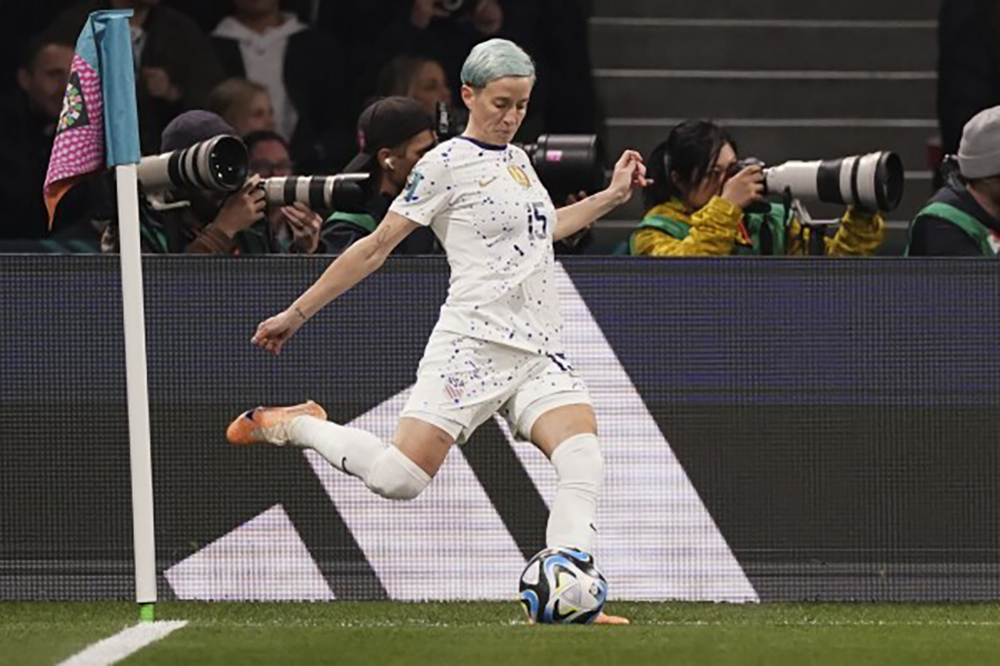
The United States women’s national team, reigning world champions, stirred controversy during their World Cup campaign as a significant portion of the team chose not to sing the national anthem before matches, the Telegraph reported. The refusal was especially noticeable in the match against Sweden, where six players, including notable figures such as Megan Rapinoe, opted out. This marked their earliest-ever exit from the tournament, leading to criticism from various quarters.
Trump didn’t miss the chance to voice his opinion on the matter. He took to the Truth Social media platform to express his disapproval of the players’ actions, denouncing the loss as emblematic of the nation’s decline under “Crooked Joe Biden.” The Telegraph of the UK also reported that he accused some players of being “openly hostile to America,” highlighting his long-standing critique of Megan Rapinoe. Trump’s remarks underscored his belief that the team’s alleged political stance negatively impacted their performance and, by extension, the nation itself.
The anthem controversy has exposed a political divide within the squad, overshadowing their on-pitch performance and potentially affecting team cohesion. As was reported by the Telegraph, while nearly half of the starting XI did sing the anthem, players like defenders Crystal Dunn, Naomi Girma, and Emily Fox, as well as midfielder Andi Sullivan and forwards Sophia Smith and Trinity Rodman, abstained. This division within the team raises questions about the team’s unity and their ability to perform effectively against strong opponents.
Former Fox News anchor Megyn Kelly also chimed in, criticizing the players’ actions as detrimental to the country. The Telegraph reported that she argued that the players’ version of feminism and empowerment translated into an overt disdain for their own nation, as they refused to sing the anthem and, in some cases, did not place their hands over their hearts during its playing. Kelly’s perspective resonates with those who believe that public figures should uphold symbols of national unity and respect, the report added
Some players have defended their choice not to sing the anthem. The Telegraph reported that Naomi Girma brushed off the criticism, emphasizing that players focus on preparing for the game when on the field. Megan Rapinoe’s previous actions set the precedent for anthem protests within the team. In 2016, she started kneeling during the anthem to raise awareness about racial inequality and police brutality, inspired by American football player Colin Kaepernick’s similar protest, as was reported by the Telegraph. Rapinoe’s stance exemplifies a broader trend in the sports world where athletes leverage their platform to advocate for social change.
As political rhetoric and social values collide within the team, questions about unity, respect, and the role of athletes in societal discussions come to the forefront. The controversy underscores the intricate balance between individual expression, national pride, and the responsibilities of being a representative of the nation on the international stage.
