



|
Getting your Trinity Audio player ready...
|
By: Fern Sidman
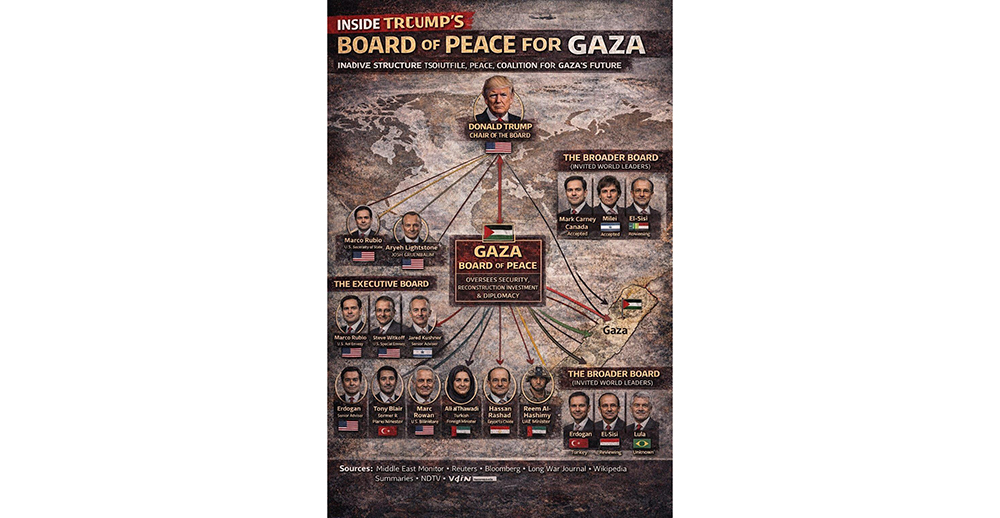
In a move that has stunned diplomats, unsettled allies, and electrified strategists across the globe, the White House has unveiled what it is calling the Board of Peace for Gaza—a sweeping new governing architecture designed to supervise security, reconstruction, investment, and diplomacy in the devastated coastal enclave. Far from another ceremonial international committee, this initiative is being presented as a muscular, executive-driven mechanism answering directly to Washington, with authority that could shape Gaza’s future for a generation.
According to public statements released by the White House, the Board of Peace is intended to function as a centralized command structure for post-war Gaza, coordinating everything from infrastructure rebuilding and economic development to the deployment of multinational stabilization forces. Officials have framed the body as the linchpin of President Donald Trump’s long-promised vision for a “New Gaza”—one that would emerge from the ashes of conflict as demilitarized, modernized, and integrated into the regional economy.
“This is not another United Nations working group,” a senior U.S. official told reporters, echoing language that has appeared repeatedly in coverage by Reuters and Bloomberg. “This is an operational governing body with teeth.”
At the apex of the new structure sits Trump himself, designated as chair of the Board and ultimate arbiter of its direction. That centralization underscores the administration’s conviction that only decisive U.S. leadership can break the cycle of war and failed reconstruction efforts that have plagued Gaza for decades.
Acting as High Representative is veteran diplomat Nickolay Mladenov, the former United Nations Middle East envoy, who will serve as the bridge between the Board and Gaza’s proposed transitional authority, known as the National Committee for the Administration of Gaza (NCAG). Day-to-day operations are to be overseen by senior advisers Aryeh Lightstone and Josh Gruenbaum, both longtime figures in Trump-era Middle East policy circles.
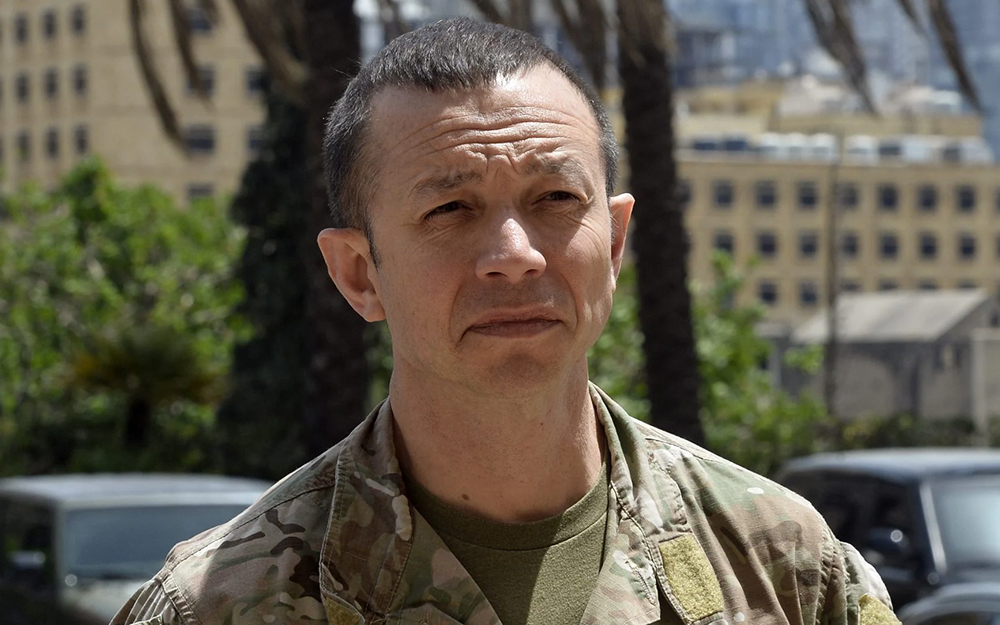
Security responsibilities will fall to Maj. Gen. Jasper Jeffers, tapped to command a yet-to-be-deployed International Stabilization Force. The Long War Journal, which closely follows military developments in the region, has described this element as crucial to ensuring that any reconstruction effort is not immediately undermined by renewed violence.
From Israel’s perspective, this emphasis on hard security is among the most encouraging aspects of the plan. After years in which international initiatives often prioritized political symbolism over practical deterrence, the new architecture appears to recognize that no amount of investment can take root in a territory still vulnerable to terrorist resurgence.
The most striking feature of the Board is its eclectic membership. The Executive Board brings together senior American officials, international financiers, regional power brokers, and veteran diplomats in a constellation rarely seen in modern peace processes.
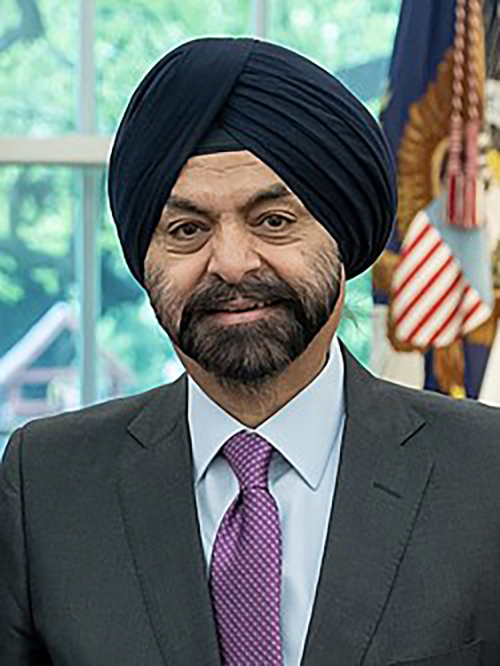
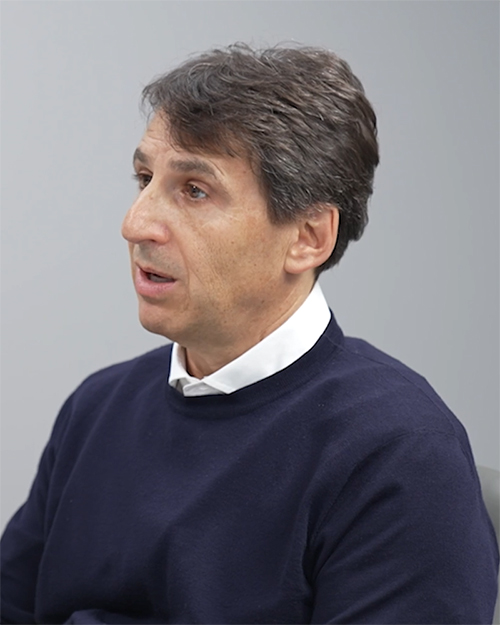
Among the figures named are Secretary of State Marco Rubio, special envoy Steve Witkoff, former presidential adviser Jared Kushner, ex-British prime minister Tony Blair, and World Bank President Ajay Banga. Private-sector heavyweights such as financier Marc Rowan and Cypriot-Israeli investor Yakir Gabay are also included, signaling an unmistakable intention to inject serious capital and business expertise into Gaza’s reconstruction.
In many respects, the lineup reflects the sober lesson of previous failures: Gaza’s problems are as much economic as political. Without roads, ports, housing, electricity, and jobs, no ceasefire can be durable. By placing bankers and investors alongside diplomats and generals, the administration is betting that market forces—properly harnessed—can succeed where decades of aid conferences did not.
Yet the Board’s composition has also generated immediate controversy, particularly in Jerusalem. Reports in Middle East Monitor and Bloomberg note that Israeli officials were blindsided by the inclusion of representatives from Turkey and Qatar, two states long criticized for their sympathetic posture toward Hamas and other Islamist movements.
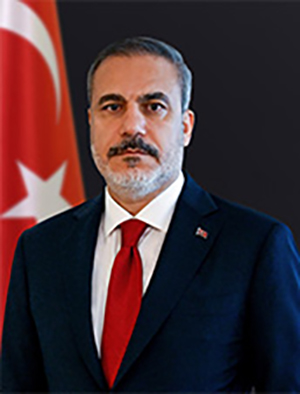
Turkish Foreign Minister Hakan Fidan and Qatari negotiator Ali Al-Thawadi are slated to sit on the Executive Board, alongside Egyptian intelligence chief Hassan Rashad and UAE minister Reem Al-Hashimy. While Cairo and Abu Dhabi have cultivated increasingly pragmatic ties with Israel, Ankara and Doha remain viewed with deep suspicion.
For many in Israel, the idea that countries accused of enabling Hamas’s political and financial lifelines should now be entrusted with Gaza’s future is difficult to accept. As one Israeli analyst told Reuters, “You cannot ask the arsonists to help design the fire department.”
Equally delicate is the matter of Palestinian participation. The proposed NCAG authority is expected to be staffed by Palestinian technocrats tasked with managing municipal services and day-to-day governance. However, at the Board’s highest levels, Palestinian voices are notably absent.
Proponents argue that this is a deliberate and necessary choice. After the October 7 attacks and the ensuing war, many Israelis—and not a few American policymakers—have concluded that traditional Palestinian political factions are too compromised, too divided, or too radicalized to be entrusted with strategic control.
From a pro-Israel perspective, this skepticism is understandable. Previous attempts to empower local Palestinian leadership have often collapsed under the weight of corruption, factionalism, or outright alignment with extremist agendas. The Board’s structure appears designed to prevent a repeat of those outcomes by keeping ultimate authority in the hands of proven allies.
Critics, however, contend that any long-term solution must eventually include credible Palestinian representation. The tension between these two imperatives—security on the one hand, legitimacy on the other—lies at the heart of the current debate.
Beyond the core Executive Board, Trump has issued invitations to a number of world leaders to join a broader advisory circle. Canadian Prime Minister Mark Carney and Argentine President Javier Milei have reportedly accepted. Turkish President Recep Tayyip Erdogan is said to be “considering,” while Egyptian President Abdel Fattah el-Sisi is reviewing the offer. The position of Brazil’s Luiz Inácio Lula da Silva remains unclear.
These invitations reveal the administration’s ambition to transform Gaza’s reconstruction into a genuinely global project. At the same time, they expose the political minefields involved. Erdogan’s potential inclusion, in particular, has drawn sharp criticism from Israeli commentators who view Ankara as an unreliable partner at best.
Bloomberg has observed that the Board’s reach—spanning the United States, Europe, the Gulf, and select emerging economies—gives it “unprecedented leverage over Gaza’s next decade.” That breadth is both its greatest strength and its most volatile liability.
The administration insists that the Board of Peace is not a traditional peacekeeping endeavor. Rather, it is an exercise in full-scale nation-building, blending security control with economic engineering and diplomatic coordination.
According to summaries circulated on Wikipedia and echoed in White House briefings, the plan envisions massive investment in housing, energy infrastructure, water systems, and commercial corridors. Ports and border crossings would be rehabilitated under international supervision. Education and health systems would be rebuilt with outside assistance. In short, Gaza would be remade from the ground up.
The Long War Journal has emphasized that none of this will be possible without a robust security umbrella capable of preventing armed groups from reconstituting. That reality explains the central role of the International Stabilization Force and the Board’s heavy representation of defense and intelligence professionals.
For Israel, which has borne the brunt of Gaza-based terrorism for nearly two decades, these provisions are not mere technicalities. They are the essential precondition for any political horizon.
Reaction across the Middle East has been predictably mixed. Gulf states, while welcoming the prospect of stability on their doorstep, are reportedly uneasy about the overt Americanization of Gaza policy. Arab governments are also said to be surprised by the prominent role given to private investors and financiers.
Israel’s government has publicly praised the initiative’s focus on demilitarization and economic renewal, but privately voiced alarm over the inclusion of Qatar and Turkey. Several Israeli officials, speaking anonymously to Reuters, warned that Jerusalem would resist any arrangement that granted influence to actors perceived as hostile.
Meanwhile, Palestinian commentators quoted in Middle East Monitor have expressed apprehension that the Board could sideline Palestinian national aspirations altogether. Such concerns, though understandable, overlook the grim reality that Gaza’s recent history has been defined not by self-determination but by self-destruction.
There is no denying the audacity of the project. Never before has a single international body attempted to consolidate so many levers of power—security, finance, governance, and diplomacy—over a territory as contested and traumatized as Gaza.
Whether the Board of Peace succeeds will depend on several factors: its ability to maintain unity among disparate members; its willingness to enforce strict conditions on aid and reconstruction; and above all, its determination to prevent Gaza from once again becoming a launching pad for terror.
For Israel, the stakes could not be higher. A stable, demilitarized Gaza integrated into regional development would represent a historic breakthrough. A Gaza rebuilt under the influence of actors aligned with Ankara or Doha would represent a strategic nightmare.
As the initiative moves from announcement to implementation, those tensions are certain to intensify. For now, the world is left to ponder a startling new reality: Gaza’s future, long dictated by rockets and ruins, may soon be shaped by boardrooms and balance sheets.
Trump promised a “New Gaza.”
This, it seems, is the blueprint.
