



|
Getting your Trinity Audio player ready...
|
By: David Avrushmi
There is a growing unease across Western democracies—one that policymakers are often reluctant to articulate, and institutions even more hesitant to confront. It is not rooted in prejudice, nor in hostility toward individuals or communities. Rather, it stems from a dawning recognition that the frameworks governing liberal societies are being tested by forces they were not designed to accommodate.
At the center of this unease lies a fundamental question: what happens when an ideology operating under the protections of religion advances not merely spiritual belief, but a comprehensive vision of law, governance, and social order—one that stands in tension with the secular principles of the state?
This is the question posed, however imperfectly, in the ongoing debate over political Islam.
Western societies have long prided themselves on their commitment to religious freedom. This principle—enshrined in constitutions, defended in courts, and celebrated in public discourse—has allowed diverse communities to flourish without fear of persecution.
Yet this very strength has, in some cases, become a vulnerability.
The liberal framework assumes that religion is primarily a private matter: a set of beliefs and practices confined to personal life, voluntary association, and spiritual expression. It was designed in response to historical conflicts within Christianity, where the separation of church and state became the cornerstone of political stability.
But not all belief systems fit neatly into this model.
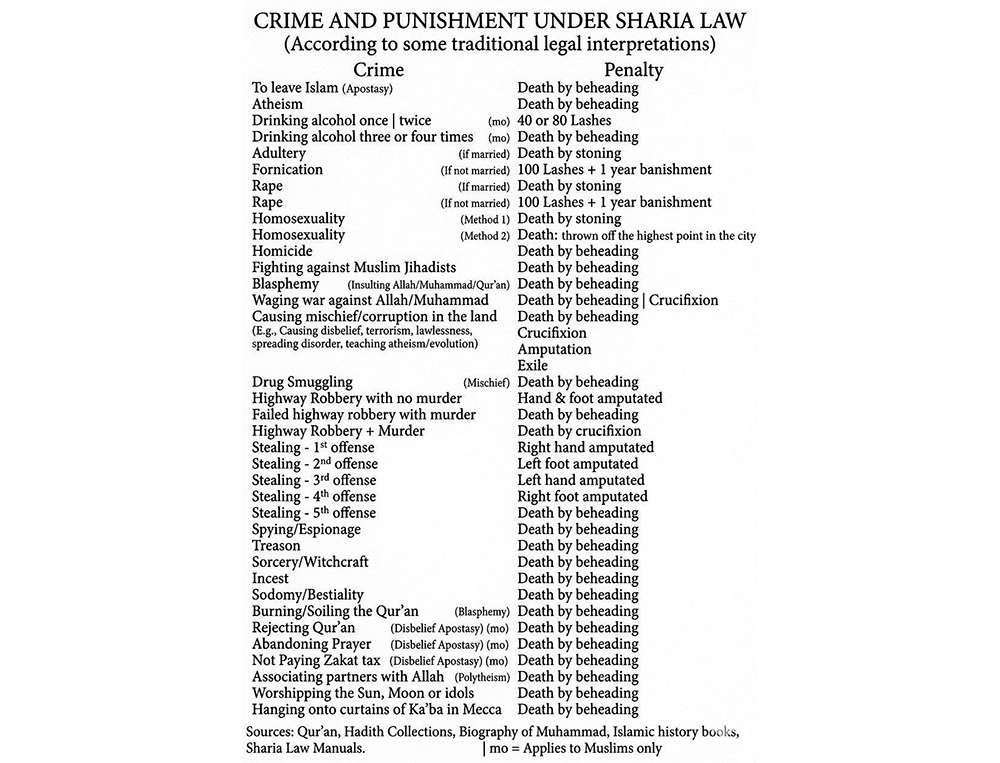
Certain ideological currents within Islam—commonly referred to as political Islam—do not confine themselves to private faith. They encompass legal doctrines, governance structures, and social codes that extend into the public sphere. In these frameworks, religious authority is not merely advisory; it is prescriptive.
To treat such a system as indistinguishable from purely spiritual traditions is not an act of tolerance. It is a category error.
The most immediate manifestation of this tension lies in the question of law.
Western democracies operate on the principle of a single, uniform legal system. All citizens, regardless of background, are subject to the same laws, adjudicated by the same institutions.
The introduction—formal or informal—of parallel legal norms undermines this principle. Whether through arbitration councils, community pressure, or social enforcement, the existence of alternative frameworks creates ambiguity about which rules ultimately prevail.
This is not merely a theoretical concern. It strikes at the heart of equal citizenship. A society cannot sustain two legal systems without eroding the very concept of shared rights and responsibilities.
Equally concerning is the gradual transformation of public institutions through well-intentioned but unexamined accommodation.
In schools, for example, adjustments to dietary offerings, scheduling, and daily routines are often framed as necessary steps toward inclusivity. Yet when such accommodations become pervasive, they risk redefining the baseline expectations of public life.
The issue is not whether halal options should exist, or whether students should be able to observe religious practices. The issue is whether public institutions—funded by and accountable to a diverse population—are maintaining neutrality, or quietly shifting toward the norms of particular groups.
When neutrality gives way to asymmetry, the principle of equal treatment begins to fray.
Democracy, by its nature, accommodates collective political action. Communities organize, advocate, and vote in pursuit of their interests. This is both legitimate and essential.
However, the emergence of highly cohesive voting blocs, particularly those influenced by transnational networks or external funding, introduces new complexities.
When political influence is exercised not merely as participation, but as leverage—capable of reshaping policy in ways that may conflict with broader societal norms—the system begins to tilt.
This is not an argument against participation. It is an argument for vigilance. Democratic institutions must ensure that representation does not devolve into fragmentation, where policy is dictated by the most organized or mobilized constituencies rather than by the common good.
Nowhere has the convergence of ideology and institutional influence been more visible than on university campuses.
In the aftermath of global conflicts, particularly following the events of October 7, campuses have seen a surge in activism that often blends legitimate political critique with more troubling currents of rhetoric.
Reports of antisemitism, intimidation, and ideological conformity have raised serious questions about the role of higher education. Universities are meant to be arenas of inquiry, not engines of indoctrination.
When complex geopolitical conflicts are reduced to slogans, and when dissenting voices are marginalized or silenced, the intellectual mission of these institutions is compromised.
Europe’s experience offers a sobering perspective. In several countries, decades of inconsistent policy—oscillating between uncritical multiculturalism and reactive secularism—have produced mixed results.
In some cases, integration has faltered, giving rise to parallel communities with limited interaction with the broader society. In others, attempts to impose uniformity have generated resistance and alienation.
The lesson is not that diversity is inherently destabilizing, but that it must be accompanied by clear expectations and consistent enforcement of shared norms.
Ambiguity, more than anything else, creates the conditions for fragmentation.
Perhaps the most damaging response to these challenges has been avoidance.
Fear of appearing intolerant has led many leaders to sidestep difficult conversations. Concerns are dismissed, questions left unasked, and policies implemented without thorough examination.
This reluctance does not preserve harmony; it postpones conflict.
A mature democracy must be capable of confronting complex issues without resorting to either denial or demagoguery. It must distinguish between individuals and ideas, between communities and ideologies.
Critiquing an ideology is not an attack on those who identify with it. It is an essential component of intellectual and political discourse.
The path forward requires clarity—not only in rhetoric, but in policy.
First, the primacy of a single legal system must be reaffirmed unequivocally. No parallel frameworks, formal or informal, can be permitted to undermine the rule of law.
Second, public institutions must adhere to genuine neutrality. Accommodation should be balanced, transparent, and consistent with the rights of all.
Third, foreign funding and influence—across all ideological spectrums—must be subject to rigorous oversight. Transparency is not optional; it is essential.
Fourth, educational institutions must recommit to their core mission: fostering critical thinking, not ideological conformity.
Finally, political leaders must rediscover the courage to speak plainly. The health of a democracy depends not on the absence of tension, but on its ability to address tension constructively.
The challenge posed by political Islam is not existential in the sense of inevitable collapse. But it is significant, and it is real.
It tests whether Western societies can uphold their principles in the face of complexity—whether they can remain open without becoming unguarded, tolerant without becoming passive, and inclusive without sacrificing coherence.
The answer will not be found in sweeping generalizations or reactionary measures. It will be found in disciplined, principled governance—anchored in the rule of law and the preservation of shared civic values.
To meet this challenge requires neither fear nor denial, but something far more demanding: the willingness to confront reality with clarity, and to act with both firmness and fairness.
That is the task before us. And it is one that cannot be deferred indefinitely.
