



|
Getting your Trinity Audio player ready...
|
By: Dean Weiner
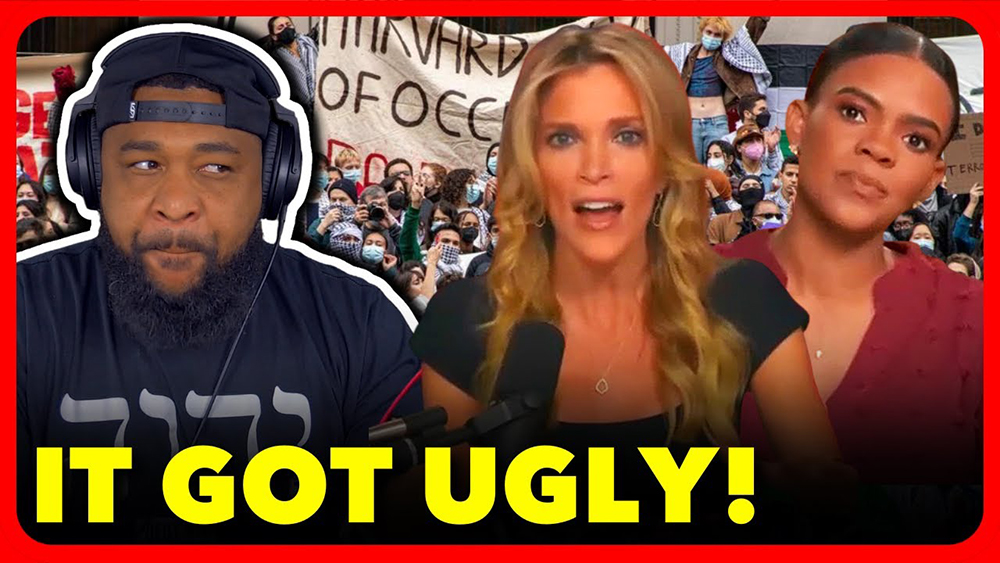
A recent online exchange between prominent figures Megyn Kelly and Candace Owens has ignited a fiery debate over the appropriateness of blacklisting Harvard students whose organizations co-signed a letter that blamed Israel for the atrocities committed by the Palestinian terrorist organization Hamas.
The exchange unfolded on social media and offered a window into the ongoing discussion about the Israel-Hamas conflict and the role of individuals and institutions in shaping opinions.
Megyn Kelly, host of the “The Megyn Kelly Show” on SiriusXM, was one of the first to weigh in on the issue. Kelly expressed her disagreement with Republican presidential candidate Vivek Ramaswamy, who opposed calls to deny job opportunities to the Harvard students whose groups signed onto the contentious letter.
She shared her perspective on the matter in a tweet, stating, “We don’t hire those who do the killing and we don’t hire those who applaud the killers while the savagery is underway.”
The tweet garnered attention given Kelly’s significant following on the social media platform. However, it was also met with opposition. Candace Owens, a commentator for the online news site Daily Wire, joined the discussion to voice her support for Ramaswamy’s stance. Owens acknowledged the students’ errors but emphasized the importance of education over blacklisting. She argued that these students were young and experimenting with ideas, drawing parallels with her own evolution of views when she was “radically pro-choice.”
The conversation between Kelly and Owens escalated as they presented contrasting perspectives. Kelly defended her position, asserting that being liberal did not equate to supporting violence. She, however, extended an offer to Owens, saying, “But you go ahead and hire as many of them as you want, Candace.” Owens responded with a call for a more nuanced approach, stating that the students were misguided and in need of education, not blacklists.
The exchange took an interesting turn when Kelly tagged Daily Wire, Owens’ employer, in her response. Owens interpreted this as a display of “inherent pettiness” and “immaturity.” She offered to provide Kelly with direct contact to her management and expressed regret for not appearing on Kelly’s show. The exchange continued as Kelly felt that Owens was attacking her personally, to which Owens clarified her intentions, saying, “I am not attacking you, I am attacking your position that students should be put on blacklists.”
The public exchange concluded with Kelly extending her well wishes to Owens, stating, “Take care, Candace. I wish you well.” This social media dispute underscored the ongoing debate over the Israel-Hamas conflict and the role of the United States in the international arena.
Moreover, the discussion highlights the divide among right-leaning media figures when it comes to the appropriate response of the United States to the Israel-Hamas conflict. Isolationist-leaning voices like Candace Owens, Tucker Carlson, and Charlie Kirk advocate for less U.S. involvement in foreign conflicts, NY Post pointed out.
In contrast, figures like Megyn Kelly, Ben Shapiro, Meghan McCain, and others favor a more robust U.S. posture in support of Israel.
In addition to ideological divides, the Harvard controversy has also created divisions among notable alumni of the university.