



|
Getting your Trinity Audio player ready...
|
Edited by: TJVNews.com
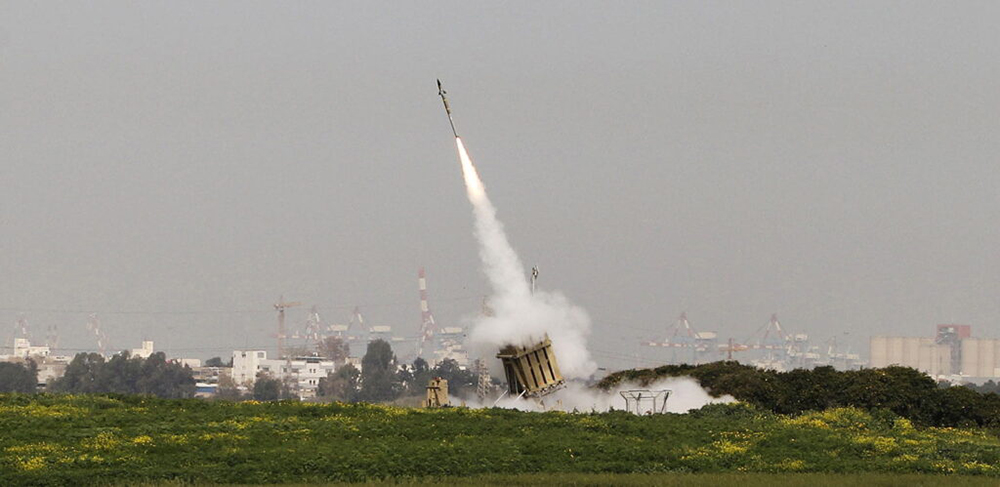
With the launch of Hamas’s unprovoked war on Israel on Oct. 7, the Iron Dome once again proved invaluable, intercepting 90 percent of projectiles fired toward Israel that it engaged, as was reported in an October 12th press release issued by the American Jewish Committee (AJC), a global advocacy organization for the Jewish people.
Here are five things you need to know about Israel’s Iron Dome system and the effort to secure emergency funding.
1) What is Iron Dome?
As was reported by the AJC, the Iron Dome is an air defense missile system developed by two Israeli firms, Rafael Advanced Defense Systems and Israel Aerospace Industries. The system is designed to intercept and destroy short-range rockets and artillery shells fired from distances of 4 to 70 kilometers (2–43 mi) away and whose trajectory would take them to an Israeli populated area, as was reported by Wikipedia. From 2011 to 2021, the United States contributed a total of $1.6 billion to the Iron Dome defense system, with another $1 billion approved by the US Congress in 2022.
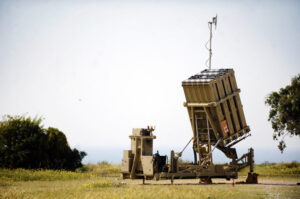
The AP reported on October 12th that according to Raytheon, Israel has 10 Iron Dome systems in place to protect its cities. Beginning with the October 7th attack, Hamas has fired more than 5,000 rockets at Israel, most of which the system has been able to intercept, according to the Israel Defense Forces.
Raytheon produces most of the missile components for Iron Dome in the U.S., and the US Army has two Iron Dome systems in its stockpile.
Iron Dome was declared operational and initially deployed on March 27, 2011 near Beersheba, as was reported by Wikipedia.org. In April 2011, the system successfully intercepted a rocket launched from Gaza for the first time. In March 2012, The Jerusalem Post reported that the system shot down 90% of rockets launched from Gaza that would have landed in populated areas, as was indicated in the Wikipedia.org report. In late 2012 Israel said that it hoped to increase the range of Iron Dome’s interceptions, from a maximum of 70 to 250 kilometers (43–155 mi) and make it more versatile so that it could intercept rockets coming from two directions simultaneously.
It is never used to attack or retaliate and poses no threat to Palestinians.
The strongest air defense system in the world has three components: a radar that detects incoming rockets; a command-and-control system that determines the threat level; and an interceptor that, if the system determines human lives or infrastructure are at risk, seeks to destroy the incoming rocket before it strikes, according to the ALC press release.
2) How does it save lives?
According to Israeli officials, it is about 90% effective in stopping short-range rockets fired by Hezbollah terrorists next door in Lebanon or Hamas and Islamic Jihad terrorists in neighboring Gaza, the AJC reported. The system protects Israelis of all backgrounds and faiths.
For example, when Hamas and Islamic Jihad fired more than 4,300 rockets from Gaza into Israel in May 2021, more than 1,500 targeted heavily populated areas, including Israel’s largest city, Tel Aviv. Iron Dome shot down more than 90% of those rockets, greatly reducing the death toll, the AJC reported. Even with the Iron Dome, about a dozen Israelis were murdered. That number would have been much higher without the Israeli missile defense system.
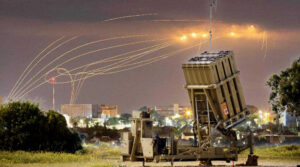
During the current Israel-Hamas war, Iron Dome once again has saved Israeli lives. Hamas and Palestinian Islamic Jihad terrorists have fired more than 5000 rockets at Israel.
Giving Israel a viable option to defend itself shifts its focus from a strategy of preemptive offensives against terrorists who hide among tightly-packed civilian areas to a defense system that intercepts real and present danger, the AJC report said. It also reduces the need for ground operations in and around the civilian areas that terrorists use for launching missiles and rockets at Israeli civilians. Often ground offenses result in greater loss of lives.
3) Why and how does America fund Iron Dome?
The U.S. and Israel have maintained a strategic partnership in the Middle East for decades. As the only true democracy in the region, Israel plays a vital stabilizing role, even though it is surrounded in part by hostile neighbors. The AJC report indicated that during his tenure as a senator, President Joe Biden first referred to the strategic advantage America reaps from its close partnership with Israel, unrivaled in the region, when he declared: “Were there not an Israel, the U.S would have to go out and invent an Israel.”
The U.S.-Israel relationship also gives Americans access to cutting-edge modes of defense.
On August 27th of this year, it was reported that the US Marine Corps was on the verge of a significant defense acquisition that could reshape its capabilities. According to a recently published report in the Jerusalem Post, plans are underway for the USMC to acquire dozens of Iron Dome launchers and thousands of interceptor missiles, forming a substantial deal potentially worth hundreds of millions of dollars. The prospective collaboration with Raytheon, the American defense giant, which has an established partnership with Israeli manufacturer Rafael Advanced Defense Systems, signals a notable stride in bolstering the USMC’s defensive capabilities, as was reported by the Jerusalem Post.
Recent reports have illuminated the USMC’s intent to procure three full batteries’ worth of the Iron Dome system. The JPost also reported that this landmark deal, if realized, would be orchestrated through Raytheon’s collaboration with Rafael, which currently distributes the Iron Dome system to the United States. The revelations surrounding this potential agreement have been unveiled by the defense news website, The WarZone, which cited an available online procurement notice of intent, the report added.
Renowned for its innovative defense technologies, Rafael has tailored the Iron Dome system to align with the specific requirements of the US Marine Corps, the JPost report said. This adaptation process, accompanied by meticulous testing support, underscores Rafael’s pivotal role in the system’s refinement.

Central to the impending deal are the procurement of 44 launchers and 1,840 Tamir interceptors by the USMC, as was reported by the JPost. The Tamir interceptors, a critical facet of the Iron Dome system, underwent rigorous testing, culminating in successful interception trials. The system’s prowess was showcased through a series of three tests conducted over several months, which effectively intercepted a diverse array of targets, the JPost report said.
This imminent procurement highlights the USMC’s commitment to modernizing and fortifying its defensive capabilities. The JPost report also indicated that the Iron Dome system, originally developed by Israel to counter short-range missile threats, could offer the USMC an enhanced shield against various airborne threats. As the geopolitical landscape continues to evolve, such advancements underscore the USMC’s readiness to adapt and respond to emerging challenges.
According to the Center for Strategic and International Studies, 55% of the system’s components are currently manufactured in the U.S.
The AJC report said that for these reasons, lawmakers on both sides of the aisle have worked to safeguard the Jewish state’s qualitative military edge (QME). Making sure the Israel Defense Forces (IDF) has superior capabilities helps de-escalate the violence when Israel is forced to defend herself.
Even so, the political machinations of the annual budget process in Congress made it hard to predict how much funding Israel could expect from year to year. A 2016 Memorandum of Understanding signed by President Barack Obama and supported by overwhelming majorities on both sides of the aisle, put an end to that uncertainty, the AJC reported. The commitment of $38 billion in military aid over 10 years, including an unprecedented commitment of $5 billion for missile defense assured Israel that it could count on a steady stream of American support amid rising tensions. Likewise, it encouraged Israel to buy more of the advanced capabilities produced by the U.S. to support American jobs.
Costing around $80,000 a piece, the Iron Dome’s interceptors are only used when there is a threat to human life or infrastructure, as was noted in the AJC report.
4) What has been the debate in the U.S. over supporting Iron Dome?
After a disheartening debate in September 2021 about whether America should support a system that saves Israeli and Palestinian lives, the U.S. House of Representatives overwhelmingly approved a bill to restock Israel’s Iron Dome air missile-defense system by a vote of 420 in favor, 9 opposed, and 2 abstentions, as was stated in the AJC report.
A small group of Democratic lawmakers forced the stand-alone bill when they refused to support a Democratic measure aimed at avoiding a government shutdown in the U.S. Why? They didn’t want it to include a provision that would continue to protect Israeli civilians from rockets launched by terrorists operating across Israel’s borders – $1 billion to replenish the Iron Dome.
The AJC report indicated that eight Democrats – Reps. Rashida Tlaib, Ilhan Omar, Ayanna Pressley, Cori Bush, Andre Carson, Marie Newman, Jesus Garcia, Raul Grijalva – and one Republican, Rep. Tom Massie, voted against the supplemental funding. Two Democrats—Reps. Hank Johnson and Alexandra Ocasio-Cortez – abstained.
But the challenge to replenish the life-saving technology dragged on in the U.S. Senate where Democrats tried four times to fast-track the funding by unanimous consent. The AJC report said that Sen. Rand Paul (R-KY) blocked every request, insisting that the funding come out of the $6 billion in proposed U.S. assistance to Afghanistan. The measure finally passed several months later in March 2022 as part of an omnibus spending package that also included $250 million for security at houses of worship and $14 million to support Ukraine.
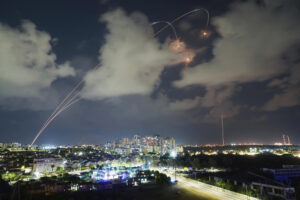
Following Hamas’ unprovoked attack on Israel on Oct. 7, Biden administration officials told Congress that Israel is in urgent need of precision-guided munitions and more interceptors for the Iron Dome air defense system. The AJC report also said that Senate Foreign Relations Chairman Ben Cardin (D-MD) has pledged to introduce legislation to restock interceptors fired by the Iron Dome system.
5) A Continuing Strategic U.S.-Israel Partnership
During his visit to Israel in July 2022, President Joe Biden toured a display of the Iron Dome system at Ben Gurion airport.
Then-Israeli Defense Minister Benny Gantz thanked Biden for his support in replenishing the system.
“Under your rule, honorable president, security cooperation in the region has intensified and expanded in an unprecedented manner and Israel is grateful for this and also for your support with record U.S. security assistance that included a billion dollars to replenish Iron Dome interceptors,” Gantz told Biden, as was reported by the AJC.
Biden also viewed the new Iron Beam system, which is designed to work in tandem with the Iron Dome to shoot down smaller projectiles.
At the same time, the U.S. Army recently announced that it has completed an interceptor test of the Iron Dome system. The U.S. military has two Iron Dome batteries that were supplied in late 2020 and plans to field the systems as an interim cruise missile defense solution, as was noted in the AJC report. Currently, one has been deployed to Guam since the fall of 2021.
“It’s important to understand that implementation for the U.S. is about the ability to integrate this system into our air defense picture,” said Maj. Gen. Brian Gibson, director of the U.S. Army’s Air and Missile Defense Cross-Functional Team, Defense News reported.
(Additional reporting by: Fern Sidman)
