



|
Getting your Trinity Audio player ready...
|
By: TJVNews Staff
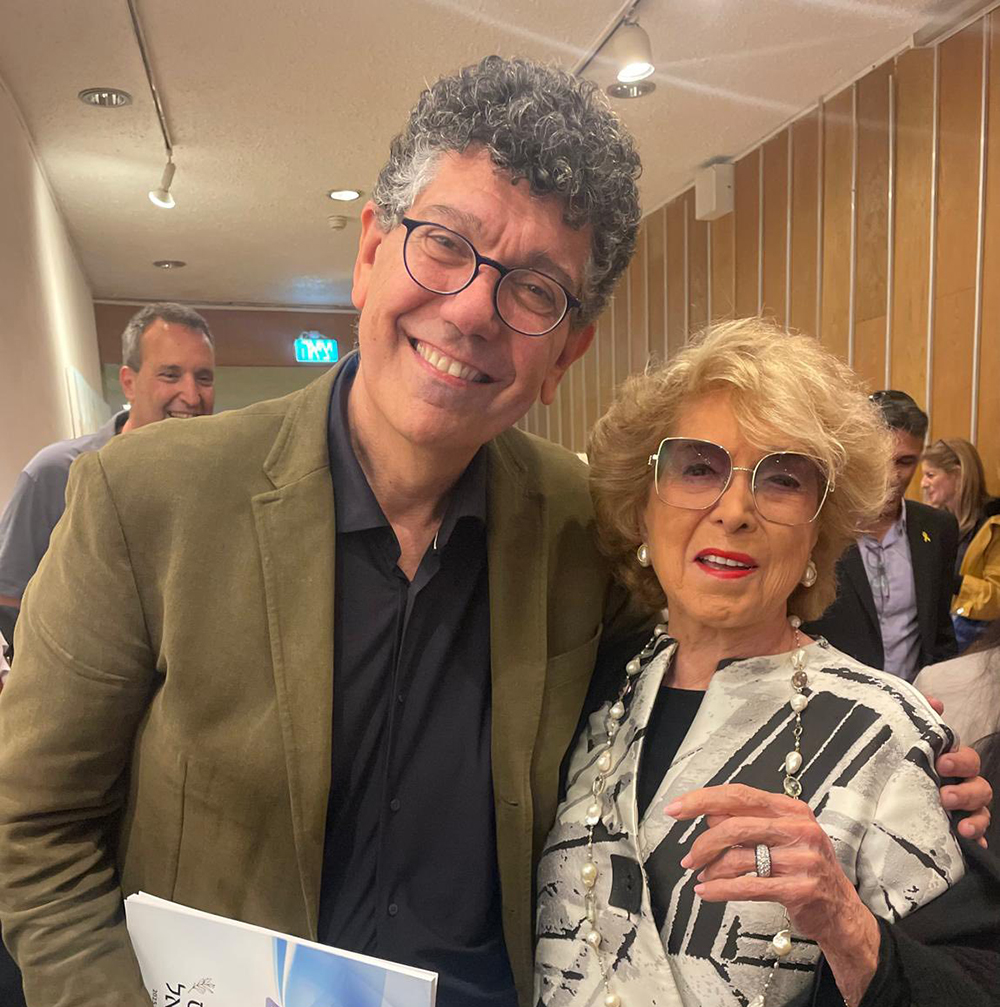
Nina Avidar Weiner is the Co-Founder of the Israel Scholarship Education Foundation. ISEF was founded in 1977 by Edmond J. Safra (z”l), his wife Lily Safra (z”l), and Nina Weiner in response to the plight of Israel’s immigrant communities, who were living on society’s margins. ISEF’s founders had the vision that transforming these communities would only be possible through expanding access to higher education for their children.
ISEF was started as an organization focused on helping disadvantaged Israeli Sephardic students gain access to higher educational opportunities. In the 1980s, ISEF began expanding its support to other underrepresented groups in Israeli society. This shift was prompted by significant demographic changes, including the arrival of Ethiopian Jews during Operation Solomon and a large influx of immigrants from the former Soviet Union. Recognizing the evolving needs of Israeli society, ISEF broadened its mission to assist these new immigrant communities, as well as the Druze population and others from marginalized backgrounds.
Now ninety-three and living in Israel, Nina Weiner is a renowned Israeli activist, and one of its most decorated and distinguished citizens. In March 2025, Israeli Education Minister Yoav Kish announced that Mrs. Weiner is the recipient of this year’s prestigious Israel Prize in the field of Lifetime Achievement – Special Contribution to Society and the State for she has “tirelessly worked to develop social and academic leadership through financial support for acquiring higher education and realizing the potential of young people from the periphery, leading them to academic excellence in research, medicine, law, governance, academia, business, and more.”
Nina Weiner is s a fascinating person, with deep knowledge about Jewish history, familiarity and friendships with numerous other Jewish leaders, and an articulate and an outspoken advocate for Israel and the Jewish people worldwide.
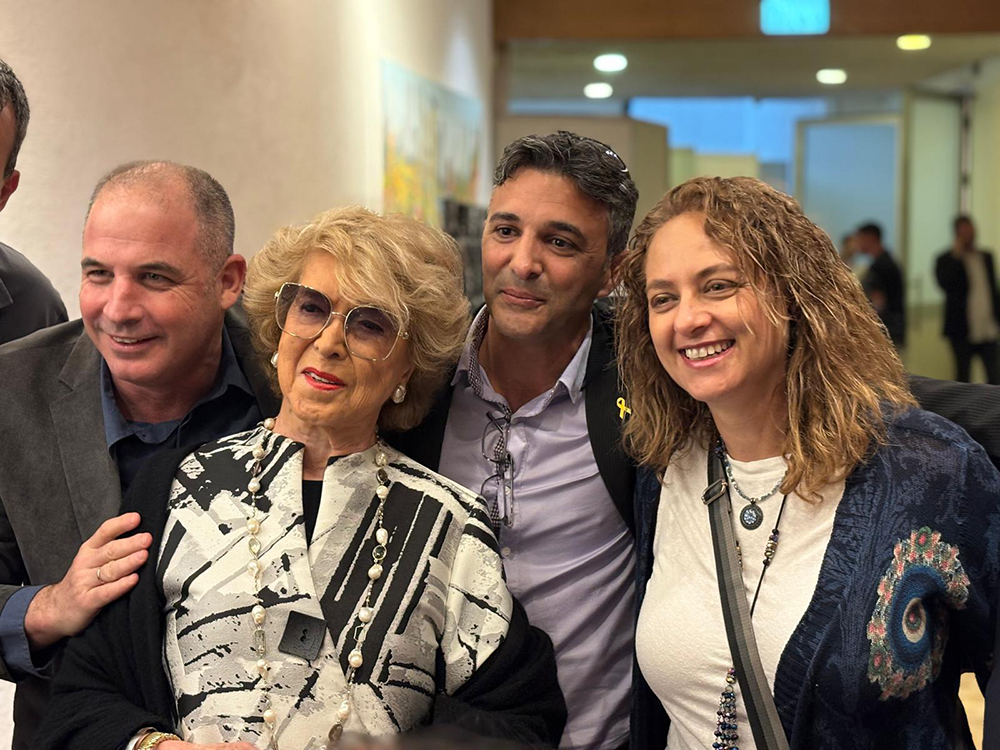
The Senate of Tel Aviv University has voted to bestow a Ph.D. honoris causa upon her. The award letter from University Vice-President Neta Ziv reads, in part: “This is the highest honorary degree our university awards… we are bestowing this degree upon you as a mark of our esteem for you, as one of the most influential figures advancing equal opportunity in education and narrowing the gaps in Israeli society by expanding higher education access, and as Co-Founder of the Israel Scholarship Education Foundation, which has been working, with your leadership, for nearly five decades.”
Recent recipients of this prestigious award include such international figures as Nobel Prize winner Prof. Katalin Kariko, whose research laid the groundwork for mRNA vaccines, and Jan Koum, founder of WhatsApp. Mrs. Weiner’s honorary doctorate was awarded during the annual meeting of Tel Aviv University’s Board of Governors, at a formal degree ceremony on May 21, 2025.
Born in Alexandria, Egypt to an Israeli mother and Ukrainian father, in 1948, she and her family arrived in Israel, refugees from an Arab country. After completing her schooling in Israel, she went to Switzerland where she studied psychology with famed Jean Piaget, Swiss psychologist known for his work on child development, and then to Columbia University in New York. She lived in the US for 55 years with her late husband of 50 years, Walter H. Weiner, who was the CEO of Republic National Bank of New York for 25 years.
Nina Weiner was recently in New York and Jewish Voice had the opportunity to ask her about ISEF’s history, evolution, and accomplishments
Jewish Voice: Please refresh our readers about the creation of ISEF.
Nina A. Weiner: For many years, I had been aware of the gap in Israel between the Sephardic population that came from North Africa and Asia, and the Ashkenazim that had come to Israel earlier from Europe.
During the 1950s and ’60s, while studying in Geneva, I had volunteered at the Youth Aliya transit camps in France. While working there, I had witnessed the plight of children from North Africa who were on their way to Israel.
When I met Edmond Safra, I realized that, with his help, we could really do something serious about closing those disturbing socio-economic gaps that persisted in Israel, through higher education!
I convinced Edmond Safra of the severity of the problem. Edmond, in turn, convinced some of his friends of the seriousness of the problem. In June 1977, Edmond gave me the “go-ahead” to establish the ISEF organization, as he had raised the first million dollars.
JV: Wonderful! So then how did ISEF evolve from helping Sephardic Israelis to all Israeli students?
NW: Our goal has always been to discover bright young people living in disadvantaged towns in the periphery of Israel. This is, I think, the uniqueness of ISEF – that we look for brilliant minds, outstanding minds, and give them the chance of a lifetime to get a college education!
We are now 48 years old! About 35 years ago, when Israel started its Aliyah, bringing the Jewish communities from Ethiopia and Russia, Ukraine, other republics, we saw that these new immigrants, too, needed ISEF’s help — as they, too, were being sent to live in poor neighborhoods. So, we enlarged our goal to encompass all immigrants — and above all, first generation to get to college!
We have always wanted to reach those students whose parents never went to college, and for them it is an incredible change. It’s a change of life, a change of attitude; it’s knowledge. They graduate with a college education, and sometimes they continue their studies until the Ph.D.
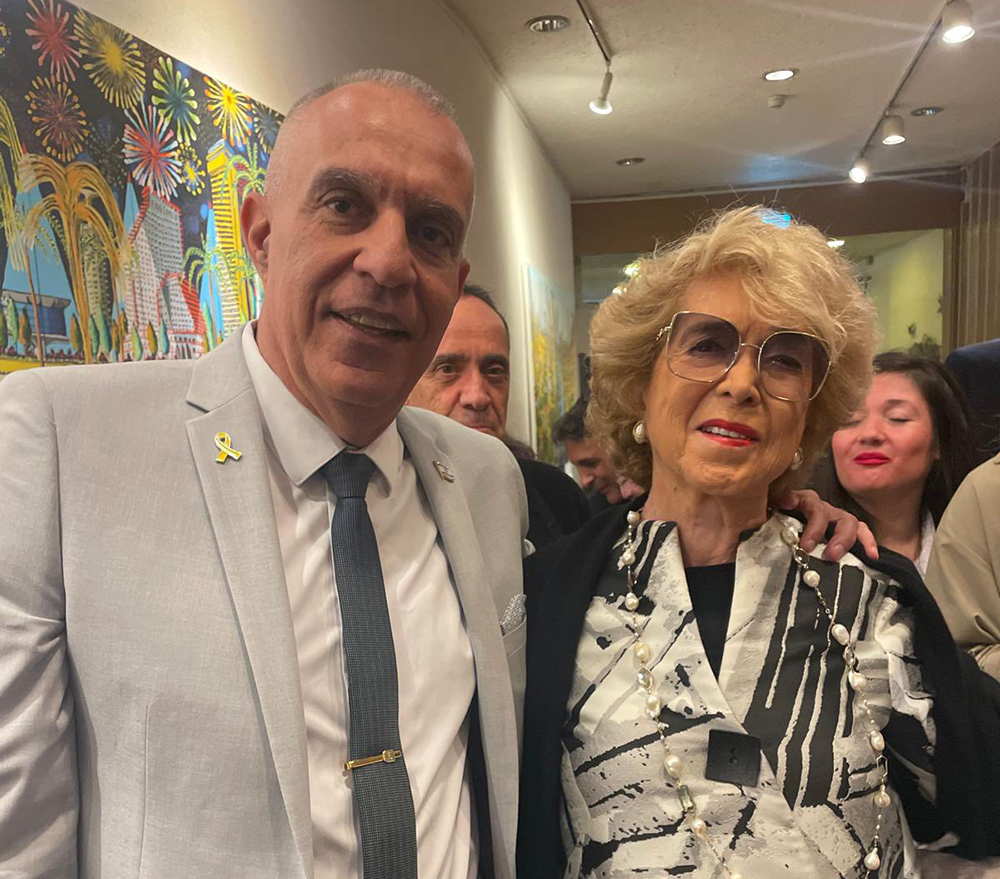
What is unique about ISEF is that we help our students all the way. At ISEF, you can start with the BA and then go on to get an MA and a PhD. Over the years, we have had ISEF students, in America and abroad, who are doing their postdoctoral research even at top schools like Harvard. Afterwards, they go back to Israel and have fabulous careers. We are unique in that sense – that we build bright young people from the beginning of their career to the end – and that gives us a lot of joy and satisfaction
JV: Yes, truly amazing so, how do how does ISEF support this work, and how do you identify the needy and worthy students to support?
NW: Yes, that’s a very important question. Once a year we publish our scholarship opportunities and invite students to apply – and we really have to make a difficult selection. I think we have something like 6,000 applications! And then the most promising have an interview and we choose every year only 150 new students among our total of 450 – about 300 are continuing students! We wish we could take more but the ones we take are truly outstanding and the beauty of it is that sometimes they’re so insecure and not even aware of their intelligence and their high intellectual abilities and they discover them more and more through ISEF and this is really very, very exciting to see that happening!
JV: Wonderful! So, in the 48 years of ISEF’s existence, please give us an overview of ISEF’s accomplishments.
NW: OK, it gives me a lot of pride and joy to tell you that we have over 11,000 graduates. We have people like Dr. Roni Gamzu who was the head of the biggest hospital in Israel. Everybody there knows who he is. He was the head of Ichilov. We have heads of departments at the best hospitals, like Professor Soly Mizrahi who was the Head of Surgery at Soroka Hospital for 20 years, Professor Asher Bashiri who heads the Department of Gynecology at Soroka Hospital.
We have more top people as heads of departments at the best hospitals, and we have top professors heading departments at the best universities – like Prof Riki Sevaya and Professor Nissim Mizrahi – both at Tel Aviv University. We have Prof. David Levi-Faur who is head of the Hebrew University Department of Political Science for many years now; he is one of my first alumni at the Hebrew University. I can go on and on really – I know a lot of them. My biggest joy these days is to connect with our old alumni.
When I got the Israel Prize about two weeks ago in Jerusalem, which is really a big honor, and it was for lifetime achievement – it was for ISEF – and about more than 2-3 dozen of my older alumni – professors and doctors – came to Jerusalem to share with me my joy and my honor. It was really very exciting. I felt like I have a family – and I always felt that way. Our students are our family. They are a family among themselves. They help each other.
I will tell you another example. We have an outstanding young man today, Omri Elmaleh, who just finished his postdoc research on analyzing the immigration of. Arab population into Latin America and Jewish population into Latin America. He got many awards, and he wanted to come back to Israel, so David Levi-Faur, who is an older professor by now, helped Omri in recommending him highly at the Hebrew University, which is not easy to get in – and Omri is starting in October to teach at the Hebrew University. So really, they become like a family among themselves. They help each other and in the nicest way. And their lives have changed.
This Omri was saying – just to show you the needs still in Israel – this is what consumes me – that we still need a lot of support – Omri says he comes from Morocco. His family came from Morocco. He said that he has100 first cousins from the huge family that came from Morocco. And he said that, out of this 100 people, he’s the only one with a PhD and then maybe 2-3 have a Master’s. And the rest never went to college. So, it’s a pity! We lose intellectual potential that could help Israel. Israel needs those people. It needs to discover those people.
JV: Truly amazing stories! So, they want to know what is your proudest moment?
NW: My proudest moment – I think I have 1,000 proudest moments at least! – but I think the Israel Prize that I just received two weeks ago – it’s also very recent. It was such an honor, and it was so exciting.
And not only, as I said, many of our alumni came – but when I arrived for the cocktail, a charming young man in his late 40s come to me and gave me a big kiss. And at this party for the Israel Prize, he tells me: You know, I got a scholarship from ISEF for my BA and for my MA. And today this event is a big event. It’s like the Oscars. It was really a big production that goes on television. It goes in the papers. It’s a big event, this Prize in Israel! And he tells me: I am running this show! I have my own company of 40 people and this whole show – I’m running it! And this is ISEF alumni! So, it doesn’t stop, it can come from different fields. It’s just a lot of joy, a lot of a lot of satisfaction, satisfaction, deep satisfaction
JV: Amazing What do you do when you’re not working on ISEF?
NW: It’s a good question! I used to do more different things. I love music. I love concerts. I like ballet. I love opera. But to be honest, I am really very involved with ISEF. I mean, I love, I have friends. I moved to Israel five years ago, and I enjoy interesting lectures, and I am very interested in politics without having ISEF involved in politics at all. But I come from a family where everybody was very interested in what goes on, not only in Egypt where I was born, not only in Israel, or in America, but my father and my mother were always very interested in what’s happening all over the world, and I kept this interest. I’m interested – every day I have to read and know what what’s going on.
JV: That’s great. Is there anything else you want to note or add to the piece?
NW: The major thing is the discovery of brilliant minds – I always say – that are way above people I know or around me, and how we discover and change their lives. Like, to give one example that bothers me: there’s a young woman who has seven children and comes from a dysfunctional family She is today not only an officer in the army, but she’s getting her postdoc research at the Weizmann Institute, which is the top institution in Israel. And this young woman – I don’t know how she does it. I don’t know! Seven children, postdoc research. I mean, she must be brilliant beyond words – beyond words – beyond understanding.
We have so many of these. We have a young woman now, Natalie, at Columbia, also doing a postdoc – four children and a brilliant, brilliant genius. So, this always amazes me, again and again, what we are gaining versus what Israel is losing if it doesn’t look into these periphery disadvantaged neighborhoods that have so many of what I like to call hidden diamonds. I say we take those diamonds – and we polish them, and we clean them, and we bring them to life, and this is very exciting. Exciting.