



|
Getting your Trinity Audio player ready...
|
By: Jerome Brookshire
When President Donald Trump addressed the nation on June 21 to confirm that the United States had carried out precision airstrikes on Iranian nuclear infrastructure, it was a defining moment—one aimed at neutralizing a long-feared threat and showcasing the United States’ resolve. But even as the missiles hit their mark near Tehran, a different kind of detonation echoed through the conservative base: a rift within Trump’s MAGA movement itself.
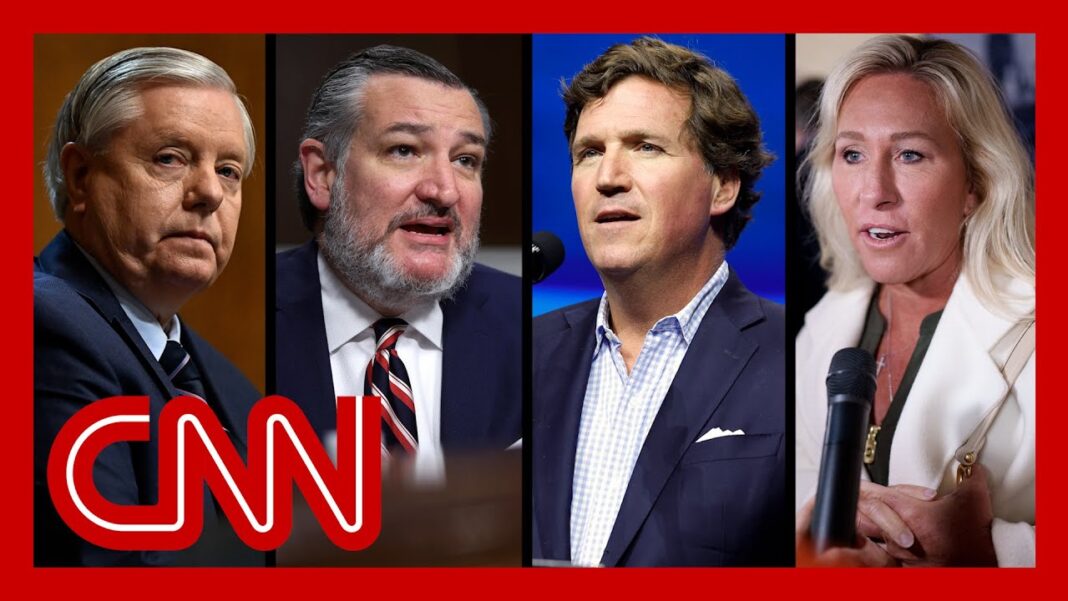
As USA Today reported on Sunday, the president’s decision to strike Iran has stirred tensions within the pro-Trump coalition, sparking an intense debate over intervention, the future of America’s Middle East policy, and the ideological coherence of the MAGA doctrine itself. For some, the attack on Iran’s nuclear sites was an act of courage and necessity. For others, it was a dangerous deviation from the very principles that helped define Trump’s presidency in the first place.
Perhaps the most notable expression of unease came from Steve Bannon, Trump’s former White House chief strategist and a towering figure within the MAGA movement. On his podcast shortly after Trump’s speech, Bannon acknowledged that many in the base were not cheering.
“This is incrementalism,” Bannon warned, referring to Trump’s carefully measured yet open-ended remarks about future military action. “If they hit back at American troops, do we go back in and hit again? Next thing you know, brother, you’re in a forever war.”
According to the information provided in the USA Today report, Bannon emphasized that while the strike was understandable, it walks a fine line. Trump, he said, would have “some work to do” to reassure his supporters—especially younger conservatives who have grown disillusioned with what they see as America’s endless military entanglements abroad.
That sentiment was echoed by Rep. Marjorie Taylor Greene (R-GA), another staunch Trump ally, who voiced her discomfort in unusually stark terms. “I don’t know anyone in America who has been the victim of a crime or killed by Iran,” she wrote on social media, questioning the direct threat justification for the strike.
“I can support President Trump on many of the great things he is doing,” she continued, “while disagreeing on bombing Iran and getting involved in a hot war that Israel started.”
This is precisely the dilemma now confronting Trump as he steers into his 2024 reelection campaign. The president has consistently marketed himself as an anti-war figure, the man who took down ISIS, withdrew troops from Syria and Afghanistan, and most famously, avoided the kind of open-ended conflicts that marred the George W. Bush era. The MAGA movement—born partly from fatigue with neoconservative nation-building—latched onto that message.
The report at USA Today pointed out that this moment places Trump in an unusually delicate position: he must balance projecting strength abroad without appearing to reignite the kind of military adventurism he once derided. His defenders argue that he’s done just that.
Vice President JD Vance, speaking on NBC and ABC on June 22, was quick to stress that the strike was not the beginning of a regime-change war. “This is not going to be some long, drawn-out thing,” Vance said, explaining that the administration views this as a one-time, precision measure to deter Iran from continuing its march toward nuclear breakout.
“There’s a question about how you achieve peace,” Vance added, “and we believe the way you achieve peace is through strength.”
Despite these misgivings, Trump retains strong support from key Republican constituencies, many of whom rallied behind the operation in the hours and days following the strike.
Turning Point USA founder Charlie Kirk described Trump’s actions as “prudent and decisive,” arguing that Iran left him “no choice.” Even Bannon, after raising his concerns, clarified, “Not that it’s wrong to take these actions; sometimes you must take these actions.”
On social media, Trump declared: “Great unity in the Republican Party. Perhaps unity like we have never seen before.” USA Today reported that early signs suggest Trump is indeed consolidating broad support—though it is not without complications.
Rep. Thomas Massie (R-KY) took to CBS’s Face the Nation to say the airstrikes were “not constitutional” and that his “side of the MAGA base” includes “non-interventionists” exhausted by decades of foreign conflict. Trump, never shy about taking on dissenters within his own party, responded with characteristic fury: “MAGA should drop this pathetic LOSER… like the plague!”
That confrontation reflects a deeper ideological tug-of-war inside the Trump movement—between those who embrace a realist, muscular foreign policy and those who see non-interventionism as a moral and strategic imperative.
As the USA Today report noted, Trump’s gamble lies in achieving a decisive blow to Iran’s nuclear ambitions without being drawn into a broader conflict. Analysts such as Republican strategist Matt Gorman praised the strike as a “beautifully threaded needle,” asserting on Fox News that the administration had been careful to frame the operation as “a very limited, targeted, focused mission.”
Lanhee Chen, a Hoover Institution fellow, said on NBC that if the strike remains a one-off event—like Trump’s 2020 drone strike on Iranian general Qassem Soleimani—the president will likely retain his coalition. “If this doesn’t escalate,” Chen observed, “Trump is going to be able to hold the coalition together.”
Still, escalation remains the elephant in the room. Iran’s next move could force Trump to act again, perhaps in a more prolonged fashion. If so, the tension between Trump-the-Peacemaker and Trump-the-Warrior will sharpen, and the MAGA movement’s ideological seams may begin to fray.
At its core, the MAGA movement was built on the belief that American strength need not require American sacrifice in endless foreign wars. President Trump understood that, and it helped redefine the Republican Party. But Iran—belligerent, nuclear-aspirant, and hostile to both the U.S. and Israel—presents a uniquely volatile test.
As the USA Today report indicated, this is a legacy-defining moment for Trump. He has walked the razor’s edge between deterrence and escalation before. Whether he can walk it again—and keep his base united—may determine not only the fate of this conflict, but the trajectory of his political future.
