



|
Getting your Trinity Audio player ready...
|
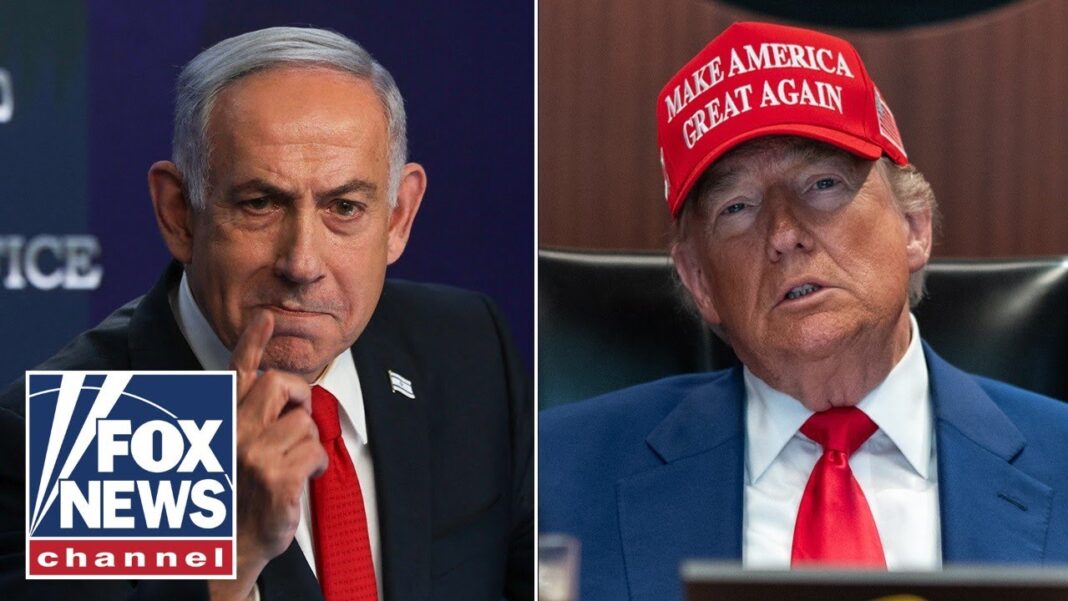
(TJV NEWS) President Donald J. Trump offered measured optimism on Wednesday regarding the durability of the newly implemented ceasefire between Israel and Iran, affirming that the truce, forged just a day earlier, was “holding up very good” and commending Israeli Prime Minister Benjamin Netanyahu for what Trump called the successful fulfillment of Israel’s wartime objectives.
Speaking at a press briefing alongside NATO Secretary-General Mark Rutte during the alliance’s high-stakes summit in The Hague, Trump praised the Israeli military campaign as both justified and disciplined—particularly in light of recent provocations from Tehran. As reported by The Jewish News Syndicate (JNS), the ceasefire followed an intense 12-day conflict that saw unprecedented direct confrontation between Israel and the Islamic Republic of Iran.
“Israel came back yesterday, I was so proud of them,” Trump stated, referring to Jerusalem’s decision to refrain from additional retaliatory strikes on Tehran, despite what Israeli intelligence considered a ceasefire violation by Iran. “They felt there was a violation,” the president said, acknowledging that Iran launched additional missiles shortly after the truce was declared. “Technically, they were right,” he added, but advised Israel against escalation. “It wouldn’t have worked out very well. I said, ‘You’ve got to get those [fighter jets] back,’ and they came back—and it was a great thing.”
Indeed, the JNS report confirmed that Israeli warplanes, reportedly en route to additional Iranian strategic targets, were recalled just hours after the ceasefire was brokered, a decision that reflects both military discipline and a deeper diplomatic calculus involving Washington’s guidance.
Throughout the press conference, Trump offered emphatic praise for Netanyahu, saying the Israeli leader “should be very proud of himself” after a campaign that, according to both the Israeli Defense Forces and international observers, struck at the very heart of Iran’s nuclear infrastructure.
“Israel got hit very hard, especially the last couple of days,” Trump noted. “Those ballistic missiles, boy, they took out a lot of buildings.”
Over the course of the war, Iran launched more than 500 ballistic missiles into Israeli territory, killing 28 civilians, injuring hundreds more, and causing substantial structural damage. As JNS reported, Israeli military analysts viewed the intensity and scope of the assault as the gravest threat to Israeli sovereignty in decades. Yet by the time the ceasefire was declared, Israel had already completed dozens of surgical strikes across Iran, targeting its nuclear enrichment facilities, weapons laboratories, and command infrastructure.
Despite saber-rattling from Iranian Foreign Minister Abbas Araghchi—who has threatened to rebuild Iran’s nuclear enrichment program—Trump dismissed such claims as hollow posturing.
“The last thing they want to do is enrich anything right now—they want to recover,” Trump said, adding, “We won’t let that happen.”
In response to questions about conflicting reports regarding the impact of the June 22 U.S. airstrikes on Iran’s nuclear facilities, Trump brushed off media skepticism. While some outlets have suggested that key parts of Iran’s uranium stockpile were moved before the strikes and that damage was less than total, Trump offered a confident rebuttal.
“They really don’t know,” he said. “I think Israel is going to be telling us very soon because Bibi is going to have people involved in that whole situation. We hear it was obliteration.”
Also weighing in on Wednesday about intelligence on Iran’s nuclear program was CIA Director John Ratcliffe.
In a press release, Ratcliffe said, “The CIA can confirm that a body of credible intelligence indicates Iran’s Nuclear Program has been severely damaged by the recent, targeted strikes. This includes new intelligence from a historically reliable and accurate source/method that several key Iranian nuclear facilities were destroyed and would have to be rebuilt over the course of years. CIA continues to collect additional reliably sourced information to keep appropriate decision-makers and oversight bodies fully informed. When possible, we will also provide updates and information to the American public, given the national importance of this matter and in every attempt to provide transparency.”
As the JNS report detailed, the joint U.S.-Israeli operation marked a watershed moment in bilateral military cooperation. Seven American B-2 Spirit stealth bombers were deployed to drop GBU-57 “bunker buster” bombs on key Iranian nuclear sites, including Fordow, Isfahan, and Natanz. Netanyahu, in his post-ceasefire address, described Washington’s participation as “historic,” asserting that it helped eliminate Iran’s capacity to build a nuclear weapon in the foreseeable future.
In a statement issued early Wednesday and covered by JNS, Netanyahu thanked President Trump for his unwavering support and described the conflict as one of the most consequential military operations in Israel’s history.
“The IDF struck at the core of Tehran’s nuclear infrastructure,” Netanyahu declared. “We effectively sent it to oblivion.” He also warned that if Iran attempts to rebuild, “we will act with the same determination and strength.”
This sentiment was echoed by Tally Gotliv, a prominent lawmaker from Netanyahu’s Likud Party, who told JNS that the campaign represented a “colossal heroic act of great importance.”
“The campaign that Israel waged in Iran under the prime minister’s authority greatly strengthened the country and its visibility in the eyes of the Middle East and the entire world,” Gotliv stated. She emphasized the technological sophistication of Israel’s intelligence and special operations forces, particularly its Air Force and elite commandos, whose coordinated strikes left international observers “in wonder.”
Gotliv also addressed the broader implications of Israel’s actions, asserting that the campaign prevented the IRGC-dominated regime in Iran from joining the ranks of nuclear-armed states. “Israel’s massive activity saved the Middle East and the entire world,” she said, “from Iran—if, God forbid, it had become a nuclear power.”
According to the information provided in the JNS report, Israeli officials see the ceasefire not as a concession, but as the natural conclusion to a mission whose objectives were decisively achieved. “The ceasefire is the derivative of achieving the goals in Iran and the predetermined objectives,” Gotliv explained. She emphasized that Jerusalem must now work to maintain those achievements “for years to come.”
Trump, for his part, sees the outcome as a vindication of his administration’s doctrine of peace through strength. “They’re not going to have a bomb and they’re not going to enrich,” he stated plainly. The president also hinted at future diplomatic overtures, remarking, “I’ve had a relationship over the last four days; they agreed to the ceasefire, and it was a very equal agreement.”
Whether the fragile truce holds remains to be seen. As JNS has reported, intelligence agencies continue to monitor Iran’s internal deliberations closely. But for now, both Trump and Netanyahu are declaring victory—not just in terms of military success, but in the geopolitical message sent across the region.
As the dust settles and the world assesses the aftermath of the most direct Israel-Iran war to date, one thing is clear: the partnership between Washington and Jerusalem remains ironclad. And in Trump’s view, as he told reporters at The Hague, “Israel didn’t just survive. They won.”
