



|
Getting your Trinity Audio player ready...
|
By: TJVNews.com
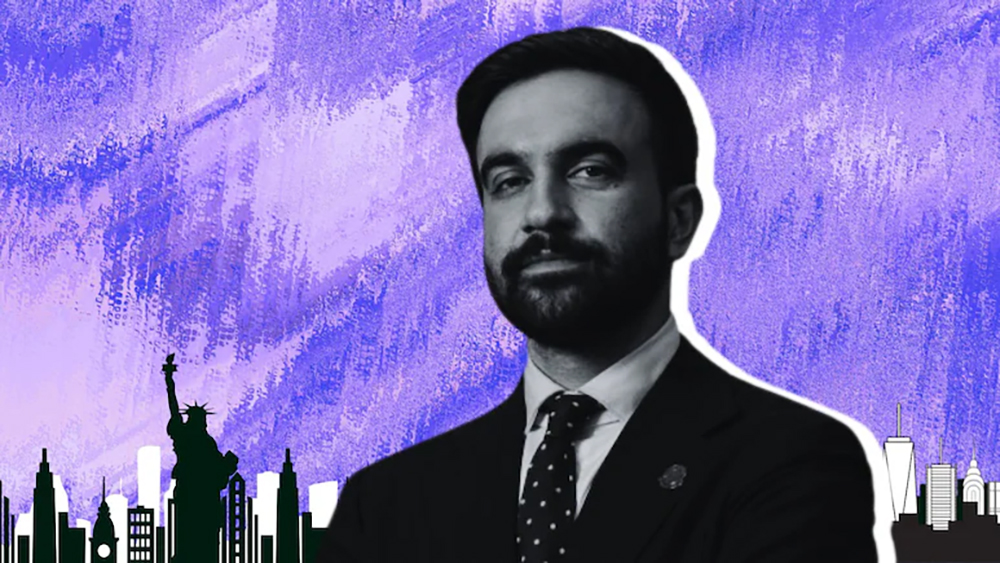
In a stunning political reversal few had predicted—and fewer dared imagine—New York City has become a cautionary tale of ideological extremism unleashed at the municipal level. The election of Zohran Mamdani, a self-styled democratic socialist and longtime critic of capitalism and Israel, as the city’s mayor has plunged the nation’s largest metropolis into an experiment that is equal parts fantastical and frightening.
Described by supporters as a “transformational figure” and by critics as an “urban revolutionary,” Mardani rose to power on a wave of grassroots frustration and social-media-driven activism. His campaign was powered by the disaffected: disillusioned youth, tenants struggling under skyrocketing rents, and anti-establishment progressives galvanized by global events.
But what began as an idealistic cry for equity has, in mere months, devolved into a citywide crisis—of governance, of finance, and of moral clarity. As The New York Post has reported in a series of increasingly urgent editorials, the Mamdani administration has pushed New York to the brink of economic and social collapse.
Central to Mardani’s platform was “The People’s Charter”—a manifesto promising sweeping reforms that included universal rent control, free city-run grocery markets, fare-free public transportation, municipal broadband, and expanded public housing through the confiscation of unused luxury developments.
True to his word, Mardani moved quickly. Within his first 100 days, executive orders froze rents across all boroughs, halted evictions, and established “People’s Markets” to replace what his administration called “corporate profiteering in food security.”
Yet within weeks, the exodus began. As The New York Post documented, commercial landlords in Midtown Manhattan filed thousands of property vacancy notices. Tech companies relocated to Florida and Texas. Law firms and financial institutions downsized or fled outright. The very tax base that sustained the city’s generous public services began to evaporate.
With fewer high-income earners to tax and real estate assessments plunging, city revenues cratered. Mamdani responded by increasing taxes on remaining small businesses and landlords. But that only exacerbated the economic spiral. Bread lines formed outside the “People’s Markets,” which frequently ran out of staples like milk, eggs, and flour. Price caps made restocking unprofitable, and suppliers balked at city procurement contracts.
A Cabinet of Ideological Allies
Mardani’s appointments offered a glimpse into the ideological engine driving his administration. Public Advocate Jumaane Williams, a fellow democratic socialist and a fierce critic of law enforcement, was appointed Deputy Mayor. In his first press conference, Williamson declared, “We’re not just reforming the system. We’re dismantling it.”
Former Congressman Jamaal Bowman — whose political career ended after a scandal involving the deliberate triggering of a fire alarm during a critical House vote—was appointed Chancellor of the New York City Department of Education. Bowman immediately initiated a curriculum overhaul that de-emphasized STEM benchmarks in favor of “decolonized pedagogy” and anti-capitalist civic instruction.
Reports indicated that Jewish parents raised alarm over the marginalization of Holocaust education and the introduction of materials casting Israel as a “colonial aggressor.” The Department of Education brushed off the complaints as “Zionist alarmism.”
Former Manhattan District Attorney Alvin Bragg, best known for his prosecution of former President Trump and his record of non-prosecution for serious crimes, was installed as Corporation Counsel, effectively becoming the city’s legal czar. His office issued a memo deprioritizing the prosecution of non-violent property crimes and instructing NYPD precincts to reduce “over-policing” in neighborhoods disproportionately impacted by “capitalist disinvestment.”
The Criminal Justice Spiral
As the administration veered leftward, the city’s criminal justice system began to strain. NYPD morale cratered. Recruitment classes were halved. Thousands of veteran officers took early retirement or relocated to neighboring jurisdictions. Arrests dropped precipitously.
Violent crime, which had dipped due to earlier federal intervention, spiked. Muggings in Central Park surged 80%. Shootings in outer boroughs doubled. Transit crime became a daily reality for commuters navigating an underfunded and overcrowded subway system. “New York is back—in all the worst ways,” declared a New York Post column in June.
Mayor Mamdani’s response? “Crime is a byproduct of inequality. We will not criminalize desperation.”
The Anti-Israel Turn and Jewish ExodusA
Perhaps the most jarring shift came in City Hall’s posture toward Israel and New York’s Jewish community. A longtime critic of Israel, Mamdani refused to recognize its right to exist as a Jewish state. In a speech to student activists, he referred to the Jewish state as “an ethno-nationalist project imposed by imperialists.”
His administration severed all sister-city ties with Tel Aviv, removed Israeli consular access from public events, and endorsed municipal divestment from companies with operations in the Judea and Samaria region. Simultaneously, graffiti such as “From the River to the Sea” was increasingly tolerated—even when scrawled on synagogue walls.
Jewish publications reported a 45% rise in antisemitic hate crimes during the first three months of Mamdani’s tenure. In Brooklyn, Yeshiva students were routinely harassed. Kosher markets were vandalized. Yet City Hall downplayed the incidents, calling them “frustrated expressions of political anger.”
While public officials were quick to condemn Islamophobia, calls for condemning antisemitism were routinely ignored. Critics argued that the mayor’s refusal to differentiate between criticism of Israel and hatred of Jews had created a toxic environment for New York’s 1.3 million Jewish residents.
A Bureaucracy of Comrades
Mamdani’s broader team reflected the ideological rigor of his worldview. His advisers included prominent Democratic Socialists such as Chi Ossé, Tiffany Cabán, Sandy Nurse, and Alexa Avilés—all vocal proponents of police defunding, wealth redistribution, and Palestinian solidarity. Each was given key roles in housing, health, and cultural affairs.
Even Congresswoman Alexandria Ocasio-Cortez made regular appearances at City Hall, offering policy guidance and attending cabinet meetings in an informal role. Her influence was unmistakable: a citywide “Green New Boroughs” program mandated the retrofitting of public buildings at enormous expense—despite the collapsing budget.
Federal Tensions and National Reverberations
At the national level, the Mamdani administration sparked unease in Washington. President Trump, who had returned to office amid global turmoil, publicly condemned New York’s “descent into ideological madness.” In an interview with ABC News, Trump warned that “if the federal government doesn’t act soon, we’ll have to consider extraordinary measures.”
Though the 1973 Home Rule Act grants New York autonomy, Congress retains oversight of federal funds. Some Republican lawmakers called for conditional aid packages to the city. Others floated the idea of a federal takeover of certain public agencies, citing fiscal mismanagement and civil rights concerns.
Meanwhile, real estate investment firms, long the backbone of Manhattan’s financial district, withdrew completely. Tourism, once a $70 billion industry, declined by over 40% year-over-year. Broadway theaters shuttered one by one. The Museum of Jewish Heritage reported record-low attendance—and record-high security costs.
A City in Crisis, a Nation at a Crossroads
The futuristic tale of Zohran Mamdani’s administration is not a literal prediction—it is a parable. It is not meant to illustrate the perils of ideological absolutism when unchecked by pragmatism, fiscal restraint, or moral clarity.
As The New York Post recently opined, “New York City has long been a bellwether. What happens here first doesn’t stay here—it echoes. And if this echo is allowed to grow, America’s cities may awaken one day to find that their foundations have shifted irreparably.”
A city that forgets the balance between justice and order, equity and excellence, speech and responsibility—risks becoming a cautionary tale for a fractured nation.

Victor Davis Hanson: Zohran Mamdani’s Disturbing Past Finally Comes to L…
https://youtu.be/AH8qhnq1nPE?feature=shared