



|
Getting your Trinity Audio player ready...
|
By: Tzirel Rosenblatt
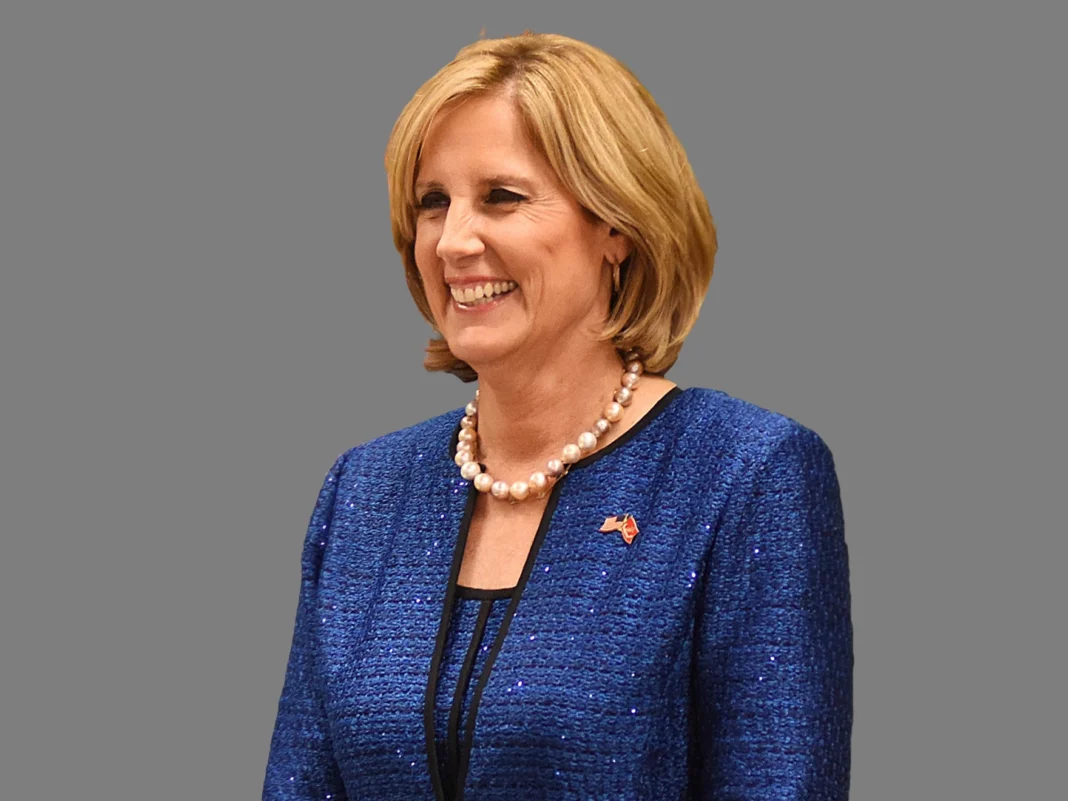
In a development that highlights the growing intersection of international diplomacy, economic policy, and U.S. domestic law, a coalition of Republican lawmakers has called on the U.S. Treasury Department to formally review Spain’s recent anti-Israel boycott measures. At the center of the effort is Congresswoman Claudia Tenney (R–NY-24), who on Thursday led a detailed letter to Treasury Secretary Scott Bessent, urging an examination of Spain’s actions under Section 999 of the Internal Revenue Code, the statute governing U.S. responses to foreign participation in unsanctioned international boycotts.
The letter, signed by seventeen members of Congress, reflects rising concern in Washington that Spain’s October legislative actions—prohibiting arms trade with Israel and banning the advertising of products originating from Judea and Samaria—may constitute formal economic discrimination against a close American ally. Lawmakers argue that such measures align with the objectives of the global Boycott, Divestment, and Sanctions (BDS) movement and could expose U.S. companies operating abroad to legal and economic pressure that directly conflicts with U.S. policy.
At stake is not only the U.S.–Israel relationship, but the integrity of long-standing American laws designed to shield U.S. businesses from being compelled to comply with foreign boycotts that Washington does not endorse.
Section 999 of the Internal Revenue Code occupies a little-known but consequential space in U.S. law. Enacted in the late 1970s in response to Arab League boycotts of Israel, the statute requires the Treasury Department to monitor and report on foreign governments that require or encourage participation in international boycotts not sanctioned by the United States.
Under Section 999, the Treasury must maintain a list of such countries. Inclusion on that list triggers specific reporting requirements for U.S. taxpayers and corporations, ensuring transparency and helping prevent American businesses from inadvertently participating in discriminatory foreign policies. The law does not impose automatic sanctions, but it creates a formal accountability mechanism that signals U.S. opposition to coercive boycotts and provides companies with legal clarity.
In their letter, Rep. Tenney and her colleagues argue that Spain’s recent legislation may meet the statutory criteria for review and potential inclusion under Section 999. They emphasize that the law is not discretionary in spirit but mandatory in design: when evidence suggests that a foreign government is promoting an unsanctioned boycott, Treasury is obligated to examine the facts and act accordingly.
Spain’s actions, enacted in October, represent a significant escalation beyond symbolic criticism of Israeli policy. The measures include a ban on arms trade with Israel and restrictions on the advertising of products originating from Judea and Samaria—territories whose legal and political status remains deeply contested internationally.
To the lawmakers who signed the letter, these policies bear the unmistakable imprint of the BDS movement, which seeks to exert economic, cultural, and political pressure on Israel through boycotts and divestment campaigns. While BDS initiatives are often framed by their proponents as human rights advocacy, critics—including successive U.S. administrations and bipartisan majorities in Congress—have argued that they single out Israel unfairly and undermine prospects for negotiated peace.
The lawmakers contend that Spain’s actions go further still, crossing the line from private activism into state-sponsored economic discrimination. Unlike municipal resolutions or parliamentary declarations, Spain’s measures carry the force of national law, with tangible consequences for trade, advertising, and cross-border commercial relationships.
One of the central concerns articulated in the letter is the potential impact on U.S. businesses with operations or partnerships in Spain. American companies may find themselves caught between conflicting legal regimes: on one hand, Spanish laws that restrict engagement with Israel or Israeli-linked products; on the other, U.S. laws designed to prevent participation in discriminatory boycotts.
Section 999 exists precisely to address this dilemma. By requiring disclosure and oversight, the statute aims to ensure that U.S. companies are not quietly coerced into compliance with foreign policies that contradict U.S. foreign policy objectives.
In the absence of a Treasury review, lawmakers warn, American firms could face legal uncertainty, reputational risk, and potential penalties—either abroad for noncompliance with Spanish law or at home for violating U.S. anti-boycott regulations. The resulting ambiguity, they argue, undermines both commercial stability and the rule of law.
Although the letter was spearheaded by Rep. Tenney, it drew support from a geographically and politically diverse group of House Republicans. Signatories include Reps. Sheri Biggs of South Carolina, Earl L. “Buddy” Carter of Georgia, C. Scott Franklin of Florida, Harriet M. Hageman of Wyoming, Brian Jack of Georgia, Nicholas Langworthy and Michael Lawler of New York, Barry Moore of Alabama, Andy Ogles and John Rose of Tennessee, Derek Schmidt of Kansas, Keith Self of Texas, Jefferson Shreve and Rudy Yakym III of Indiana, Pete Stauber of Minnesota, Daniel Webster of Florida, and Joe Wilson of South Carolina.
The breadth of the signatories illustrates the extent to which concern over foreign boycotts of Israel resonates across districts and regions. While the issue is often associated with Middle East policy, the lawmakers frame it equally as a matter of domestic economic protection and legal consistency.
In a statement accompanying the letter, Rep. Tenney was explicit in her assessment of Spain’s actions and the responsibilities of the U.S. government.
“Spain’s actions go beyond rhetoric and cross into formal economic discrimination against one of America’s closest allies,” she said. “U.S. law mandates foreign governments that participate in or promote unsanctioned boycotts against Israel must be reviewed and held accountable.”
Tenney emphasized that Section 999 was enacted not merely as a symbolic gesture, but as a practical safeguard.
“Section 999 exists to protect American businesses from being coerced into compliance with discriminatory policies and to ensure transparency when our allies are targeted,” she said. “The Treasury must conduct a thorough review and enforce the law as written.”
Her concluding warning was unambiguous: “The United States cannot turn a blind eye when foreign governments attempt to economically isolate Israel or undermine American companies in the process.”
A Treasury review of Spain under Section 999 would not be without diplomatic consequences. Spain is a NATO member, a key U.S. partner in Europe, and a significant player within the European Union. Any formal designation—or even the initiation of a public review—could generate friction in U.S.–European relations.
Yet supporters of the letter argue that failing to enforce existing law carries its own costs. Allowing a close ally to adopt policies that align with unsanctioned boycotts, they contend, risks eroding the credibility of U.S. commitments to Israel and undermining the consistency of American economic policy.
The issue also highlights a broader tension between U.S. and European approaches to Israel. While Washington has historically opposed state-backed boycotts of Israel, several European governments have adopted increasingly restrictive stances on trade and cooperation, particularly regarding Judea and Samaria. The lawmakers’ letter signals a willingness to push back against that trend using domestic legal tools.
The Treasury Department has not yet publicly responded to the letter. Should Secretary Bessent order a formal review, Treasury officials would assess whether Spain’s laws meet the criteria set forth in Section 999—namely, whether they require or encourage participation in an unsanctioned international boycott.
If Spain were found to qualify, its inclusion on the Treasury’s list would trigger reporting requirements for U.S. taxpayers and companies and could prompt further congressional scrutiny. Even absent formal designation, the review itself would send a clear signal that Washington is closely watching the evolution of European policies toward Israel.
For now, the letter stands as a reminder that laws enacted decades ago continue to shape contemporary foreign policy debates—and that Congress remains prepared to invoke them when it believes American interests and allies are at stake.
At its core, the Tenney-led initiative is a test of whether the United States will consistently enforce its own statutes in the face of complex international dynamics. Section 999 was designed for moments precisely like this, when foreign governments move from political statements to concrete economic measures.
Whether Treasury acts, and how decisively, will be closely watched not only by U.S. lawmakers and Israeli officials, but by American companies operating in an increasingly fragmented global regulatory environment. The outcome may help define the contours of U.S. opposition to modern iterations of economic boycotts—and the extent to which Washington is willing to defend its allies through the mechanisms of law rather than rhetoric alone.