



|
Getting your Trinity Audio player ready...
|
By: Fern Sidman
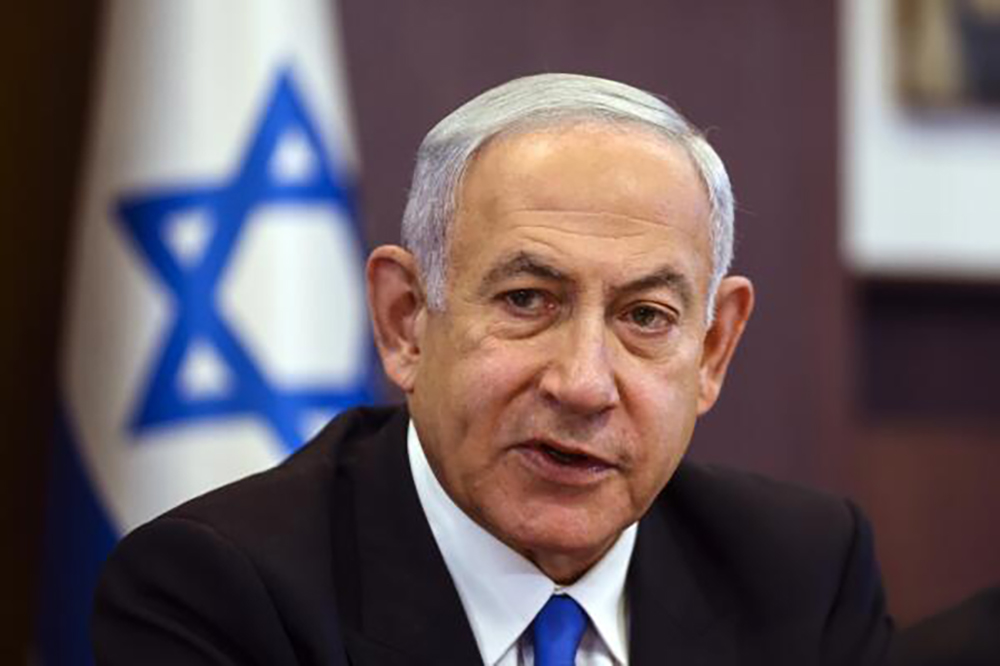
Prime Minister Benjamin Netanyahu, addressing the United Nations General Assembly in New York, delivered his trademark defense of Israel before the world’s most powerful leaders. But when the applause faded and the delegates dispersed, the Israeli leader made a far quieter yet arguably more consequential move. As reported by VIN News on Sunday, Netanyahu convened a private gathering at the Israeli Consulate on Friday afternoon with a different kind of power broker: American influencers, activists, and social media creators whose reach online often eclipses that of traditional diplomacy.
The meeting was intimate but charged with urgency. Seated around a conference table in the consulate, attendees ranged from YouTube personalities with millions of followers to Jewish community activists and policy commentators with loyal online audiences. These were individuals who, in the digital age, shape conversations at lightning speed, often determining how events in Israel are perceived by millions of Americans scrolling through their phones.
Netanyahu wasted no time in laying out his appeal. According to the information provided in the VIN News report, he told the group:
“The only value in life is its purpose, and if it depends on the survival and prosperity of the Jewish people and rebuffing the wave of hatred and denigration — you must fight!”
It was not the language of policy briefings or diplomatic jargon. It was a call to arms, though this battle would be fought with words, videos, and hashtags rather than tanks or jets.
The timing was deliberate. Hours earlier, Netanyahu had spoken to the world about Israel’s security challenges — Iran’s nuclear ambitions, Hamas’ atrocities, and the dangers of international recognition for a Palestinian state. At the UN podium, his words were aimed at presidents, prime ministers, and foreign ministers. At the consulate, his words targeted a very different audience: Americans scrolling TikTok, Instagram, or X who might never watch a UN speech but could be swayed by a viral post.
VIN News reported that Netanyahu described this new battleground as “existential.” Hostile narratives, spread at lightning speed online, were undermining Israel’s legitimacy and fueling antisemitism worldwide. “Networks are not just for entertainment,” he said. “They are instruments of truth or lies. Our enemies know this — and we must know it too.”
The group of invitees reflected a strategic choice. Rather than relying solely on Jewish community leaders or established advocacy groups, Netanyahu’s team assembled a mix of digital voices capable of reaching both Jewish and non-Jewish audiences. Influencers who specialize in lifestyle, culture, and even comedy were present, underscoring the recognition that pro-Israel messaging cannot be confined to policy circles alone.
As one participant told VIN News afterward, “It’s not about debating antisemites — it’s about reaching the millions in the middle who are confused, overwhelmed, and looking for clarity.”
Netanyahu urged the influencers to focus on three core themes:
Hostages — highlighting the plight of those still held in Gaza and personalizing the human cost of Hamas terrorism.
Hamas’ Brutality — reminding global audiences of the October 7 atrocities and countering efforts to obscure or minimize them.
Israel’s Humanity — documenting Israel’s warnings to civilians, its humanitarian aid shipments, and its democratic values.
The meeting, according to the information contained in the VIN News report, was less about dictating talking points and more about encouraging creative approaches. Attendees were encouraged to tailor the message to their audiences — whether through heartfelt storytelling, compelling visuals, or sharp humor that punctures misinformation.
The Broader Strategy — Israel’s Fight for Digital Legitimacy, Why Social Media Matters More Than Ever
The urgency behind Netanyahu’s outreach reflects a sobering reality. Since the Hamas-led massacres of October 7, 2023, antisemitic incidents worldwide have surged. Jewish communities in Europe and North America report harassment, threats, and exclusion from public spaces. Much of this hostility has been amplified by social media, where images stripped of context and slogans detached from reality often dominate the conversation.
As VIN News has documented, viral campaigns demonizing Israel have spread rapidly, often targeting Jewish students on American campuses or fueling boycotts of Israeli businesses. Against this backdrop, traditional diplomacy can seem glacial. By the time a foreign ministry issues a press release, a misleading video may already have been seen by tens of millions.
Israel’s leaders increasingly see social media as a frontline in its defense. In this sense, the influencers gathered in New York are not merely commentators but, as Netanyahu implied, “digital soldiers.”
For decades, Israel’s public diplomacy — known in Hebrew as hasbara — relied heavily on formal briefings, op-eds, and government spokespeople. While often effective in elite circles, this model struggled in the fragmented, decentralized world of social media. A 19-year-old TikTok user in Los Angeles might never read a foreign policy essay but could form an opinion about Israel based on a 30-second video.
Recognizing this, Israeli officials have sought to diversify their outreach. As the VIN News report noted, the consulate meeting was part of a broader series of events in New York designed to cultivate grassroots advocacy. The idea is simple: trusted voices embedded in American culture can carry Israel’s message more effectively than official statements alone.
Netanyahu’s plea also reflects a deeper concern: the convergence of antisemitism and anti-Zionism online. According to monitoring groups cited in the VIN News report, anti-Israel campaigns often spill into outright antisemitic abuse, targeting Jewish individuals regardless of their views.
In his remarks at the consulate, Netanyahu reportedly told the influencers: “When they slander Israel, they slander the Jewish people. When they delegitimize our right to exist, they open the door to hatred everywhere.”
This framing aligns with growing alarm in Jewish communities that social media has become a vector for classic antisemitic tropes repackaged as “criticism” of Israel.
While Netanyahu’s strategy is clear, the challenges are formidable. Israel faces adversaries online who deploy sophisticated campaigns, often backed by state actors. False claims can spread faster than corrections, and platforms are often reluctant to intervene decisively.
Moreover, as the VIN News report observed, Israel must also contend with skepticism among younger Americans, many of whom consume information primarily through social platforms where pro-Palestinian narratives are dominant. Bridging this generational divide will require creativity, persistence, and voices that resonate beyond traditional advocacy.
The meeting in New York also called attention to the importance of U.S. Jewry in Israel’s public diplomacy efforts. American Jews, particularly younger generations, are deeply engaged in online discourse. Netanyahu’s outreach to influencers can be seen as part of a broader effort to empower diaspora Jews to take a more visible role in defending Israel.
A consulate spokesman told VIN News that strengthening ties between Israel and the American Jewish community was a central theme of the meeting. By equipping influencers with information and moral clarity, the goal is to ensure that Jewish voices are not drowned out in the digital cacophony.
Netanyahu has long viewed communication as a central pillar of his leadership. From his early days at the UN in the 1980s, where he honed his rhetorical skills as Israel’s ambassador, to his famous use of visual props in UN speeches, he has consistently emphasized the battle for perception.
The meeting with influencers in New York is a continuation of that legacy, adapted to the realities of the 21st century. As the VIN News report highlighted, Netanyahu sees the fight against antisemitism and the defense of Israel’s legitimacy as inseparable. In his view, social media is not a distraction from geopolitics — it is geopolitics.
The closed-door gathering at the Israeli Consulate may not have generated the global headlines of Netanyahu’s UN address, but it may prove equally consequential. By enlisting American influencers as allies, Netanyahu is attempting to reshape the digital conversation around Israel at a time when public opinion is both volatile and decisive.
As VIN News reported, the prime minister framed the task as nothing less than existential: the survival and prosperity of the Jewish people depend not only on military strength but on the ability to withstand and counter a rising tide of hatred.
In a world where narratives can travel faster than missiles, Netanyahu’s strategy is clear: win the war of ideas, and Israel’s security will be stronger for it. The influencers who left the consulate that day may not wear uniforms or carry weapons, but in Netanyahu’s eyes, they are soldiers nonetheless — soldiers in a battle where the terrain is digital, but the stakes are no less real.

This measure taken is long overdue, but better late than never.