



|
Getting your Trinity Audio player ready...
|
By: David Avrushmi
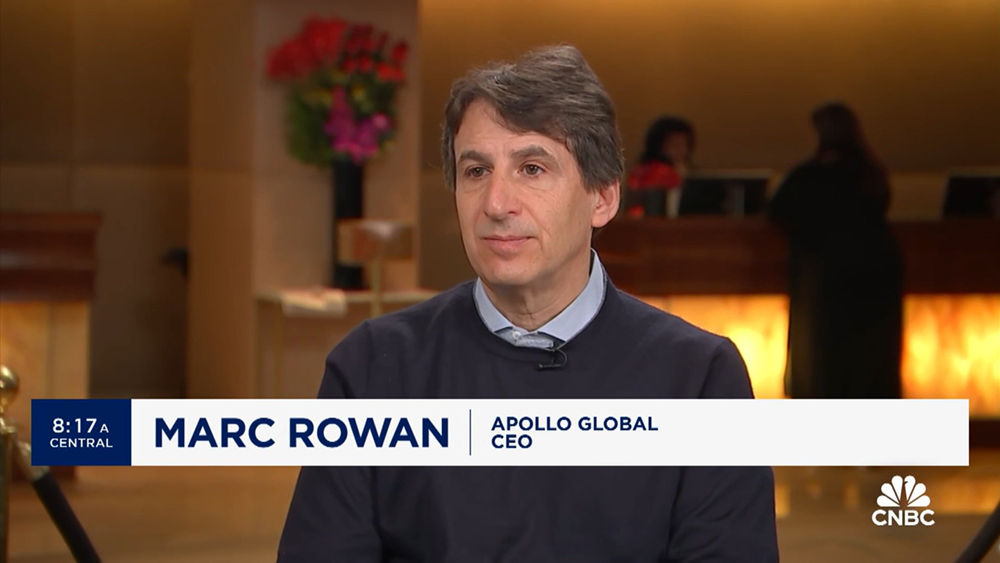
In a city accustomed to political theater, blunt rhetoric is hardly a novelty. Yet the thunderous warning delivered this week by Apollo Global Management CEO Marc Rowan — one of the most influential executives in American finance and the chair of UJA-Federation of New York’s board — reverberated with an urgency not often heard in Manhattan’s elite circles. Speaking Monday night before nearly 2,000 attendees at a UJA-Federation Wall Street dinner, Rowan called incoming New York City Mayor Zohran Mamdani an “enemy” of Jews and condemned what he described as the normalization of antisemitism in the mayor-elect’s campaign and public rhetoric.
The event, which raised $57 million for pro-Israel causes, was already poised to be a significant night for a community confronting surging antisemitism in the United States and worldwide. But Rowan’s address, reported on Wednesday by The New York Post, was something else entirely — a rare public admonition from a titan of industry who, in recent years, has emerged as one of the most outspoken Jewish leaders on issues of antisemitism, extremism on campus, and the corrosion of civic responsibility in elite American institutions.
His message was unmistakable: Mamdani is not merely a political opponent. His rhetoric places him in direct opposition to the safety, dignity, and security of New York’s Jewish community.
Rowan’s indictment of Mamdani was rooted not in partisan disagreement but in a far deeper moral chasm. “Someone who uses antisemitism in their campaign and normalizes antisemitism, he is our enemy,” Rowan declared, according to The New York Post report. The room, packed with business leaders, philanthropists, and activists, did not hear a whisper of hesitation or ambiguity. Rowan was drawing a line — one that had been crossed repeatedly by the incoming mayor.
Mamdani, a Muslim and Democratic socialist aligned with the Democratic Socialists of America, has long been one of the most caustic critics of Israel in American politics. He has labeled Israel’s policies “genocide,” “apartheid,” and “ethnic cleansing.” He has refused to condemn the chant “Globalize the intifada” — a phrase used for incitement to violence against Jews, whether in Israel or the diaspora. He has repeatedly used the Palestinian cause as a cudgel, not only to condemn Israeli policy but to delegitimize the Jewish state itself.
This rhetorical pattern, Rowan argued, cannot be brushed aside as hyperbole or symbolic protest. It is the normalization of antisemitism — a process by which anti-Jewish hatred becomes acceptable, fashionable, even morally righteous in certain political spaces.
That normalization, Rowan warned, is already taking root.
New York is home to the largest Jewish population outside Israel. Once a place where Jewish political influence was woven into the city’s cultural fabric, the city has, in recent years, experienced a frightening escalation of antisemitic incidents: assaults in the street, vandalism, shouted threats, harassment, synagogue protests, and disruptions at cultural events. The spike in incidents since the October 7 Hamas massacre has only deepened fears.
In this context, Mamdani’s rise to the mayoralty — after a campaign The New York Post reported as steeped in anti-Israel messaging — feels to many like a watershed moment. Rowan’s remarks reflect not only personal concern but the anxieties coursing through New York’s Jewish community.
“We need to be the ones to call him out,” Rowan said. “We need to say it.”
Those words echoed the urgency of a man who believes New York is approaching a turning point — one in which Jewish New Yorkers cannot afford complacency.
At 62, Marc Rowan is one of the most influential financiers in the world. But over the past year, he has taken on a somewhat unexpected mantle: that of one of the country’s most formidable public voices against institutional antisemitism.
The Jewish community’s battle with elite academia has placed Rowan at its vanguard. Rowan publicly demanded the ouster of University of Pennsylvania President Liz Magill and board chair Scott Bok over their refusal to condemn antisemitic rhetoric at campus events prior to and following the October 7 massacre. Months later, both resigned. Rowan’s role in their removal was not subtle — nor was it meant to be. For Rowan, silence in the face of antisemitism is complicity.
At the UJA dinner, Rowan positioned Mamdani within the same continuum: a political leader who excuses, rationalizes, or downplays antisemitism under the guise of “anti-Zionism” or “human rights.”
“Make no mistake, these could potentially be dark times,” Rowan told the crowd, citing threats emerging from both the far left and far right.
His message was clear: Jewish New Yorkers must be prepared not only to engage politically but to defend themselves culturally, intellectually, and civically.
Many Wall Street leaders have privately expressed deep concerns about Mamdani’s mayoralty, fearing the destabilization of the business climate, the encouragement of anti-Israel activism, and the emboldening of far-left agitators. Cliff Asness, another prominent hedge fund figure, said last month, “Come for the communism, stay for the globalizing of the intifada. Shrewd, New York City.”
Even before Rowan’s Monday speech, various corporate executives had begun contemplating strategies for navigating — or counterbalancing — the incoming administration. Some are preparing to pressure the mayor-elect through philanthropic networks. Others are exploring legal guardrails against municipal overreach. More candidly, several have told The New York Post they are considering relocating parts of their operations out of New York City if Mamdani adopts anti-business policies.
Rowan, however, is pressing the community to take a different approach: engagement, courage, confrontation where necessary, and the rejection of wishful thinking.
“We give, we show up, we have cohesion. We now need to lead,” he said.
Following Rowan’s blistering remarks — and similar comments from high-profile donors like Benjamin Tisch earlier in the week — Mamdani attempted to steady the perception of his incoming administration. According to the information provided in The New York Post report, the mayor-elect told reporters that Police Commissioner Jessica Tisch “reached out to apologize” for her brother’s remarks at another dinner.
But Mamdani’s response did little to quell concerns. He has never repudiated the policies, rhetoric, or ideological positions that gave rise to Rowan’s condemnation. His refusal to disavow inflammatory slogans like “Globalize the intifada” remains, for Jewish New Yorkers, a non-negotiable red flag.
This is not a dispute over tax policy or infrastructure. It is a dispute over the safety of Jewish life.
Rowan’s speech was more than a warning — it was a call to action. The Jewish community, he argued, must be prepared to defend its values and its future in a moment when political winds are shifting in dangerous ways.
The UJA-Federation echoed that sentiment in a statement shared with The New York Post: “UJA-Federation will hold all elected officials, including Mayor-elect Mamdani, fully accountable for ensuring that New York remains a place where Jewish life and support for Israel are protected and can thrive, and loudly call out rhetoric and actions that delegitimize Israel or excuse antisemitism.”
This is the new reality: Jewish institutions, donors, philanthropists, and civic leaders must confront — not accommodate — political actors who normalize antisemitism.
At a fragile moment for Jewish communities worldwide, Marc Rowan’s warning carries the weight of lived history. His message was not merely rhetorical but existential: antisemitism does not recede when ignored. It grows when good people remain silent.
In New York — the symbolic capital of American Jewish life — the election of an overtly anti-Israel mayor represents a moment of profound urgency. Whether the community will meet that moment with the clarity and resolve Rowan demands remains to be seen.
What is certain is that silence is no longer an option. In Rowan’s words, echoed through The New York Post’s reporting: “We have plenty of enemies. Now we need to lead.”
And for New York’s Jewish community, leadership may prove to be the only defense against a political era poised to test the resilience of its identity, its safety, and its future.