



|
Getting your Trinity Audio player ready...
|
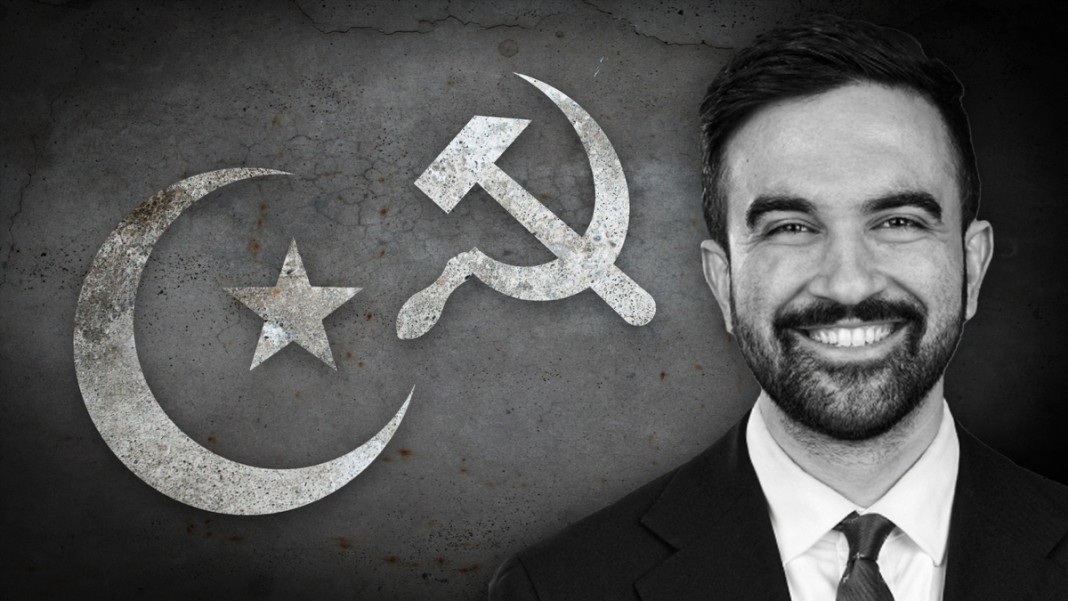
(TJV NEWS) In a resurfaced video from the 2021 Young Democratic Socialists of America (YDSA) conference, New York City’s socialist mayoral candidate Zohran Mamdani is seen plainly stating what many suspected all along: his ultimate political goal is to seize the means of production.
Zohran Mamdani: “Our end goal, seizing the means of production” HOLY F
— End Wokeness (@EndWokeness) June 30, 2025
“What the purpose is about this entire project—it’s not simply to raise class consciousness, but to win socialism,” Mamdani said during the panel. “And obviously raising class consciousness is a critical part of that, but making sure that we have candidates that both understand that and are willing to put that forward at every which moment that they have… We have to continue to elect more socialists and we have to ensure that we are unapologetic about our socialism.”
He went further, saying the quiet part out loud: “There are also other issues that we firmly believe in, whether it’s BDS, right, or whether it’s the end goal of seizing the means of production, where we do not have the same level of support at this very moment.”
The resurfaced footage lit up social media over the weekend, with critics warning that Mamdani’s statements amount to an open embrace of radical Marxism—one that envisions state control of the economy, private property, and ultimately the lives of working Americans.
Red Flags in Full View
While Mamdani’s campaign couches its rhetoric in buzzwords like “equity” and “justice,” his public statements continue to betray the ideological core: top-down socialism administered by a select class of bureaucrats. What “seizing the means of production” historically means is not worker co-ops or community gardens—it’s centralized government control of industry, housing, and commerce.
During a recent appearance on NBC’s Meet the Press, Mamdani doubled down on his worldview, suggesting that billionaires should not exist and implying that the very idea of individual wealth accumulation is itself unjust. “There is no need for anyone to have a billion dollars,” he said, citing inequality.
These words should be terrifying to anyone who knows what they mean: he’s not talking about billionaires, he’s talking about ending social mobility, which is bedrock to these United States.
— Libby Emmons (@libbyemmons) June 30, 2025
Critics quickly pointed out the obvious: Mamdani wasn’t just targeting the ultra-rich. “These words should be terrifying to anyone who knows what they mean,” wrote journalist Libby Emmons. “He’s not just talking about billionaires—he’s talking about ending social mobility.”
A Candidate of Contradictions
Mamdani, 33, represents a curious paradox. He has styled himself as a populist fighting for the marginalized, yet was raised by affluent parents—one a Columbia University professor, the other a film director for companies like Disney. This carefully manicured theater of working-class struggle has become a common feature of today’s activist class.
Meanwhile, Mamdani’s political allies are calling for extreme policy shifts that would remake New York City in the mold of failed leftist regimes. Among the proposals Mamdani has floated: hiking property taxes specifically for “whiter and wealthier” neighborhoods, creating government-run grocery stores, establishing state-controlled rent pricing, enacting a $30 minimum wage, and implementing free universal healthcare.
“The end goal,” he emphasized again during the YDSA event, “is not just reform. It is to achieve socialism.”
Unapologetically Radical—and Proud of It
Asked recently on a national broadcast whether his platform could be successful outside New York, Mamdani responded confidently: “Absolutely.” His remarks come as many Democrats privately express concerns that rising stars in the party’s socialist wing are pushing the Overton window too far—and alienating working-class voters in the process.
Yet Mamdani remains defiant, refusing to walk back controversial slogans like “Globalize the Intifada,” a phrase widely understood as a call for violence. Asked about it, Mamdani danced around the question, declining to outright condemn the message.
