



|
Getting your Trinity Audio player ready...
|
By: Carl Schwartzbaum
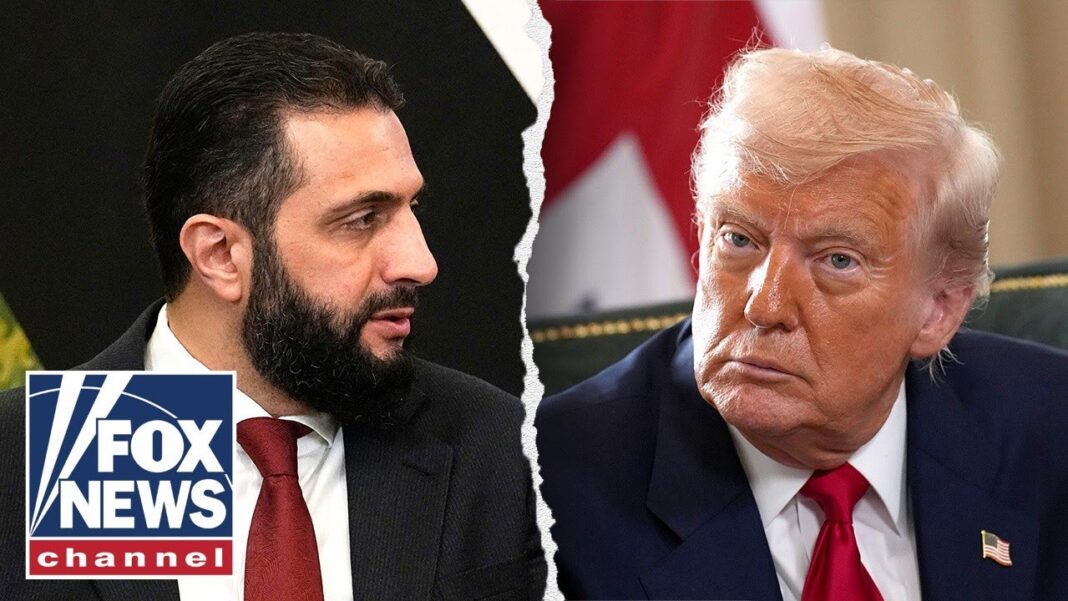
In a city bracing for political realignment, New York City Mayor-elect Zohran Mamdani has signaled a cautious yet deliberate attempt to engage directly with President Donald Trump before taking office, underscoring what could become one of the most ideologically charged federal–municipal relationships in modern city history. In an exclusive interview on Tuesday with NBC New York’s Melissa Russo, Mamdani confirmed that he plans to call the President prior to his swearing-in, seeking clarity on Trump’s approach toward the nation’s largest—and most politically progressive—city.
“I’ll be reaching out to the White House as we prepare to take office because this relationship will be critical to the city’s success,” Mamdani told NBC. His remarks, later highlighted in a report on Tuesday at VIN News, mark his first public acknowledgment that back-channel preparations are already underway between the incoming mayor’s transition team and the Trump administration.
According to the information provided in the VIN News report, Mamdani’s statement reflects an effort to balance ideological conviction with administrative pragmatism. The self-described democratic socialist—whose election last week upended New York’s political establishment—faces immediate fiscal and political challenges that will require at least functional coordination with Washington. His comments suggest that while he intends to maintain his progressive platform, he recognizes the financial and logistical leverage the federal government holds over the city’s operations.
The outreach effort comes against a backdrop of uncertainty and tension. VIN News reported that Trump’s team has been weighing potential executive actions that could directly impact New York, including threats to cut federal funding for so-called “sanctuary cities” and to expand the deployment of ICE agents to enforce immigration policy in defiance of local non-cooperation statutes.
Trump, for his part, has sent mixed signals about how his administration will engage with Mamdani’s incoming government. In recent remarks cited by VIN News, the President hinted that he might “help him a little bit,” referring to the new mayor, but warned that “if he turns New York into another socialist mess, there will be consequences.”
That dichotomy—between selective collaboration and political punishment—now defines the delicate dance between two men whose worldviews could scarcely be more different. Mamdani, 34, is a former community organizer and Queens Assemblyman who rose to prominence as part of the Democratic Socialists of America (DSA), advocating policies such as rent cancellation, public ownership of utilities, and deep police reform. Trump, by contrast, has made New York’s progressive politics a recurring target of his campaign rhetoric, calling the city “a symbol of liberal failure.”
Yet as the VIN News report noted, both leaders share an interest in stabilizing New York’s economy amid inflationary pressures, rising homelessness, and ongoing migration challenges.
During the interview, Mamdani also revealed that he has already spoken with New York Governor Kathy Hochul about contingency planning in case of punitive federal measures. According to the information contained in the VIN News report, the discussions focused on how the state might insulate key city programs—particularly housing and healthcare—from sudden funding disruptions.
“Governor Hochul and I have talked about ensuring that no New Yorker is left behind, regardless of what happens in Washington,” Mamdani said. “If there are cuts, we’ll find a way to protect the people who need government the most.”
VIN News reported that the mayor-elect’s team has established a small working group tasked with modeling different federal funding scenarios, assessing risks to programs that rely heavily on national grants—such as the NYPD’s anti-terrorism operations, public health initiatives, and transportation infrastructure projects.
Sources close to the transition told VIN News that Mamdani’s advisers are also exploring diplomatic channels through New York’s congressional delegation, including House Minority Leader Hakeem Jeffries, who endorsed Mamdani during the campaign despite tensions with the DSA wing of the Democratic Party.
Outgoing Mayor Eric Adams, currently on his way to Israel on a previously scheduled visit, has reportedly reached out to Mamdani to congratulate him on his election victory. According to NBC New York and later confirmed in the VIN News report, the two men plan to meet upon Adams’ return to City Hall.
That meeting, insiders say, will be crucial for ensuring a smooth transition amid ongoing administrative challenges—from budget shortfalls to a still-strained migrant shelter system. Adams’ trip to Israel, where he has met with civic and security officials, also underscores an early point of divergence between the two mayors: Mamdani’s criticism of Israel’s policies and his support for the Boycott, Divestment, and Sanctions (BDS) movement, positions that have drawn sharp rebuke from many in the city’s Jewish community.
Still, VIN News reported that Mamdani has privately expressed appreciation for Adams’ willingness to assist in the transition, particularly on matters of policing and fiscal management. “Mayor Adams has been very gracious,” Mamdani told NBC. “We don’t agree on everything, but I think he wants to see the city succeed.”
At the core of Mamdani’s early diplomacy is a pragmatic recognition that New York’s financial stability depends in part on its relationship with Washington. Federal funds support essential components of city life—from mass transit and education to public safety and housing subsidies. A breakdown in that relationship, analysts told VIN News, could leave City Hall scrambling to fill multimillion-dollar gaps.
Political analysts quoted in the VIN News report noted that Trump’s federal posture toward cities governed by political opponents has historically oscillated between confrontation and selective compromise. During his first term, the administration withheld or delayed federal grants to cities like Chicago, Portland, and New York over disputes involving immigration enforcement. But Trump also greenlit major urban infrastructure projects, including the long-stalled Gateway Tunnel between New York and New Jersey.
For Mamdani, the challenge will be threading that needle—asserting municipal independence without alienating the very administration that controls much of the city’s fiscal oxygen. His willingness to initiate dialogue, observers suggest, reflects an understanding that ideological purity alone cannot sustain a metropolis of 8.5 million people.
As the VIN News report contextualized, Mamdani’s outreach to the Trump administration represents a nuanced shift from his campaign’s fiery populism. While his rhetoric on the trail often cast the federal government as an adversary of working-class New Yorkers, his comments this week suggest a more tempered approach.
“He’s signaling that governance is different from activism,” one City Hall veteran told VIN News. “You can’t run New York City on slogans. You have to negotiate, even with people you disagree with.”
That sentiment reflects a broader reality for progressive leaders in high-stakes executive roles. Like previous mayors who faced presidents of opposing parties—Ed Koch with Ronald Reagan, or Bill de Blasio with Donald Trump—Mamdani’s success will depend on his capacity to translate ideological conviction into functional governance.
As Mamdani prepares to take the oath of office, his call to the Trump White House will serve as the first test of his political dexterity. The gesture is as symbolic as it is strategic—an attempt to chart a path between confrontation and cooperation, between the demands of his base and the realities of federal oversight.
According to the report at VIN News, insiders close to both camps are cautiously optimistic that mutual pragmatism may prevail. Trump, now focused on consolidating his legacy, has reportedly expressed a “personal fondness” for New York despite his public critiques, while Mamdani—an unabashed critic of capitalism—appears willing to engage with its most prominent practitioner if it means protecting his city.
For now, the tone remains diplomatic. “We’ll work with anyone who wants to make New York stronger,” Mamdani told NBC New York. “Our job is to protect our people—and that means finding common ground, even when it’s uncomfortable.”
As the VIN News report observed, “The phone call may last only minutes, but it could define years of governance. New York’s future, once again, depends on its ability to reconcile idealism with reality.”
Mr. Schwartzbaum seems to think this election is more or less business as usual. I don’t think the Jewish population can view it that way. I read in TJV that Mamdani was mentored by Linda “Cockroach” Sarsour. Can it get any worse?