



|
Getting your Trinity Audio player ready...
|
By: Fern Sidman
The New York City Department of Health, an agency charged with the quotidian yet vital responsibilities of safeguarding public welfare, has found itself thrust into the center of a political maelstrom after revelations that a group of its staffers convened what they termed a “Global Oppression and Public Health Working Group,” a forum that, among other things, accused Israel of committing genocide. The disclosure, reported by The New York Post on Tuesday, ignited a firestorm of criticism from lawmakers and civic leaders who contend that municipal bureaucrats have veered perilously far from their statutory mandate and into the realm of partisan foreign-policy activism.
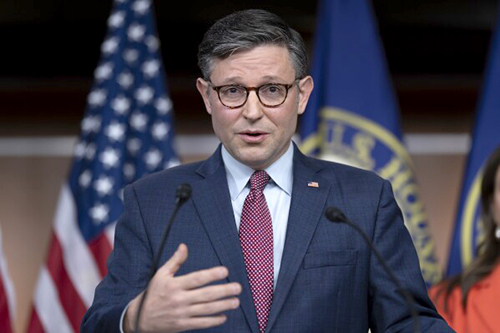
House Speaker Mike Johnson, the Republican leader from Louisiana, issued a stinging rebuke, seizing upon The New York Post’s report to underscore what he described as an egregious misuse of taxpayer-funded resources. In a public statement circulated on social media, Johnson argued that the health department’s employees appeared more invested in advancing a “radical-left foreign policy agenda” than in addressing the pressing health crises confronting New Yorkers. The rebuke was notable not merely for its sharpness but for the way it cast the controversy as emblematic of a broader national debate over the politicization of public institutions.
NYC Health Department employees under Zohran Mamdani formed an internal “Global Oppression & Public Health Working Group” that accuses Israel of genocide — using city resources and official workplace platforms.
This should concern every physician and public health professional. pic.twitter.com/nZfLwMYAWt
— Dr. Sheila Nazarian (@DoctorNazarian) February 5, 2026
The episode unfolded when The New York Post obtained video footage of the group’s inaugural meeting, convened during the workday at the department’s headquarters in Long Island City. The meeting’s tone, as captured on tape and reported by The New York Post, left little doubt about its ideological orientation. One presenter, reading from the working group’s mission statement, declared that the initiative had been “developed in response to the ongoing genocide in Palestine,” language that immediately drew condemnation from critics who argue that such terminology reflects a polarizing and contested narrative rather than an established consensus. The fact that this discourse unfolded within the walls of a city agency charged with managing everything from disease surveillance to restaurant inspections only intensified the backlash.
The controversy has resonated far beyond partisan lines in Washington. Within New York City itself, City Council Speaker Julie Menin joined the chorus of concern, calling for a formal investigation into whether department employees had used public time and resources to promote a political agenda unrelated to their professional duties. Menin’s intervention, as reported by The New York Post, called attention to a growing unease among city leaders that the health department—an institution whose credibility depends on public trust—might be jeopardizing its standing by venturing into ideologically fraught territory.
The outcry also rekindled the ire of former Governor Andrew Cuomo, who has not been shy in critiquing his onetime political rival, Mayor Zohran Mamdani. Cuomo, who lost the mayoral contest to Mamdani last year, seized upon The New York Post’s revelations to denounce what he described as the “criminal” politicization of city agencies. In a radio interview, Cuomo lambasted the administration for allowing public servants to divert their attention from urgent local crises. His remarks struck a populist chord: while city employees debate geopolitics, vulnerable New Yorkers grapple with homelessness, mental illness and the brutal realities of winter cold.
At the heart of the controversy lies a fundamental question about the appropriate boundaries of public service. Municipal health departments occupy a unique position in civic life. Their authority derives not from ideological persuasion but from expertise, data and the confidence of the communities they serve. When such agencies are perceived to be advancing political causes—particularly ones that implicate contentious international conflicts—they risk eroding the very neutrality that undergirds their effectiveness. The New York Post has repeatedly emphasized this tension, framing the episode as a cautionary tale about what happens when bureaucratic activism collides with the expectations of a diverse and often divided public.
The Mamdani administration, for its part, has offered no immediate public response to the criticism, nor has the Department of Health issued a statement clarifying the scope or authorization of the working group’s activities. That silence has only deepened speculation about whether the initiative reflects a broader ethos within City Hall. Critics have pointed to the mayor’s creation of a new “office of mass engagement,” suggesting that the administration may be blurring the line between civic outreach and ideological mobilization.
The New York Post report highlighted these concerns, noting that transparency has been in short supply at a moment when clarity is most needed.
The ramifications of the controversy extend beyond municipal politics. Speaker Johnson’s intervention hints at the possibility—however remote—of federal scrutiny. While it remains unclear whether Congress will pursue the matter, the episode dovetails with a national discourse about the role of government employees in political advocacy. In recent years, debates over the politicization of federal agencies have dominated headlines; the furor surrounding New York’s health department suggests that similar anxieties now permeate local governance. The New York Post report framed the issue as part of this broader reckoning, arguing that the public is increasingly wary of institutions that appear to conflate professional duties with ideological commitments.
The stakes are not merely symbolic. New York City faces a constellation of public health challenges, from the lingering effects of the pandemic to the mental health crisis playing out on its streets and subways. For many residents, the idea that health officials might be devoting time to international political discourse feels incongruous, if not offensive. As one critic told The New York Post, the spectacle of bureaucrats convening during office hours to discuss global oppression seems detached from the quotidian struggles of neighborhoods grappling with overcrowded clinics, under-resourced hospitals and persistent health inequities.
Yet defenders of the working group might argue that public health is, by its nature, intertwined with global conditions. Pandemics, migration, war and displacement all shape health outcomes in complex ways. The challenge, however, lies in distinguishing legitimate professional inquiry from overt political advocacy. The language employed at the meeting, as reported by The New York Post, appears to have crossed that threshold in the eyes of many observers, substituting contested political claims for empirically grounded analysis.
In the coming weeks, the calls for investigation may yield formal inquiries into how the working group was authorized, whether public resources were misused and what safeguards, if any, exist to prevent similar episodes. The outcome of such probes will likely shape not only the future of the Department of Health but also the tenor of Mayor Mamdani’s administration. For a mayor who campaigned on promises of reform and accountability, the optics of bureaucratic politicization pose a formidable test.
Ultimately, the controversy serves as a reminder that public institutions derive their legitimacy from restraint as much as from ambition. The New York Post’s report has brought into sharp relief the perils of allowing ideological fervor to infiltrate agencies entrusted with the pragmatic work of governance. Whether City Hall heeds that warning may determine whether this episode becomes a footnote in the annals of municipal missteps or a defining moment in the ongoing struggle to keep public service anchored to its foundational mission.
