



|
Getting your Trinity Audio player ready...
|
By: Max Schleifer
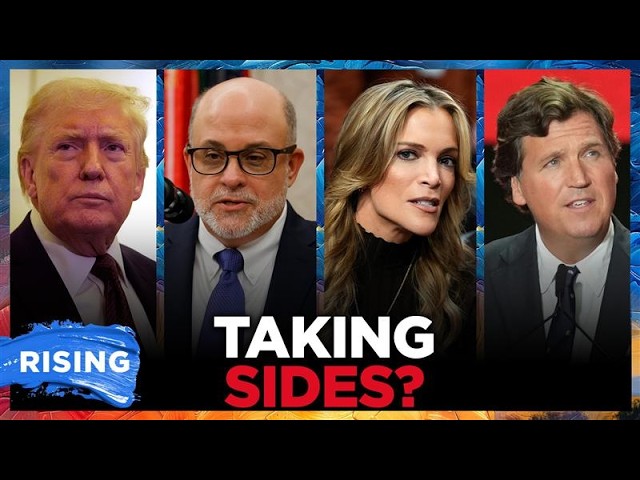
In the ever-evolving ecosystem of American political media, few figures command as much influence—or provoke as much scrutiny—as Megyn Kelly. Once widely regarded as a formidable voice within conservative circles who spoke with clarity on matters of antisemitism and steadfast support for Israel, Kelly now appears to occupy a far more ambiguous—and to some critics, troubling—position. Over the course of a single year, her rhetorical trajectory has shifted in ways that reflect not merely personal evolution, but a broader ideological realignment within segments of the American right.
This transformation is not occurring in isolation. Rather, it mirrors a deeper and more consequential recalibration underway in “America First” political culture, where traditional alliances—particularly with Israel—are increasingly being reevaluated through a prism of isolationism, populism, and, at times, conspiratorial thinking. In this changing landscape, Kelly’s voice serves less as a guiding force and more as a barometer of audience sentiment, raising urgent questions about responsibility, influence, and the normalization of dangerous narratives.
Not long ago, Kelly’s commentary on antisemitism was marked by an unmistakable moral clarity. In the aftermath of high-profile antisemitic incidents and the October 7 atrocities, she articulated a firm denunciation of anti-Jewish hatred and expressed unequivocal solidarity with Israel’s right to defend itself. Her rhetoric aligned with a longstanding bipartisan consensus that viewed antisemitism as a pernicious and unacceptable form of bigotry, and Israel as a strategic and moral ally of the United States.
Yet recent commentary suggests a discernible departure from that posture. Rather than foregrounding the threat of antisemitism, Kelly has increasingly entertained arguments that downplay its severity or reframe it within broader critiques of political influence. More strikingly, she has lent credence—whether intentionally or inadvertently—to the notion that Israel exerts disproportionate sway over American political decision-making.
Such assertions, even when couched in ostensibly analytical language, tread perilously close to longstanding antisemitic tropes that have historically portrayed Jewish communities as wielding covert and undue power. The distinction between critique and caricature is a fine one, and in today’s hyper-fragmented media environment, it is a line that can easily blur.
Kelly’s rhetorical shift must be understood within the broader ideological currents shaping contemporary conservative discourse. The resurgence of “America First” isolationism—characterized by skepticism toward foreign entanglements and a prioritization of domestic concerns—has created fertile ground for a reevaluation of longstanding alliances, including that with Israel.
In principle, such reassessment is neither unprecedented nor inherently problematic. Democracies thrive on debate and the reexamination of policy assumptions. However, what distinguishes the current moment is the manner in which legitimate policy critiques are increasingly intertwined with conspiratorial narratives that cast suspicion on entire communities.
Israel, in this context, has become a focal point—a symbolic and geopolitical fault line through which broader anxieties about globalization, influence, and national identity are expressed. Within certain segments of the media landscape, critiques of Israeli policy have metastasized into insinuations about loyalty, influence, and control—ideas that echo historical prejudices in modernized form.
Kelly’s role in this dynamic appears less that of an originator and more that of an amplifier. By providing a platform where such narratives can circulate without rigorous challenge, she contributes to their normalization, even if she stops short of endorsing their most extreme manifestations.
Central to understanding this evolution is Kelly’s increasingly visible alignment with Tucker Carlson, a figure whose own trajectory has been marked by a pronounced shift toward skepticism—and at times hostility—regarding Israel.
Carlson has, in recent years, positioned himself as a leading critic of U.S. support for Israel, framing it as emblematic of misplaced priorities and undue foreign influence. His commentary has frequently courted controversy, particularly when it veers into territory that critics argue echoes antisemitic tropes.
Kelly’s public camaraderie with Carlson, including joint appearances and sympathetic commentary regarding his critics, signals more than mere professional collegiality. It reflects an ideological convergence—or at the very least, a willingness to engage within the same discursive framework.
This association carries implications. In the contemporary media environment, proximity often confers legitimacy. By aligning herself with Carlson’s perspective, Kelly risks reinforcing narratives that, while couched in the language of political critique, may carry deeper and more troubling connotations.
Perhaps the most salient feature of Kelly’s evolution is the extent to which it appears driven by adaptation rather than conviction. In an era where audience engagement is both a metric and a mandate, media figures operate within powerful incentive structures that reward alignment with prevailing sentiments.
Kelly’s podcast, which commands a vast and dedicated audience, exists within a competitive ecosystem where resonance often supersedes rigor. The temptation to mirror audience perspectives—particularly those that generate high engagement—can exert a subtle but profound influence on content and tone.
In this sense, Kelly’s shift may be less a reflection of personal ideological transformation than a strategic recalibration aimed at maintaining relevance within an evolving audience landscape. This does not absolve responsibility; rather, it underscores the complex interplay between media figures and their constituencies.
Leadership, in its truest sense, involves not merely reflecting audience sentiment but challenging it—particularly when it veers into dangerous or unfounded territory. The absence of such challenge can, over time, contribute to the entrenchment of harmful ideas.
One of the most consequential aspects of this shift is the normalization of ambiguity. By neither fully endorsing nor decisively rejecting problematic narratives, Kelly occupies a space that allows such ideas to persist and proliferate.
This phenomenon—often described as “plausible deniability”—enables media figures to engage with controversial topics without incurring the full weight of accountability. Statements are framed in ways that invite interpretation, allowing audiences to project their own beliefs onto the commentary.
While this approach may offer short-term insulation from criticism, it carries long-term risks. Ambiguity can serve as a conduit through which fringe ideas enter mainstream discourse, gradually reshaping the boundaries of acceptable conversation.
Kelly’s evolution is emblematic of a broader transformation within American political media. The erosion of consensus on issues such as antisemitism and support for Israel reflects deeper fractures in the ideological landscape.
As traditional alliances are reevaluated and new narratives gain traction, the role of influential media figures becomes ever more consequential. Their choices—what to amplify, what to challenge, and what to ignore—shape the contours of public discourse.
In this context, the stakes extend beyond individual reputations. The normalization of narratives that flirt with antisemitic tropes or undermine longstanding alliances carries implications for social cohesion, political stability, and international relations.
The trajectory of Megyn Kelly invites a broader reckoning with the responsibilities of influence. In an age where media platforms can reach millions with unprecedented immediacy, the line between commentary and consequence has never been thinner.
Kelly’s journey—from a voice of clarity on antisemitism to a figure navigating the ambiguities of a shifting ideological landscape—serves as a cautionary tale. It illustrates how quickly the boundaries of discourse can shift, and how easily the normalization of problematic narratives can occur.
Ultimately, the question is not merely about Kelly, but about the ecosystem in which she operates—and the audience that sustains it. In a media environment defined by fragmentation and polarization, the imperative for clarity, accountability, and moral courage has never been greater.
Whether Kelly will reclaim that mantle—or continue along her current trajectory—remains an open question. What is certain, however, is that the consequences of this evolution will reverberate far beyond the confines of any single podcast or personality.

In other words, the boundaries of discourse can be rapidly changed with $. Follow the money. See Tucker Qatarlson.
Israel should worry less about what the rest of world thinks and more about getting the job done. Burn their cities to the ground if necessary. No more Mr. nice guy. There is nothing better than complete victory on the battlefield. Can’t argue with it either.