



|
Getting your Trinity Audio player ready...
|
By: Abe Wertenheim
In a stunning and expletive-laced live broadcast Wednesday morning, Republican mayoral candidate Curtis Sliwa abruptly quit his longtime radio position at 77 WABC, accusing colleagues and station management of betrayal and political interference in his campaign. The dramatic exit unfolded in real time on air, as Sliwa clashed with host Sid Rosenberg over mounting calls from within conservative circles — including WABC’s billionaire owner John Catsimatidis — for him to abandon his underdog bid for City Hall in favor of former Governor Andrew Cuomo.
“You will never see me at the studios of WABC again,” Sliwa thundered during the explosive exchange, his voice rising in frustration. “They have said I’m selfish. Selfish? Are you out of your mind?” The outburst, reported by The New York Post on Wednesday, marked the culmination of weeks of tension between the radio firebrand and his former employer, whose executives have privately — and now publicly — urged him to exit the race.
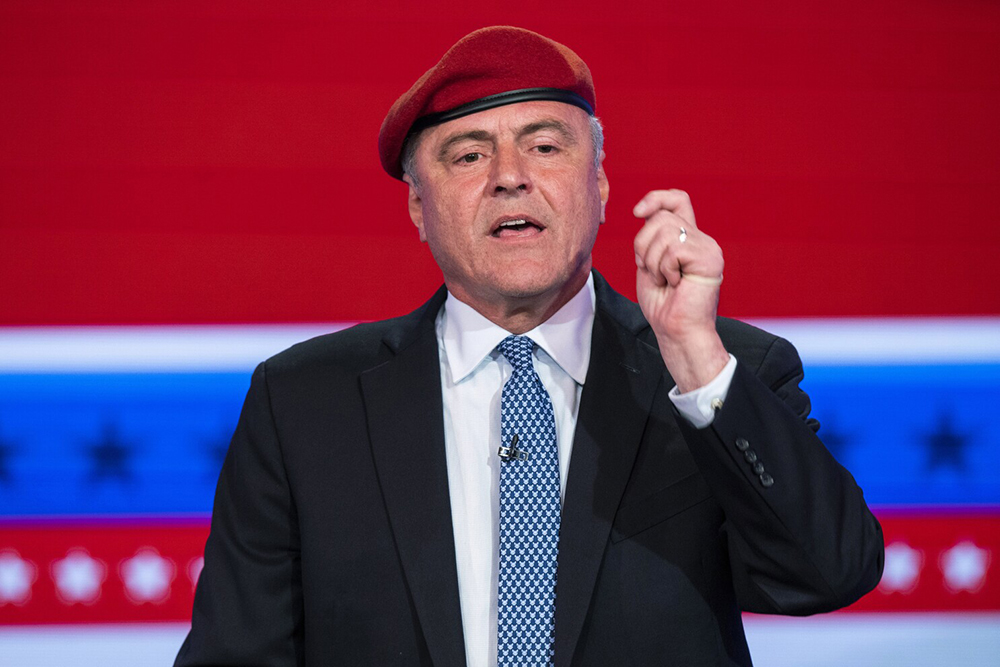
Sliwa’s on-air confrontation with Rosenberg quickly devolved into a verbal brawl. The founder of the Guardian Angels, known for his combative populist style and bright red beret, accused colleagues at WABC of giving Cuomo preferential coverage while undermining his own campaign. “That’s why you will never see me at the studios of WABC again, never, no matter how this election turns out,” he fumed.
According to the information provided in The New York Post report, the heated exchange began after Rosenberg pressed Sliwa to “do the right thing” and step aside so that Cuomo — now running as an independent — could consolidate moderate votes and block Zohran Mamdani, the far-left Queens Assemblyman who currently leads in the polls.
Station owner John Catsimatidis, a prominent Republican donor and grocery magnate who owns the Gristedes supermarket chain, had earlier echoed that sentiment, saying that while Sliwa “would make the best mayor,” he simply had “no shot” at winning. Catsimatidis said the political reality was clear: “If Curtis drops out, Cuomo has a path. If not, Mamdani wins.”
But Sliwa, visibly incensed, took the plea as a betrayal — not only from management but from a station he helped build into a conservative media powerhouse.
“I know there are people there at WABC who are personally attacking me, saying I’m running a lazy campaign,” Sliwa said. “I feel personally offended by what my friends and colleagues — many of whom I trained, many of whom wouldn’t have a job at WABC without me — have done.”
He then delivered a blistering jab at his former employer: “WABC doesn’t stand for ‘We Are Broadcasting Conservative.’ It stands for ‘Always Broadcast Cuomo.’”
As The New York Post report noted, Sliwa’s fiery departure from WABC comes amid growing fractures within the city’s Republican establishment, which has struggled to unify around a single candidate capable of mounting a serious challenge to Mamdani.
While some influential voices — including Catsimatidis and Rosenberg — have publicly pushed for Sliwa to withdraw, GOP leaders across all five boroughs have declared their continued support for the Guardian Angels founder. Among them is Catsimatidis’ own daughter, Andrea Catsimatidis, who chairs the Manhattan Republican Party and has said she is “standing firmly with Curtis.”
“Curtis has been a tireless advocate for public safety and the people of this city,” she said in a recent statement. “He deserves our support, not sabotage.”
Still, with polling consistently showing Mamdani leading, Cuomo in second, and Sliwa trailing far behind, many strategists believe that the Republican’s persistence in the race could split the anti-socialist vote — effectively handing Mamdani the mayoralty.
Rosenberg, reflecting that view, grew increasingly frustrated during Wednesday’s broadcast as Sliwa continued to rail against perceived media bias. “This obsession with Cuomo has to stop,” Rosenberg snapped. “You can beat Cuomo and still lose the election. You’re gonna lose, and you’re gonna lose badly — embarrassingly.”
The chaos of the live confrontation escalated further when Sliwa revealed that he and his wife, Nancy Sliwa, had been forced to hire armed security following a wave of threats he attributes to what he called a “political frenzy” stirred by his detractors.
“If anything happens to me or anything happens to my wife, because of this frenzy that I hear constantly coming from some of your colleagues there at WABC, it’s on you guys and you gals,” Sliwa said. “My life is on the line here.”
The New York Post report noted that Sliwa has previously alleged that wealthy New Yorkers have attempted to bribe him to withdraw from the race, though he has provided no documentation to substantiate the claim. Still, his comments reflect the growing paranoia and pressure surrounding what has become one of the most chaotic mayoral campaigns in recent memory.
Sliwa, who has spent decades as a staple of New York’s talk-radio scene, had taken a leave of absence from WABC earlier this year to focus on his campaign. His program, “The Curtis Sliwa Show,” had been one of the station’s signature offerings, combining local political commentary with Sliwa’s trademark streetwise humor and bombast.
His abrupt resignation, delivered live and unscripted, left Rosenberg and other WABC hosts stunned. “You’re talking about WABC and Cuomo — that’s not gonna win you this goddamn race,” Rosenberg shouted at one point, as the two men talked over each other.
The exchange ended with Sliwa storming off the broadcast, declaring that his ties to the station were “finished forever.”
The dispute highlights a broader power struggle within New York’s political landscape as Republicans and moderate Democrats search for a viable alternative to Mamdani, whose unapologetically socialist platform — including plans to slash NYPD funding and expand rent-control laws — has galvanized the city’s progressive base while alarming business leaders.
For Cuomo, the fractured opposition could represent his best shot at a political comeback after years in the wilderness following his 2021 resignation. Once one of the most dominant figures in New York politics, the former governor has slowly rebuilt his profile, emphasizing fiscal responsibility and a return to what he calls “pragmatic leadership.”
Privately, campaign operatives have said that if Sliwa were to step aside, Cuomo’s polling numbers could surge by double digits, potentially putting him within striking distance of Mamdani. That prospect has made Sliwa’s defiance a source of frustration not only for conservatives but for centrists across the city who see this election as a referendum on the direction of New York’s post-Adams future.
Still, as The New York Post report observed, Sliwa remains deeply entrenched in his conviction that he alone represents “the real New York.” His campaign has centered on public safety, housing reform, and restoring police morale — themes that resonate with working-class voters but have failed to expand his support beyond a small but loyal base.
For a man who built his public persona on confrontation — from patrolling subway stations in the 1970s to verbally sparring with political heavyweights on radio and television — Sliwa’s meltdown at WABC was, in some ways, a natural extension of his brand.
But it also underscored the isolation and resentment of a candidate increasingly at odds with his own party, his allies, and his former employers. In storming out of the WABC studio, Sliwa not only ended a decades-long broadcasting career but also severed ties with one of the few platforms that consistently amplified his message.
Whether his exit will free him to campaign more aggressively or accelerate his political marginalization remains to be seen.
As of Wednesday afternoon, WABC had not issued an official statement regarding Sliwa’s resignation. The station’s management, according to The New York Post report, has sought to downplay the incident, framing it as a “disagreement among friends.”
Catsimatidis, however, reiterated his earlier position: “Curtis is a good man. He loves this city. But sometimes you have to face the facts. He’s not going to win this race.”
For his part, Sliwa appears undeterred. Speaking briefly to reporters after leaving the studio, he vowed to continue campaigning until Election Day. “I’ve been counted out before,” he said. “I’ll be counted out again. But I don’t quit on New York.”
Sliwa’s defiance may resonate with the city’s disaffected conservatives, but without a clear path to victory, his campaign risks becoming a political footnote in what is shaping up to be one of the most polarizing mayoral contests in recent memory.
As The New York Post report observed, the spectacle at WABC was more than just a radio meltdown — it was a microcosm of New York’s fractured politics: a city divided between pragmatism and populism, loyalty and self-preservation, ambition and defeat.
Whether Sliwa’s dramatic exit will shift the momentum of the race remains uncertain. But one thing is clear: New York’s airwaves — and its political landscape — are now missing one of their loudest voices.