




|
Getting your Trinity Audio player ready...
|
By: Fern Sidman
In a forceful bipartisan effort to tighten national security safeguards and curb potential espionage risks, Congresswoman Elise Stefanik and Senator Tom Cotton on Thursday unveiled legislation aimed at preventing entities tied to the Chinese Communist Party from participating in sensitive American defense transportation operations. The proposed measure, titled the Trucking Security and CCP Disclosure Act, seeks to prohibit Chinese-linked companies from receiving U.S. transportation contracts connected to military projects and would bar Chinese nationals from operating trucks carrying Department of War cargo.
The bill reflects growing alarm among lawmakers about the vulnerability of logistical supply chains that support the American military. Advocates of the legislation argue that a critical gap in existing law has allowed potential adversaries to gain indirect access to defense-related transportation networks, potentially exposing sensitive operational information.
According to the sponsors, the legislation is designed to close what they describe as a longstanding and alarming loophole in federal procurement rules. Despite decades of escalating geopolitical rivalry between Washington and Beijing, current statutes do not explicitly prohibit Chinese entities from receiving certain transportation contracts tied to American defense projects.
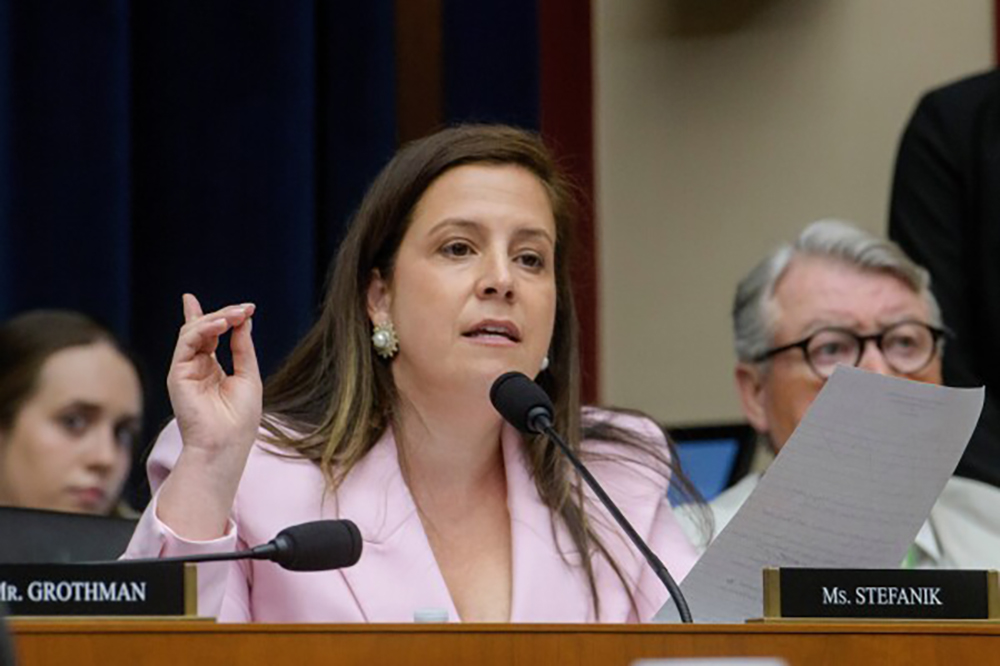
Stefanik, who serves as Chairwoman of House Republican Leadership and sits on key national security committees, said the oversight could expose the United States to unnecessary intelligence risks. “Most Americans would be shocked to learn that U.S. law does not already prohibit Communist China’s military from receiving transportation contracts tied to American defense projects,” Stefanik said in a statement accompanying the bill’s introduction. “This bicameral legislation closes that loophole by establishing a clear firewall between the Chinese Communist Party and Department of War contracts.”
Stefanik emphasized that safeguarding sensitive logistical networks is an essential component of protecting national security. “American tax dollars should never benefit our greatest adversary at the expense of U.S. national security,” she added.
The proposal also introduces new vetting requirements for individuals who handle military freight, particularly truck drivers responsible for transporting cargo connected to defense operations. Under the bill’s provisions, Chinese nationals would be barred from operating trucks carrying Department of War cargo, and companies bidding on transportation contracts would be required to disclose any ties to Chinese government or military entities.
Cotton, a senior member of the Senate Armed Services Committee and Senate Intelligence Committee, warned that adversaries could exploit the transportation sector as a covert intelligence channel. “Communist China continues spying on American military technology by exploiting truck drivers handling Department of War cargo,” Cotton said. “My bill will require anyone handling military freight to be properly vetted to ensure our adversaries cannot gain access to valuable information.”
Security experts have long cautioned that logistical systems—particularly those involving contractors and commercial carriers—can serve as entry points for espionage. Transportation personnel may gain access to information about shipment contents, military equipment movements, or operational logistics, details that could prove valuable to foreign intelligence services.

The legislation reflects a broader shift in U.S. policy toward China as Washington increasingly views Beijing as its principal strategic competitor. Over the past several years, lawmakers from both parties have proposed numerous measures designed to limit Chinese access to American technology, infrastructure, and sensitive industries.
Congress has already imposed restrictions on Chinese telecommunications companies, semiconductor investments, and critical supply chains. The trucking security bill represents an extension of those efforts into the defense logistics sector.
Stefanik and Cotton, both prominent voices on national security issues, argue that the transportation of military cargo represents a particularly sensitive vulnerability.
Military freight can include everything from weapons systems and classified equipment to advanced technological components and infrastructure materials used in defense projects. Ensuring the security of these shipments is considered a fundamental aspect of military readiness.
The bill’s sponsors are seeking to incorporate the Trucking Security and CCP Disclosure Act into the Fiscal Year 2027 National Defense Authorization Act (NDAA), the massive annual defense policy legislation that outlines military priorities and funding. Because the NDAA traditionally passes with broad bipartisan support, attaching the trucking security provisions to that legislation could significantly improve the measure’s chances of becoming law.
Both Stefanik and Cotton hold influential positions on congressional Armed Services and Intelligence Committees, placing them in a strategic position to advocate for the bill’s inclusion.
Defense analysts say the proposal aligns with growing congressional concern over supply chain vulnerabilities, particularly those involving foreign ownership or influence.
The debate surrounding the bill also highlights the increasing overlap between economic competition and national security. Lawmakers have become increasingly wary of Chinese participation in sectors tied to American defense capabilities.
By prohibiting Chinese-linked entities from securing transportation contracts tied to military projects, the legislation aims to prevent potential intelligence gathering while reinforcing domestic control over sensitive logistical networks.
Supporters argue that the measure will help ensure that American defense infrastructure remains insulated from adversarial influence. If enacted, the legislation would represent one of the most comprehensive attempts yet to shield military transportation systems from foreign infiltration.
For Stefanik and Cotton, the issue transcends politics. They contend that protecting the integrity of the nation’s defense supply chain is essential to maintaining military superiority and safeguarding sensitive information. As the geopolitical rivalry between Washington and Beijing continues to intensify, lawmakers increasingly view measures like the Trucking Security and CCP Disclosure Act as necessary steps to reinforce the United States’ strategic defenses—not only on the battlefield, but also across the complex logistical networks that sustain modern military power.
