



|
Getting your Trinity Audio player ready...
|
Bari Weiss, Alan Dershowitz, & the Reclamation of a Serious Public Square: CBS News’ New Editorial Vision Leaves the Woke Commentariat Seething
By: Tzirel Rosenblatt
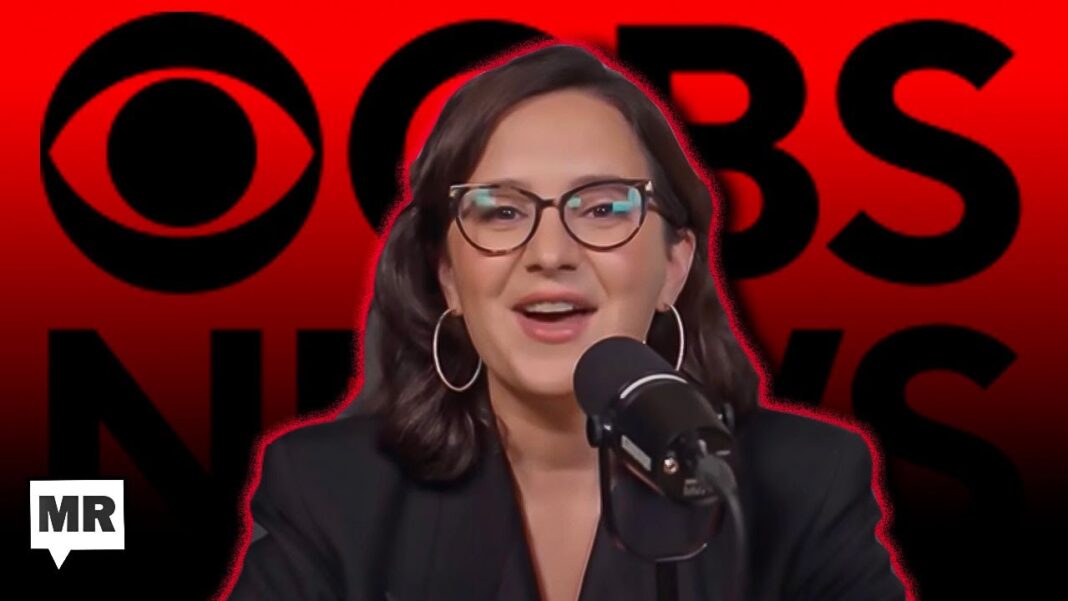
When The Independent of the UK first reported on Tuesday that Bari Weiss—a journalist long characterized by her detractors as obstinately resistant to ideological conformity—would be steering the editorial course of CBS News, the tremors were felt instantly across America’s media class. But it was Weiss’s most recent remarks, delivered at the Jewish Leadership Conference earlier this month, that detonated a full-scale cultural brushfire. There, seated beside Ben Shapiro, Weiss articulated a vision for CBS News that rejects both the censorious zeal of hyper-progressive social media culture and the nihilistic, click-bait sensationalism saturating the contemporary public square.
For Weiss, the path forward is rooted in something at once daring and traditional: serious public debate among serious thinkers—including the likes of Alan Dershowitz, the 87-year-old legal scholar and civil liberties titan, whom she described with unapologetic sincerity as “charismatic.”
To the progressive commentariat, this was blasphemy. To a wide swath of the American public exhausted by hysteria masquerading as journalism, it was refreshing.
According to ongoing reporting from The Independent, the critics erupted almost immediately—snickering, sneering, and scoffing at the mere suggestion that Alan Dershowitz represents the kind of robust intellectual engagement that American broadcast journalism so desperately needs. But Weiss, who has built an entire career by refusing to bow to the ideological orthodoxy of elite institutions, was not courting their approval.\
She was articulating a generational correction.
The moment Weiss praised Dershowitz as emblematic of the “center left and center right” voices she wants CBS to highlight, social media critics pounced with the breathless eagerness of people who mistake Twitter sarcasm for political engagement. The Independent report noted the now-viral mockery across platforms: the predictable jokes about “Gen Z demanding more Dershowitz,” the affected incredulity that Weiss would elevate someone with a half-century record of scholarship and debate.
Yet what these critics revealed most clearly was not their comedic talent but their intellectual insecurity. They cannot articulate why Dershowitz—one of the most prominent constitutional lawyers of his generation—should be banished from mainstream discourse. Instead, they rely on irony and performative shock to disguise the thinness of their opposition.
This, of course, is precisely the problem Weiss seeks to remedy.
In her remarks, as reported by The Independent, Weiss lamented the way “provocateurs” such as Hasan Piker, Nick Fuentes, Andrew Tate, and Tucker Carlson command massive audiences. She was not critiquing ideological extremity alone but the culture of performative outrage that supplanted the thoughtful and morally serious tradition of public deliberation once associated with American broadcast journalism.
Her response? Not paternalistic gatekeeping. Not technocratic curation. Rather: a renewed public square populated by adults.
Mocking Dershowitz, as many online critics have done, is easy. Understanding him is harder. For decades, Alan Dershowitz has served as a constitutional scholar, civil libertarian, lifelong Democrat, and defender of due process—even for those loathed by society. His work has shaped American legal discourse from the Pentagon Papers to campus free speech to Middle East policy. That the progressive left now treats him as an outlandish or unserious figure says less about Dershowitz and more about the anti-intellectualism that has infected the woke imagination.
To Weiss, this is anathema. As she told the conference audience in remarks cited by The Independent, the debate between Dershowitz and former NRA spokeswoman Dana Loesch—staged earlier this year by her outlet The Free Press—captured the very sort of “charismatic disagreement” she believes should anchor CBS News. Two thinkers, profoundly opposed on the Second Amendment, grappling vigorously but respectfully with ideas. No theatrics. No pandering. No ideological purity tests.
To her critics, however, this is naive. They derided the event’s relatively modest online viewership, rushing to mock the idea that a debate without screaming matches or moral grandstanding could draw mass attention.
But Weiss is playing a long game. She is not building virality; she is rebuilding trust. And by choosing Dershowitz—a figure simultaneously insufficiently woke for the left and insufficiently radical for the populist right—she signaled that the American intellect cannot and will not be confined to the narrow ideological bandwidth currently enforced by the loudest voices online.
The reaction catalogued by The Independent is as revealing as it is predictable. Here is a sampling of the progressive response: “The kids demand Alan Dershowitz,” “America has a fever and the only cure is more Dersh,” and “Gen Alpha can’t get enough Dershowitz clips.”
The sarcasm is not merely unfunny—it is unserious, revealing both
the intellectual laziness and unexamined biases of those who claim to speak for “the public.”
These critics speak with absolute certainty about what “ordinary Americans” want, even as trust in the media collapses and viewership for major networks declines precipitously. They mock Dershowitz not because he lacks relevance, but because his presence threatens the cultural monopoly they believe they still possess.
And Weiss, by openly admiring him, has violated their unwritten codes.
One of the most important points Weiss made—highlighted clearly in The Independent’s coverage—is her insistence that she is not trying to build “centrist news.” She has no interest in a bland, triangulated both-sidesism. Her goal, rather, is intellectual transparency: “Put people with genuinely different worldviews in the same studio and let them argue with full force, in good faith, on air,” she said. “Actual pluralism, not neutrality theater.” This distinction is profound.
Neutrality is the refuge of media institutions terrified of offending anyone, resulting in an anemic product that excites no one. Pluralism, by contrast, demands courage, curiosity, and an ethic of good-faith engagement—qualities Weiss embodies and her critics conspicuously lack.
The call for pluralism is not conservative or progressive. It is democratic.
It is not difficult to understand why Weiss’s comments, as covered by The Independent, triggered such intense defensiveness among progressive commentators. For several years, they have operated inside a carefully maintained bubble—a media ecosystem where ideological conformity is prized above accuracy, and where dissent from woke orthodoxy is treated not as disagreement but betrayal.
Weiss, both at The New York Times and at The Free Press, exposed this dynamic repeatedly. Her resignation letter from the Times became a Rosetta Stone for understanding the culture of fear pervading elite newsrooms.
Now, as the newly appointed editor-in-chief of CBS News, she has the authority not merely to critique the system but to fix it. This terrifies her opponents.
Because if CBS News—one of the nation’s most venerable institutions—embraces her vision, the hyper-progressives lose precisely what they crave most: control. Control over the narrative. Control over permissible opinion. Control over who is allowed to speak and who must remain silent.
Dershowitz, in their eyes, represents everything they despise: a Jewish intellectual unafraid of complexity, unapologetic about defending Israel, grounded in liberal democratic tradition rather than identity-based tribalism. To elevate him is to reject their worldview.
The irony highlighted by in The Independent report is that many of the journalists mocking Weiss and Dershowitz are themselves products of media institutions teetering on the brink of collapse. Newsrooms hemorrhage readers. Ratings drop. Public trust evaporates. And yet these same commentators sneer at an attempt to restore seriousness to public discourse.
Their derision conceals insecurity. Weiss’s success—her ability to move from The Free Press to CBS News while retaining creative control—reflects a truth they cannot stomach: audiences are hungry for what she offers. Not partisan rage. Not ideological purity. Not the outrage treadmill. But intellectual depth.
And so they laugh, not because Dershowitz is laughable, but because the alternative—that the American public might prefer thoughtful debate over ideological performance—is unthinkable to them.
Amid the mockery, The Independent also chronicled the few voices who defended Weiss’s project. Perhaps most striking was the assessment from Mediaite’s Colby Hall, who recognized the significance of Weiss’s approach: “Her alternative isn’t moderation. It’s transparency.”
This is the essence of good journalism. Let the public see the clash of ideas. Let arguments be tested in daylight. Let viewers judge for themselves. It is not radical. It is journalism in its purest form.
And it is the antithesis of the newsroom groupthink that chased Weiss from The New York Times and that despises Dershowitz simply for failing to submit to progressive orthodoxy.
To understand Weiss’s admiration for Dershowitz—as covered by The Independent—one must look past the distortions of his critics. Dershowitz has spent decades defending principles that transcend political affiliation such as the presumption of innocence, civil liberties, academic freedom, the necessity of defending unpopular views and liberal Zionism grounded in historical reality.
These are not fringe positions. They are foundations of a liberal democracy. Weiss recognizes this. Her critics do not.
In a culture that now rewards moral theatrics, social media shaming, and simplistic binaries, Dershowitz represents something profoundly out of fashion: intellectual courage.
To mock him is easy. To understand him is difficult. To elevate him requires moral backbone. Weiss, to her credit, possesses it.
If The Independent’s reporting captures anything, it is that Bari Weiss is shaking an industry that desperately needs to be shaken. Her embrace of Alan Dershowitz is not nostalgia. It is a statement: journalism must rediscover its intellectual seriousness.
Her critics, marinating in the self-assuredness of ideological purity, have done nothing but expose their own fragility. Their mockery is not incisive. It is defensive, a last gasp from a cohort long accustomed to policing discourse rather than participating in it.
In elevating Dershowitz, Weiss has done something far more subversive than her detractors understand: she has refused to outsource the boundaries of American debate to the loudest fringes.
If her project succeeds, CBS News may once again become a place where the public encounters vigorous, meaningful, and pluralistic argument—not the cultural litmus tests of the progressive left or the performative outrage of the populist right.
As for Dershowitz and Weiss? Their critics underestimate them at their own peril.
For in a media landscape defined by noise, their commitment to clarity, intellectual honesty, and principled debate may be precisely what the American public has been waiting for. And no amount of mockery can silence that.
“Weiss articulated a vision for CBS News that rejects … the nihilistic, click-bait sensationalism saturating the contemporary public square “ (Huh? Why require readers to attempt to decipher sophomoric language meant to obscure and impress?)