



|
Getting your Trinity Audio player ready...
|
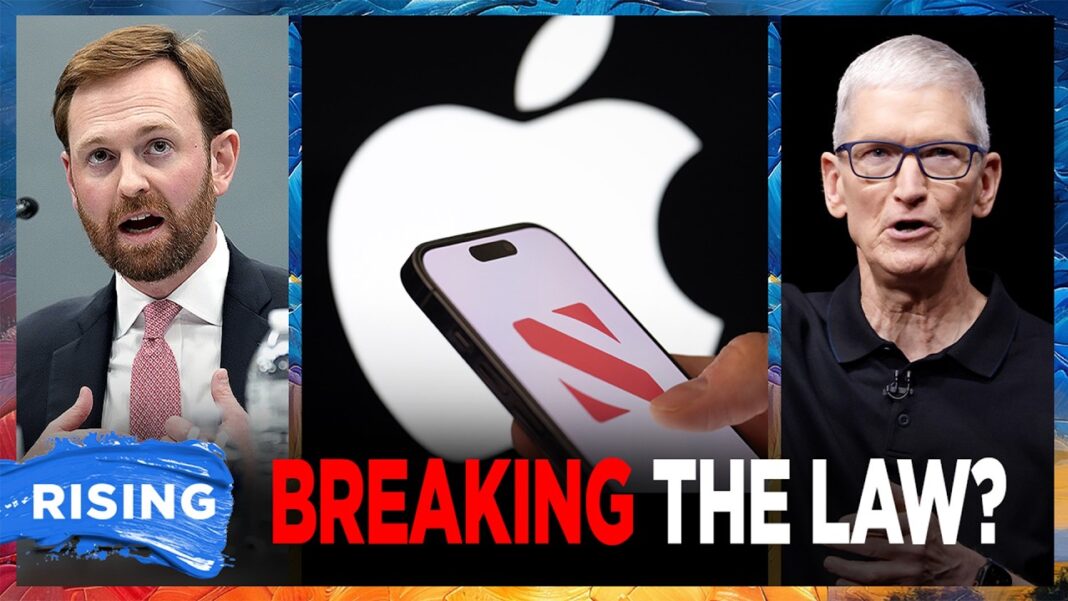
(TJV NEWS) Apple’s built-in news app has become the latest focus of scrutiny from a federal regulator appointed by President Donald Trump, amid allegations that the platform favors liberal-leaning publications.
As the Washington Post reported, Federal Trade Commission Chairman Andrew Ferguson sent a letter Wednesday to Apple CEO Tim Cook raising concerns about what he described as reports that Apple News promotes content from left-leaning outlets while limiting visibility for more conservative sources.
In his letter, Ferguson wrote that the FTC is “not the speech police,” but cautioned that Apple could potentially face scrutiny under consumer protection laws if its curation practices conflict with its stated terms of service or with what consumers reasonably expect. According to the Washington Post, the letter did not formally announce an investigation or threaten legal action. However, it urged Apple to ensure that conservative perspectives are adequately represented on the platform.
Apple News, which comes preinstalled on iPhones and aggregates stories from more than 500 publications, has been marketed by the company as the leading news app in the United States. Apple did not respond to requests for comment, the Washington Post reported, and an FTC spokesperson declined to elaborate beyond Ferguson’s written statement.
The letter comes amid evolving relations between Apple and the Trump administration. In previous years, Apple largely avoided the direct criticism that Trump directed at other technology firms. In August, Cook appeared alongside the president at an event announcing new domestic investments by Apple, where he presented Trump with a commemorative plaque mounted on a 24-karat gold base.
More recently, tensions have surfaced. Earlier this week, Apple sponsored the Super Bowl halftime performance by Puerto Rican artist Bad Bunny, which Trump criticized publicly. The Washington Post reported that the episode contributed to a broader backdrop in which the administration has sought to challenge media organizations and technology companies it perceives as unfriendly.
Since returning to office, Trump’s appointees at the FTC and the Federal Communications Commission have publicly questioned the editorial practices of various media outlets, tech platforms and nonprofit organizations. Critics have described some of these actions as “jawboning,” a term used to describe government officials pressuring private companies without initiating formal proceedings.
FCC Chairman Brendan Carr voiced support for Ferguson’s letter, writing on X that Apple has “no right to suppress conservative viewpoints” in violation of federal law.
Ferguson’s letter referenced a study by the Media Research Center, a conservative nonprofit. The group analyzed 620 top stories featured on Apple News in January and concluded that none originated from outlets it classified as right-leaning. The classifications were based on ratings from AllSides. President Donald Trump shared a New York Post article about the report on his social media platform.
Free speech advocates and former regulators have expressed differing views. Alex Abdo of Knight First Amendment Institute said the FTC’s action appeared to be part of a broader effort to influence how platforms moderate content. He argued that the agency does not have constitutional authority to direct editorial decisions.
By contrast, David Bozell defended the FTC’s involvement, stating that dominant technology platforms should be examined when there is evidence of discrimination affecting competition or consumer access to information.
A former FTC official who served under President Joe Biden also criticized the letter, calling it an inefficient use of agency resources and raising First Amendment concerns, as the Washington Post reported.
The situation reflects broader tensions between federal regulators and media organizations. Recent disputes have involved agencies’ scrutiny of mergers, nonprofit media watchdogs and broadcast networks, with some cases resulting in legal challenges in federal court.
Shira Ovide contributed to the Washington Post’s coverage of the story.
