



|
Getting your Trinity Audio player ready...
|
A Fox to Guard the Henhouse? NYC’s Antisemitism Czar Appointment Raises Alarms Over Ideology, Competence, and the City’s Moral Compass
By: Fern Sidman
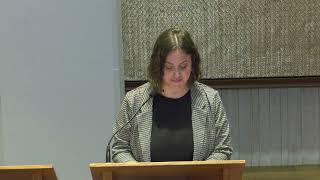
New York City’s struggle with antisemitism has become one of the most urgent civic challenges of the moment, marked by an unrelenting rise in hate crimes and a pervasive anxiety within Jewish communities that the social contract meant to protect them is fraying. Against this backdrop, Mayor Zohran Mamdani’s decision to appoint Phylisa Wisdom as executive director of the Mayor’s Office to Combat Antisemitism has landed not as a moment of reassurance, but as a flashpoint—an appointment freighted with ideological contradictions and administrative uncertainties that have already ignited concern among Jewish leaders across the city.
As The Jerusalem Post reported on Thursday, the choice has been greeted with cautious curiosity by some, but with profound skepticism by others who view the move as emblematic of a mayoralty that has yet to demonstrate the seriousness, institutional competence, or moral clarity demanded by the scale of the crisis.
On its face, the appointment appears calculated to project moderation. Wisdom, who has led the New York Jewish Agenda (NYJA) since 2023, presides over an organization that describes itself as composed of “liberal and progressive Zionists,” explicitly committed to Jewish self-determination and opposed to the movement to boycott Israel. In this narrow sense, The Jerusalem Post report noted, Mamdani has selected a figure who supports Israel’s right to exist as a Jewish state—an acknowledgment of reality that distinguishes her from the mayor’s own record of antagonism toward Israel. Yet symbolism, however carefully curated, cannot substitute for institutional credibility, nor can it erase the ideological chasm that separates the urgent task of combating antisemitism from the far-left currents that have shaped both Mamdani’s political ascent and Wisdom’s public positions.
Rabbi Moshe Davis, who previously served as executive director of the Mayor’s Office to Combat Antisemitism, offered a sober warning to The Jerusalem Post that the work of confronting antisemitism cannot be reduced to performative gestures or reputational signaling. “Antisemitism cannot be addressed with slick videos or empty remarks,” he said. “It requires policy, budgets, enforcement, and sustained follow-through.” The architecture of the office, Davis emphasized, was deliberately constructed to be operational rather than symbolic, requiring government experience, strong interagency relationships, and trust across the Jewish community to function effectively from the first day. Without those foundations, he cautioned, there is a real risk that the office will falter precisely when Jewish New Yorkers most urgently require protection.
That warning cuts to the heart of the controversy. Wisdom’s professional background, while rooted in advocacy, does not include the operational experience typically demanded by a role that must coordinate with law enforcement, civil rights agencies, and municipal departments under conditions of acute social strain. The executive director’s remit, as outlined in Mamdani’s own executive order, encompasses identifying and developing strategies to eliminate antisemitism and anti-Jewish hate crime, as well as establishing a task force drawing on the Office for the Prevention of Hate Crimes, police departments, and the New York City Commission on Human Rights.
The Jerusalem Post report underscored that this is not a ceremonial portfolio; it is an administrative nerve center whose effectiveness depends on bureaucratic fluency and political acumen. Appointing an activist figure without a demonstrated track record in municipal governance risks hollowing out an office designed to be muscular and consequential.
The ideological tensions surrounding Wisdom’s appointment have been exacerbated by her public opposition to the codification of the International Holocaust Remembrance Alliance (IHRA) definition of antisemitism. Mamdani repealed his predecessor Eric Adams’s executive order adopting the IHRA framework, a decision that The Jerusalem Post reported was closely watched by Jewish leaders for signs that the mayor might import his longstanding opposition to Israel into city policy.
Wisdom’s alignment with Mamdani on this question—she has urged universities not to adopt IHRA and to rely instead on hybrid approaches incorporating alternative definitions—has intensified concerns that the city’s principal institutional bulwark against antisemitism will be guided by an interpretive framework that many Jewish organizations view as dangerously permissive.
In 2024, Wisdom publicly called upon universities not to adopt the IHRA definition, writing that institutions should instead use elements of IHRA alongside the Nexus Project’s alternative framework. She argued that even the author of the IHRA definition did not intend it for legal codification. Yet The Jerusalem Post reported that this stance drew immediate criticism from Rabbi Marc Schneier of the Hampton Synagogue, who warned that the leader of the Office to Combat Antisemitism must grasp a “basic truth”: Israel cannot be bifurcated from Judaism.
Schneier noted that IHRA has been adopted by dozens of nations and the vast majority of American states, and he argued that opposition to the definition calls into question whether its critics truly understand the contemporary manifestations of antisemitism, which often masquerade as political critique while reproducing ancient tropes of collective Jewish culpability.
The Jerusalem Post report situates this dispute within a grim empirical reality. Jews remain the targets of a disproportionate share of hate crimes in New York City. The NYPD reported 31 alleged antisemitic hate crimes in January alone—an average of one per day—and a staggering 182 percent increase compared with the same period last year. These figures underscore that antisemitism in New York is not an abstract debate about definitions; it is a daily threat to bodily safety and communal dignity. In this context, the appointment of an antisemitism czar who rejects the most widely recognized definitional tool for identifying contemporary antisemitic patterns appears, to critics, less like nuance and more like negligence.
Speculation surrounding Mamdani’s choice had been building since his first day in office, when he announced he would retain the Office to Combat Antisemitism even as he repealed Adams’s anti-BDS executive order. Jewish leaders, The Jerusalem Post reported, monitored each move for clues as to whether Mamdani would translate his ideological commitments into administrative practice. By selecting Wisdom, Mamdani has chosen someone positioned to the left of Moshe Davis, the previous director, while attempting to blunt criticism by appointing a figure who does not espouse overt anti-Zionism.
This triangulation may satisfy political calculus within the mayor’s progressive base, but it risks leaving the Jewish community with an office that is neither trusted by those most vulnerable to antisemitic violence nor empowered to act decisively across the municipal apparatus.
The controversy is further complicated by Wisdom’s prior work with Yaffed, an organization advocating increased oversight of secular education in Hasidic and Haredi yeshivas. Some Orthodox Jewish leaders voiced concern that this history could hinder her ability to build trust with the very communities most often targeted by antisemitic hate crimes. Yaacov Behrman, a Chabad public relations liaison, warned on social media that the leader of the Office of Antisemitism cannot afford a contentious relationship with the Hasidic yeshiva community.
The Jerusalem Post reported that Behrman argued it is difficult to imagine how someone who has publicly antagonized yeshivas could forge the relationships or provide the reassurance needed by communities that bear the brunt of antisemitic attacks. In a city where Hasidic Jews are frequent targets of street-level harassment and violence, alienating these communities is not a peripheral concern; it is a structural failure.
Supporters of Wisdom, most notably Brad Lander—Mamdani’s most prominent Jewish ally and a co-founder of NYJA—have lauded her as uniquely capable of bridging divides. “@phylisajoy is the perfect person for the job,” Lander tweeted, praising her leadership during critical moments and asserting that she loves New York City’s extraordinary diversity and will work tirelessly to preserve it. The Jerusalem Post report noted the enthusiasm of Lander’s endorsement, yet such political patronage underscores precisely the concern articulated by critics: that the appointment reflects factional alliances within the progressive left more than a sober assessment of what the role demands amid a citywide antisemitism emergency.
Wisdom’s personal biography—her Sephardic grandmother’s Ladino heritage, her Brooklyn residency, her navigation of post–October 7 Jewish political complexities—adds texture to her profile. She has spoken of helping liberal Jews navigate a polarized environment in which activists on the political extremes demand absolute alignment with one side of the Israeli-Palestinian conflict.
The Jerusalem Post report acknowledged that such bridge-building rhetoric resonates with many Jews seeking to resist binary framings. Yet the task before the Office to Combat Antisemitism is not to mediate ideological debates within Jewish communities; it is to protect Jews from hate crimes, intimidation, and systemic discrimination. The gulf between these mandates is significant and conflating them risks diluting the office’s mission.
The structural design of the office itself demands a leader capable of commanding trust even among those who do not share her personal views. A coalition of thirteen pro-Israel Jewish organizations and institutions, including the NYC Public School Alliance, End Jew Hatred, Progressives for Israel, and the Hannah Senesh Community Day School in Brooklyn, petitioned Mamdani to select someone “in the mold of” Moshe Davis—an administrator with deep relationships across the Jewish communal spectrum.
The Jerusalem Post reported that the coalition emphasized the necessity of appointing a figure who could unify rather than polarize, recognizing that the office’s legitimacy depends on broad-based confidence. By choosing Wisdom, Mamdani has disregarded this counsel, substituting ideological proximity for institutional continuity.
The deeper concern, as articulated in The Jerusalem Post’s report, is that Mamdani’s own ideological posture toward Israel and antisemitism casts a long shadow over any appointment he makes in this domain. His repeal of the anti-BDS executive order and rejection of IHRA signaled a willingness to subordinate Jewish communal consensus to far-left orthodoxies that frame Zionism itself as suspect. Even if Wisdom supports Israel’s right to exist, her alignment with Mamdani on the definitional frameworks that govern how antisemitism is recognized and prosecuted raises the specter of an office structurally constrained from naming the most prevalent forms of contemporary antisemitism. In a city where anti-Zionist rhetoric frequently shades into antisemitic harassment on campuses and in public spaces, such constraints are not theoretical.
The moral hazard is compounded by the operational reality that the office must coordinate with police departments and civil rights bodies to respond to incidents in real time. The Jerusalem Post report stressed that Jewish New Yorkers are experiencing antisemitism not as a debate over speech codes but as daily vulnerability. An antisemitism czar who approaches the problem through the lens of ideological nuance rather than institutional enforcement risks rendering the office inert. Rabbi Davis’s admonition that the office must be built on policy, budgets, and enforcement rather than symbolism reads, in this light, as an indictment of the mayor’s approach: an attempt to mollify critics with optics while leaving the machinery of protection underpowered.
There is, finally, the question of legitimacy. Antisemitism czars derive their authority not merely from mayoral appointment but from communal trust. The Jerusalem Post report suggests that this trust is already frayed. The backlash from Orthodox leaders, the criticism from rabbis who view IHRA as indispensable, and the skepticism of coalitions representing a broad swath of Jewish institutions point to a widening credibility gap.
In such an environment, even the most earnest efforts by Wisdom may be interpreted through a prism of suspicion, undermining the office’s capacity to function as a credible convener of stakeholders.
The appointment thus crystallizes a broader indictment of Mamdani’s governance. By privileging ideological alignment over operational competence and communal trust, the mayor risks hollowing out one of the few municipal institutions explicitly tasked with confronting antisemitism at a time when hate crimes against Jews are surging. The Jerusalem Post report framed this not as a partisan squabble but as a test of New York City’s moral seriousness. A city that prides itself on pluralism cannot afford an antisemitism czar whose public positions cast doubt on her willingness to recognize the full spectrum of antisemitic harm, nor a mayor whose political instincts appear tethered to far-left orthodoxies that minimize Jewish vulnerability in the name of ideological purity.
In the months ahead, the efficacy of the Office to Combat Antisemitism will be measured not by press releases or symbolic gestures but by tangible outcomes: reduced hate crimes, improved coordination with law enforcement, and restored confidence among Jewish communities that City Hall understands the urgency of their plight. Whether Phylisa Wisdom, under the aegis of Mayor Zohran Mamdani, can deliver such outcomes remains an open question. What is already clear, as The Jerusalem Post has documented with increasing urgency, is that the stakes could not be higher. New York’s Jews are watching closely, not for reassurances, but for evidence that the city’s leadership is prepared to confront antisemitism with the clarity, competence, and moral resolve the moment demands.

Wisdom? Ironic.