



|
Getting your Trinity Audio player ready...
|
By: Kaylie McNoor
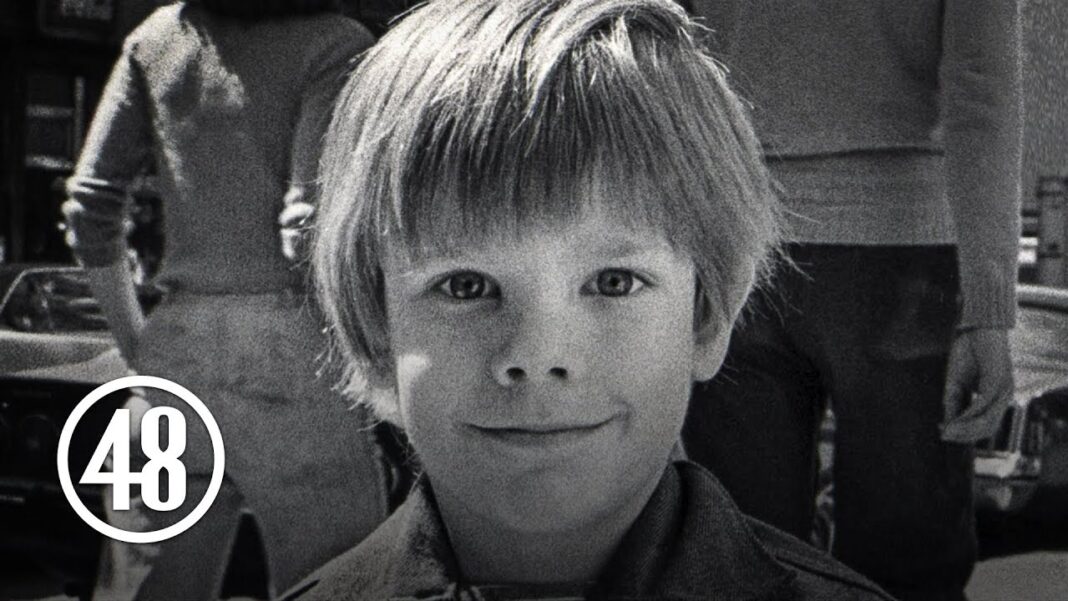
More than four decades after six-year-old Etan Patz vanished on his way to a Manhattan school bus stop, the case that introduced the term “stranger danger” into America’s lexicon has once again been thrust into the national spotlight. On Monday, a New York court overturned the 2017 conviction of Pedro Hernandez, ruling that jurors had received flawed instructions during deliberations—a technical error that could potentially free the man previously convicted of one of the most haunting crimes in the city’s modern history.
As reported on Wednesday by The New York Post, the appeals board decision represents a stunning reversal for a case long believed to be closed. The 1979 disappearance of Etan Patz launched a new era in missing children investigations, catalyzing both policy changes and public awareness efforts, but it never fully achieved the sense of closure that the public or the boy’s family desperately craved.
Pedro Hernandez, a former SoHo bodega worker, had confessed to strangling Etan in the store’s basement and disposing of his body in a nearby alleyway. Yet from the outset, his mental fitness and the reliability of his confession were steeped in controversy. Hernandez suffers from schizophrenia and other mental health disorders. According to his defense attorney Harvey Fishbein, Hernandez had also been medicated—including with fentanyl—during the extensive seven-hour police interrogation that led to his confession.
“There’s nothing physical to connect him to it,” Fishbein told The New York Post. “Although he was working in that area in 1979, nothing he said could be corroborated.”
Indeed, no forensic evidence or eyewitness testimony ever placed Hernandez with Etan on the day the child disappeared. His first trial ended in a hung jury in 2015, but he was convicted at a second trial in 2017—largely on the strength of his confession. Now, with the conviction thrown out, the legal process must begin anew.
The court’s ruling has also refocused attention on Jose Antonio Ramos, the man who, for decades, was the prime suspect in Etan’s disappearance. Ramos, now 82, is a convicted child sex offender with a chilling history of predatory behavior. He was once closely associated with a woman who babysat Etan and had been in the Patz home on the very day the boy went missing.
Ramos’s makeshift home—inside a drainpipe—was found filled with religious paraphernalia, children’s toys, and photographs of young boys taken near an adult cinema in Times Square. According to the information provided in The New York Post report, Ramos admitted to federal prosecutors that he was “90 percent sure” he met Etan on the day of his disappearance and confessed to attempting to molest the boy.
Despite this damning circumstantial evidence, no physical proof ever linked Ramos to the crime, and he was never criminally charged in the case. In 1990, he was convicted on unrelated charges of sexually abusing an eight-year-old boy in Pennsylvania and later admitted to having sexual contact with a ten-year-old. He served 27 years in prison and was arrested again after his release for falsifying his address. He is now listed as a Category Three sexually violent offender—denoting the highest risk of recidivism—and is believed to have left the country for the Philippines.
While incarcerated, Ramos was sued by Etan’s parents, Stanley and Julie Patz, in civil court. In 2004, three years after Etan was legally declared dead, Ramos was found civilly responsible for the boy’s death. He refused to answer questions during the proceedings but continued to deny kidnapping or murdering Etan.
Nevertheless, amid the 2016 trial of Hernandez, the Patz family publicly stated they now believed Ramos was not the perpetrator. “After sitting through the trial and hearing all the evidence… we now believe that Pedro Hernandez and not Jose Ramos was the perpetrator of this heartless crime,” Stanley Patz declared in a sworn statement.
Still, Fishbein remains unpersuaded. “If the trial was Jose Ramos, he would have been convicted in a day,” he told The New York Post. “But Jose Ramos was not the defendant.”
Etan Patz’s disappearance was more than just a personal tragedy—it was a cultural and legal watershed. The New York Post has frequently highlighted how his case ignited sweeping reforms in child protection and law enforcement practices across the country. He became the first child whose photo was printed on a milk carton. His case spurred the establishment of National Missing Children’s Day, proclaimed by President Ronald Reagan in 1983.
Law enforcement’s handling of missing children cases was revolutionized. The Etan Patz case accelerated the development of a centralized FBI database and played a key role in the founding of the National Center for Missing and Exploited Children. Corporations such as Walmart began publicly displaying images of missing children in their stores, leveraging private sector support in nationwide search efforts.
The emotional scars, however, ran deepest in Etan’s own SoHo neighborhood. Susan Meisel, whose husband Louis K. Meisel owned the art gallery near where Etan was last seen, described the trauma to The New York Post: “It was a nightmare. And it’s still a nightmare.”
Meisel recalled how Etan’s disappearance changed daily life for families in Lower Manhattan. “People decided not to have babysitters, not to have nannies,” she said. “A lot of the people who lived in the building moved.”
Despite the pain, Etan’s parents continued to hold onto hope for decades, choosing to remain in their Prince Street loft long after most neighbors had left. They finally sold the property and relocated to Hawaii in 2019, according to The New York Post report.
As the legal machinery now resets, the case of Etan Patz remains emblematic of the complexities that surround criminal justice, mental health, and the weight of circumstantial evidence. It is also a painful reminder that even in an era defined by advances in forensic science and digital surveillance, the full truth can remain agonizingly out of reach.
Whether Pedro Hernandez will face a new trial remains uncertain. Whether Jose Antonio Ramos will ever be brought to justice—should justice even still be possible—is an even more open question.
But as The New York Post report emphasized, what remains clear is that Etan Patz’s disappearance forever altered the American conscience, reshaped its institutions, and revealed both the possibilities and limitations of the legal system in confronting unthinkable loss.
