



|
Getting your Trinity Audio player ready...
|
U.S. Withdraws from Russia-Ukraine Peace Talks, Citing Need for Direct Negotiations Between the Warring Nations
By: Fern Sidman
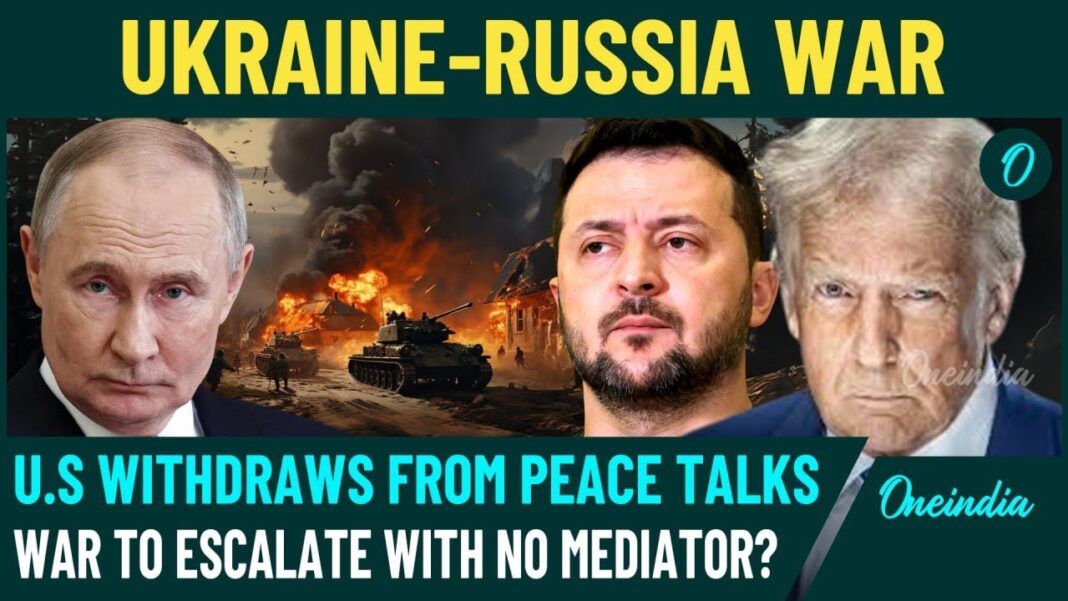
In a significant shift in foreign policy under the Trump administration, the United States announced on Thursday that it will no longer serve as a mediator in peace talks between Russia and Ukraine, formally stepping away from diplomatic efforts to end the war that has gripped Eastern Europe since early 2022. As was reported on Friday by The Hindustan News, the decision, confirmed by a U.S. State Department official, marked a dramatic recalibration of America’s role in one of the most consequential global conflicts in recent memory.
During an appearance on Fox News Thursday evening, Secretary of State Marco Rubio delivered a blunt message: “This is not our war.” The Hindustan Times reported that his remarks drew attention to the Trump administration’s growing frustration with the lack of progress in peace negotiations and a broader shift toward limiting American entanglement in foreign conflicts that do not directly serve U.S. strategic interests.
Rubio’s statement came just hours before Tammy Bruce, spokesperson for the Department of State, issued a formal statement outlining the new direction of U.S. policy. “We are changing the methodology of how we contribute to the conflict,” Bruce explained. “We will not be the mediators going forward.”
Bruce, speaking on behalf of the State Department, signaled an end to the kind of intensive shuttle diplomacy that has defined previous U.S. approaches to conflict mediation. “We are not going to fly around the world at the drop of a hat to mediate meetings,” she said, pointing to a growing recognition within the Trump administration that the time has come for Russia and Ukraine to take responsibility for negotiating a political solution.
“It is now between the two parties, and now — now is the time that they need to present and develop concrete ideas about how this conflict is going to end. It’s going to be up to them,” Bruce added, as quoted by The Hindustan Times.
The U.S. exit from peace talks is in line with President Trump’s emphasis on accountability and results in international negotiations. The president has previously expressed skepticism about the value of prolonged diplomatic efforts that yield few tangible outcomes. According to the information provided in The Hindustan Times, the administration’s patience has worn thin amid continued battlefield hostilities and no clear pathway to a ceasefire or final settlement.
A day before the official announcement, Secretary Rubio warned that unless Russia and Ukraine reached an agreement “very soon,” President Trump would have to “make a decision about how much time the U.S. would dedicate” to continued mediation efforts, as was indicated in The Hindustan Times report. That decision now appears to have been made: the U.S. is stepping aside.
Vice President JD Vance, speaking to Fox News on Thursday, confirmed the administration had hoped to identify some middle ground to bring the conflict to a negotiated end. “It’s not going anywhere … it’s not going to end any time soon,” Vance said, according to the report in The Hindustan Times, echoing concerns that the conflict had reached a diplomatic impasse.
Though he expressed guarded optimism about the possibility of a breakthrough, Vance acknowledged that a resolution “has to come from the two countries themselves.” While American diplomatic pressure may have helped facilitate past rounds of talks, the administration now believes that real peace will only come when Moscow and Kyiv take ownership of the process.
As reported by The Hindustan Times, the U.S. withdrawal from peace mediation marks a geopolitical turning point in the West’s approach to the Russia-Ukraine war. For much of the conflict, the United States has played a leading role in coordinating Western aid, applying sanctions on Russia, and rallying support for Ukraine’s sovereignty. Now, the Trump administration is signaling that America’s primary responsibility is to its own people and national interests, rather than continuing to carry the diplomatic burdens of others.
The decision may reverberate through NATO capitals and among Ukraine’s Western backers, some of whom have relied heavily on U.S. leadership to sustain pressure on the Kremlin. However, Trump administration officials argue that America’s role must shift from endless management to strategic recalibration.
The administration’s message is now clear: the onus is on Russia and Ukraine to find a resolution. After more than two years of open warfare, humanitarian crises, and stalled ceasefires, the U.S. believes that the time has come for the principal actors to take the final steps themselves.
The international community will now watch closely to see whether this diplomatic handoff leads to real progress—or whether the absence of U.S. mediation opens the door to new challenges in achieving a long-term peace.
