



|
Getting your Trinity Audio player ready...
|
By: Jeff Gorman
In a case that underscores the uncompromising legal standards governing American citizenship, a federal court in South Florida on Tuesday revoked the naturalization of a Peruvian-born man after determining that he fraudulently obtained U.S. citizenship while actively engaged in crimes involving the sexual exploitation of children. The ruling, delivered by a U.S. District Judge, reinforces a foundational principle of American immigration law: citizenship is a privilege earned through honesty and lawful conduct, not a refuge for deception.
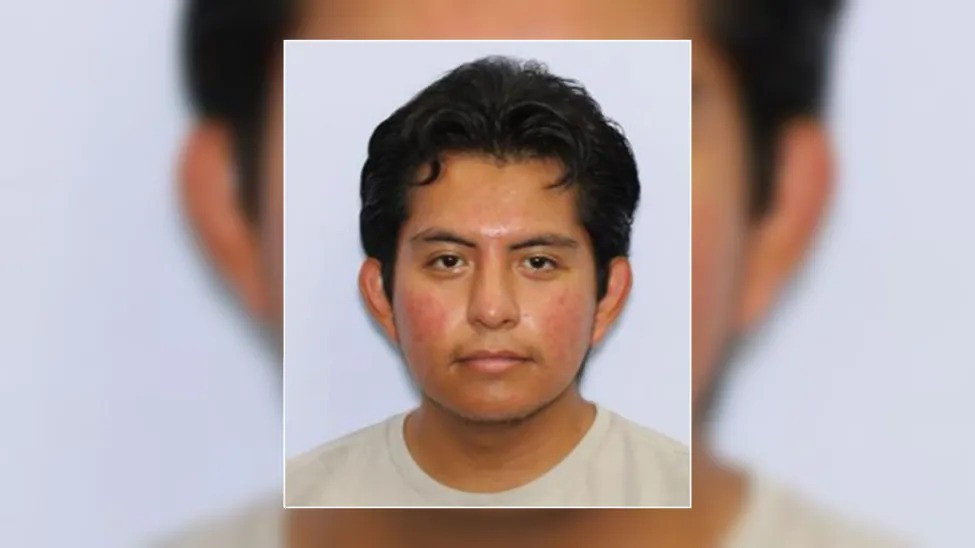
The defendant, Renzo William Alegre, 25, of Fort Lauderdale, had his U.S. citizenship formally rescinded and his Certificate of Naturalization canceled after pleading guilty to unlawful procurement of citizenship or naturalization. The court’s order was accompanied by a sentence of 150 days of home detention and one year of probation, in addition to the severe penalties he had already received for child pornography offenses.
Court records reveal a deliberate pattern of misrepresentation during Alegre’s naturalization process. On March 16, 2019, Alegre submitted an application for U.S. citizenship, a document that explicitly requires applicants to disclose any criminal conduct—even offenses for which they were not arrested or charged. One critical question asked whether the applicant had ever committed, assisted in committing, or attempted to commit a crime or offense for which they were not arrested.
Alegre answered “no.”
That response, prosecutors later demonstrated, was false.
On October 23, 2019, Alegre appeared for an in-person immigration interview with U.S. Citizenship and Immigration Services (USCIS). Once again, under oath, he affirmed that he had never committed any undisclosed criminal offenses. Eight days later, on October 31, 2019, he was granted U.S. citizenship.
At the time, however, Alegre was already engaged in criminal activity of the gravest kind.
In September 2020—less than a year after becoming a U.S. citizen—Alegre was arrested on federal child pornography charges. Subsequent investigation revealed that the arrest was not the beginning of his criminal conduct but rather its exposure.
According to his own factual proffer in federal court, Alegre admitted that he had been using a computer to receive and download child sexual abuse material (CSAM) for approximately one year prior to his arrest. That timeline placed his criminal behavior squarely before and during the period in which he was applying for and receiving U.S. citizenship.
Investigators determined that Alegre possessed at least 600 images of CSAM, a volume that underscored the sustained and intentional nature of his offenses. He was ultimately convicted and sentenced to 48 months in federal prison, followed by an extraordinary 20 years of supervised release—reflecting both the severity of his crimes and the ongoing risk he was deemed to pose.
While Alegre’s prison sentence addressed the criminal conduct itself, federal law also provides a separate remedy when citizenship is obtained through fraud or willful misrepresentation. Under U.S. immigration statutes, naturalization can be revoked if the government proves that an individual illegally procured citizenship or concealed material facts during the application process.
In this case, the evidence was unambiguous. Alegre’s false statements on his application and during his USCIS interview were material: had he disclosed his criminal activity, he would have been ineligible for naturalization. The deception went to the heart of the government’s decision to grant him citizenship.
U.S. District Judge Rodney Smith entered the order revoking Alegre’s citizenship, formally canceling his Certificate of Naturalization and returning him to non-citizen status under U.S. law.
Federal authorities used the case to send a broader message about the integrity of the immigration and naturalization system. U.S. Attorney Jason A. Reding Quiñones for the Southern District of Florida emphasized that citizenship cannot be used as a protective cloak for criminal conduct—particularly crimes that victimize children.
“United States citizenship is a privilege, not a shield for deception,” Reding Quiñones said in a statement announcing the court’s decision. “This defendant lied to obtain citizenship while actively engaging in crimes that exploit children. When citizenship is procured by fraud, the law requires that it be revoked. Our Office will act decisively to protect children and to preserve the integrity of our immigration and naturalization system.”
His remarks reflect a dual imperative: safeguarding vulnerable victims and maintaining public confidence in the naturalization process. Prosecutors stressed that the revocation was not discretionary or political but a mandatory legal consequence of fraud proven beyond doubt.
The case was investigated by Homeland Security Investigations (HSI) Fort Lauderdale, a division of the Department of Homeland Security tasked with probing transnational crime, child exploitation, and immigration fraud. Acting Special Agent in Charge José R. Figueroa of HSI Miami joined U.S. Attorney Reding Quiñones in announcing the outcome.
HSI’s involvement highlights the increasingly integrated approach federal authorities take when crimes span immigration, cyber activity, and child exploitation. Digital forensics, immigration records, and sworn statements were woven together to establish not only Alegre’s criminal conduct but also the timeline proving that his offenses predated his naturalization.
Assistant U.S. Attorney Latoya C. Brown prosecuted the case, navigating the complex intersection of criminal law and immigration statutes. Legal experts note that denaturalization cases are relatively rare and require meticulous proof, given the gravity of stripping someone of citizenship once it has been granted.
In this instance, the evidentiary record—including Alegre’s own admissions—left little room for ambiguity. His false answers were not peripheral or inadvertent; they concealed conduct that struck at the core eligibility requirements for citizenship.
The revocation of Alegre’s citizenship raises broader questions about trust in the naturalization process. Each year, hundreds of thousands of immigrants lawfully become U.S. citizens after years—or decades—of compliance with immigration laws, background checks, and moral character requirements. For those individuals, cases like this are an affront to the seriousness with which they approached the process.
Federal officials were careful to stress that the case should not cast suspicion on lawful immigrants or naturalized citizens as a whole. Rather, they framed it as evidence that safeguards exist—and are enforced—when those safeguards are deliberately circumvented.
Although Alegre has already served—or is serving—a substantial prison sentence for his child exploitation offenses, the loss of citizenship carries profound additional consequences. Denaturalization may expose him to future immigration proceedings, including potential removal from the United States, depending on subsequent legal determinations.
More symbolically, the revocation represents a formal judgment that his place in the civic body was never validly earned. In the eyes of the law, his citizenship was void ab initio—invalid from the moment it was granted, because it was built on lies.
At its core, the case is about accountability—both for crimes against children and for fraud against the United States. By pursuing denaturalization alongside criminal prosecution, federal authorities signaled that violations of either realm will be met with equal seriousness.
The outcome also reinforces a principle that immigration officials and prosecutors frequently emphasize: honesty is not merely encouraged in the naturalization process—it is indispensable. When applicants lie about material facts, particularly those involving serious criminal conduct, they undermine the system itself.
In revoking Renzo William Alegre’s citizenship, the court delivered a ruling that extends beyond one individual. It stands as a reminder that the privileges of American citizenship are inseparable from the responsibilities that accompany them—and that when those