



|
Getting your Trinity Audio player ready...
|
Trump Unveils Sweeping Healthcare Plan Aimed at Rewriting America’s Medical Economy
By: Jerome Brookshire
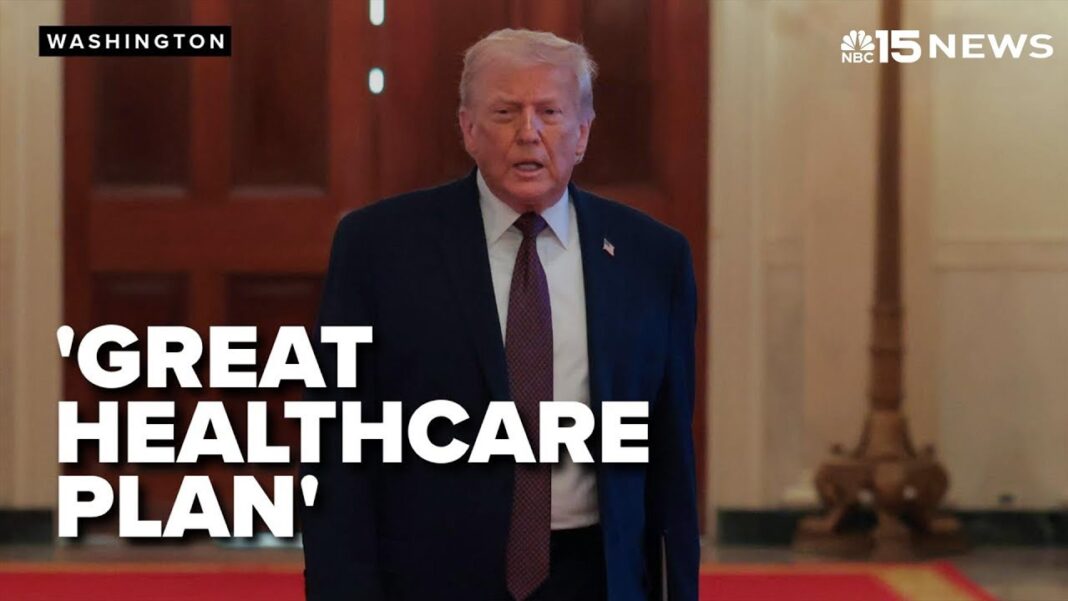
In a move designed to reshape the architecture of American health care and place economic power back into the hands of ordinary citizens, President Donald Trump on Jan. 15 announced what he termed his “Great Healthcare Plan,” a far-reaching initiative intended to reduce medical costs through aggressive price negotiation, market competition, and unprecedented transparency. As detailed in a report on Thursday by The Epoch Times, the proposal represents one of the most ambitious efforts in decades to overhaul the financial mechanics of the nation’s health system.
Standing before the cameras in a video address that was both combative and optimistic, Trump framed the plan as a direct challenge to entrenched interests in the pharmaceutical and insurance industries. “Instead of putting the needs of big corporations and special interests first, our plan finally puts you first and puts more money in your pocket,” the president declared, calling on Congress to codify the reforms into permanent law.
The initiative, according to analysis published by The Epoch Times, is not a single piece of legislation but rather a comprehensive framework that bundles together a series of executive actions, regulatory changes, and policy goals already introduced by the administration. If transformed into statute, these provisions would carry far greater durability, making them less vulnerable to reversal by future administrations.
At its core, the Trump proposal reflects a philosophy fundamentally different from that of the Affordable Care Act (ACA), commonly known as Obamacare. Whereas the ACA relied heavily on subsidizing insurance premiums and expanding government involvement in coverage markets, Trump’s approach focuses on reducing underlying prices and injecting consumer-driven competition into the system.
As reported by The Epoch Times, the administration argues that decades of bureaucratic complexity, opaque pricing, and industry consolidation have artificially inflated the cost of care. The new plan seeks to attack those structural distortions head-on.
White House officials speaking to The Epoch Times described the initiative as an effort to move beyond what they see as the narrow focus of the ACA. “The president thinks that is far too narrow a view on what is ailing our health care system,” a spokesperson told reporters. “That is why he is putting something out that is much broader on how to improve affordability for American patients.”
Perhaps the most dramatic component of the new health care blueprint involves prescription medications — long a source of public frustration and political controversy. Trump’s plan builds upon an already-implemented policy known as the Most-Favored Nation Prescription Drug Pricing initiative, which has sought to force pharmaceutical companies to offer Americans the same low prices enjoyed by consumers in other developed countries.
According to The Epoch Times report, the administration has successfully negotiated reduced drug prices for Medicaid patients with 15 major pharmaceutical manufacturers. Under the policy, companies must offer their lowest global price to U.S. Medicaid customers, introduce new drugs into the American market at internationally competitive rates, and, in some cases, sell medications directly to patients at reduced prices.
The objective is straightforward: eliminate the longstanding disparity in which American consumers subsidize lower prices abroad.
Dr. Mehmet Oz, the newly appointed administrator of the Centers for Medicare and Medicaid Services, emphasized in remarks reported by The Epoch Times that lower drug prices would yield savings far beyond the pharmacy counter. “When you reduce obesity-related complications from hypertension and diabetes—and the downstream effects of that, heart attacks, kidney failures, stroke, dementia, liver issues—you actually start saving enough money to justify more investments,” Oz explained.
Trump is now urging Congress to enshrine this approach into federal law, including a grandfather clause protecting agreements already reached by his administration. Supporters argue that such a move would permanently alter the balance of power between drug manufacturers and American consumers.
Another element of the pharmaceutical strategy, highlighted by The Epoch Times, involves expanding the range of medications available over the counter. By allowing more safe and commonly used drugs to be dispensed without a prescription, the administration hopes to lower costs, reduce administrative burdens, and increase competition.
Beyond the issue of drug pricing, Trump’s health care plan proposes a fundamental shift in how federal assistance is delivered. Rather than channeling subsidies through insurance companies — as the ACA does — the new model would provide financial support directly to consumers.
This represents a sharp departure from the Obamacare structure, under which tax credits are paid to insurers on behalf of policyholders. Critics, including many Republicans, have long argued that this arrangement fuels inflation and invites fraud.
As The Epoch Times reported, the Trump administration believes that empowering individuals with direct purchasing power will force insurers and providers to compete more aggressively on price and quality. By bypassing intermediaries, officials contend, federal dollars can be used more efficiently and transparently.
The issue of subsidies remains politically contentious. Enhanced ACA subsidies expired in December 2025, and a bipartisan group of senators has been working on a compromise to extend them while tightening anti-fraud measures. Sen. Lisa Murkowski (R-Alaska) told The Epoch Times she intends to continue pursuing such an extension, citing the sharp rise in insurance premiums this year.
“I think we have to respond to the immediacy of the situation that we have now,” Murkowski said, underscoring the delicate balance Congress must strike between immediate relief and long-term reform.
One of the most innovative — and potentially transformative — aspects of the Trump proposal involves what the White House calls “radical transparency.” The plan would require insurers and health care providers to present pricing and coverage information in clear, consumer-friendly language.
Under the proposed “Plain English Insurance” Standard, insurers would have to disclose on their websites key metrics such as the percentage of revenue paid out in claims, the percentage of claims denied, and average wait times for routine care. Health care providers accepting Medicare or Medicaid would be obligated to post their prices prominently in offices and clinics.
According to The Epoch Times report, the administration believes that transparency will function as a powerful market corrective. When consumers and employers can easily compare costs, prices are more likely to fall.
“Large employers are very, very desperate to get clear information on how they can be negotiating better prices,” a White House spokesperson told The Epoch Times. “They have perhaps the best incentives within the system.”
This emphasis on openness builds upon earlier Trump-era initiatives. During his first term, the administration instituted a 2019 rule requiring hospitals to disclose their prices publicly. Compliance, however, was uneven and enforcement limited. In December 2025, the Trump administration proposed an updated transparency regulation designed to close loopholes and strengthen accountability.
Despite the boldness of the agenda, the ultimate success of the “Great Healthcare Plan” will depend heavily on Congress. Many of the most consequential provisions currently rest on executive orders and regulatory actions that could be undone by future administrations.
As The Epoch Times report noted, Trump is urging lawmakers to transform these policies into durable federal statutes. Doing so would ensure that negotiated drug prices, transparency requirements, and consumer-directed assistance programs survive beyond his presidency.
The politics of such an effort are complex. Pharmaceutical companies, insurance firms, and hospital systems wield enormous influence in Washington and are likely to resist measures that threaten their revenue models. Democrats, meanwhile, remain committed to preserving and expanding Obamacare’s subsidy structure.
Even within the Republican Party, divisions persist. Efforts to create federally funded Health Savings Accounts as an alternative to ACA subsidies have stalled, and moderate GOP senators have expressed reluctance to dismantle existing programs without clear replacements.
Proponents of Trump’s plan, however, believe the political landscape has shifted in their favor. Public frustration with high medical bills, opaque insurance practices, and soaring drug costs has reached a boiling point. Many voters, across party lines, are increasingly open to disruptive reforms.
In its reporting, The Epoch Times has highlighted how the administration is framing the initiative as a populist crusade on behalf of everyday Americans. Trump himself has repeatedly cast the plan as a battle between working families and corporate elites.
“This is about fairness,” the president said in his Jan. 15 address. “Americans pay more for health care than anyone in the world, and we’re going to change that.”
Not everyone is convinced. Opponents caution that aggressive price controls could stifle innovation in the pharmaceutical sector and reduce incentives for developing new treatments. Insurers argue that transparency mandates may prove burdensome and confusing to consumers.
Democratic lawmakers, quoted in The Epoch Times, have also warned that shifting subsidies directly to individuals could destabilize insurance markets and leave vulnerable populations exposed.
The coming months are likely to feature intense debate over these competing claims, as Congress weighs the economic, ethical, and political ramifications of the president’s proposals.
What is clear, as The Epoch Times report noted, is that Trump’s health care agenda represents one of the most consequential domestic policy gambits of his presidency. If successful, it could redefine how Americans pay for medicine, choose insurance, and interact with the medical system.
If it fails, the United States may remain trapped in the familiar cycle of rising costs and partisan gridlock.
For now, the White House is betting that voters are ready for something new — and that lawmakers will ultimately follow their lead.
“Americans deserve a system that works for them, not against them,” Trump said in closing his announcement. “This plan is the beginning of a new era in health care.”
Whether Congress agrees may determine the future of American medicine for generations to come.

It’s always so interesting that the opposing view always centers around whether pharmaceutical companies will have the revenue to continue research and produce new innovative medications for various medical issues. So why, in Israel, where healthcare is a National system and costs are contained and medications are inexpensive for the most part, does Israel’s medical/pharmaceutical sector manage to outperform any other country in finding cures, creating new medications that treat illnesses, etc.???? I think we all know the answer. American pharmaceutical companies are only concerned with lining the pockets of the big wheels. It’s all about the money….not your money or my money, but the money that the CEO’s, CFO’s, and others have falling into their pockets. It’s got to end, and maybe, just maybe, President Trump has the ansswer.